What is Project Homecoming self-deportation?
By William J. Vásquez · Updated November 16, 2026
Looking for deportation numbers? See how Project Homecoming records voluntary departures, travel support, and the $3,000 exit bonus. Get a free evaluation.
Published on November 16, 2026· Updated November 16, 2026
Talk to an immigration attorney
Free call. A clear plan for your case.
Free & confidential · Se habla espanol · Mon-Fri 8am-7pm, Sat 9am-2pm (ET)
Have questions? Talk to an attorney - free evaluation.
Call 1-844-967-3536Check your case status now
Look up your immigration case below, then talk to an attorney about what it means — free.
Questions about your result?
Talk to an attorney about your case — free, no obligation.
Do Deportation Numbers Include Project Homecoming Departures?
Deportation numbers can refer to different results. The difference depends on whether the government removed a person through an enforcement process or the person chose to leave through a federal departure process. USCIS describes Project Homecoming as a voluntary, incentivized option for people who are currently in the United States unlawfully and want to return to their home country or another country where they have legal status. The program uses the CBP Home Mobile App. It offers travel assistance. It may also involve Form G-325R when CBP needs more information. Before you submit personal information or decide to leave, learn what the process records. Also learn how leaving could affect your future immigration options.
Questions about a possible departure, immigration status, or future options need careful review. William J. Vasquez offers free immigration evaluations. Se Habla Español.
Call 1-844-967-3536.
Quick Answer
Project Homecoming is a USCIS-described voluntary departure process. It is not simply another name for deportation numbers. A person records an intent to depart in the CBP Home Mobile App. Eligible participants may receive a one-way ticket. They may also receive a $3,000 exit bonus after departure is confirmed. The program may forgive certain unpaid civil fines.
- CBP Home is the starting point.
- Some people receive a request for Form G-325R.
- USCIS may schedule biometrics.
- Departure may affect future immigration options.
How do deportation numbers relate to voluntary departure records?
A headline about deportation numbers may combine very different immigration results. A removal is a legal process with consequences under federal immigration law. A voluntary departure through Project Homecoming starts when a person submits an intent to depart through the CBP Home Mobile App.
USCIS calls its page USCIS Supports “Project Homecoming” Self-Deportation. The agency describes a voluntary, incentivized process. It is for people currently in the United States unlawfully who want to return to their home country. They may also choose another country where they have legal status. This wording matters. An intent to depart, a completed departure, and an immigration removal are not interchangeable descriptions of a person’s record.
The U.S. government will purchase a one-way departure ticket for illegal aliens to fly to their home country or another country where they have legal status.
People considering voluntary self-deportation can review federal immigration services for departure and status questions before submitting an app entry.
Why the category matters
Do not assume that every departure will be counted or described in the same way in public discussions. The practical issue for an individual is the immigration record created by that person’s own process. A person should preserve notices, confirmations, travel records, and any proof issued through USCIS or CBP.
How does the CBP Home self-departure process work?
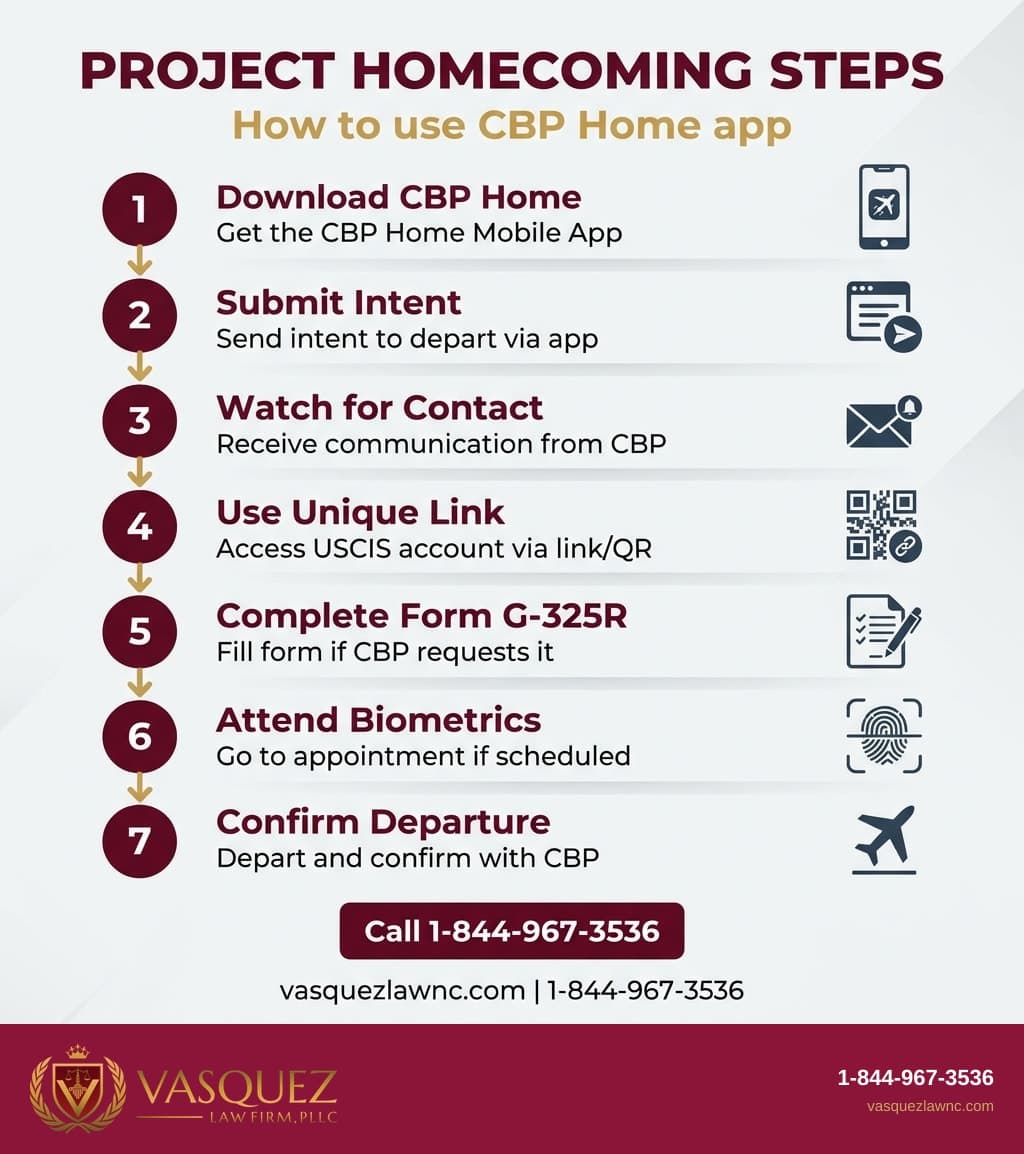
The first concrete step is to download the CBP Home Mobile App. The person then submits personal information, including a photograph. USCIS says that after registration, the person will be contacted at the phone number provided to book a one-way plane ticket.
- Submit an intent to depart in the CBP Home Mobile App.
- Watch for communications from CBP.
- Use a unique link or QR code only if CBP sends one.
- Create or access the USCIS online account connected to that link.
- Complete Form G-325R if the online account presents it.
- Check the account for any biometric appointment notice.
- Await contact about next steps regarding the intent to depart.
USCIS explains that only some people will be referred for Form G-325R. The referral can happen when CBP needs more information. This includes cases where a person has not previously encountered or registered with the government. It can also happen when biographic information or a photo needs correction.
USCIS will generally schedule your appointment, if you need one, within 2 to 3 weeks after you submit Form G-325R.
That timeline concerns a biometric appointment when one is needed. It does not promise that every individual will follow the same path. For broader USCIS case processing information, consult the USCIS processing times tool.
Why the unique link and QR code matter
USCIS instructs recipients to use the personal link or QR code in the CBP email. The agency says these items are unique. They cannot be shared. The link connects the USCIS account process to the intent to depart submitted to CBP.
What documents should you preserve for a voluntary departure review?
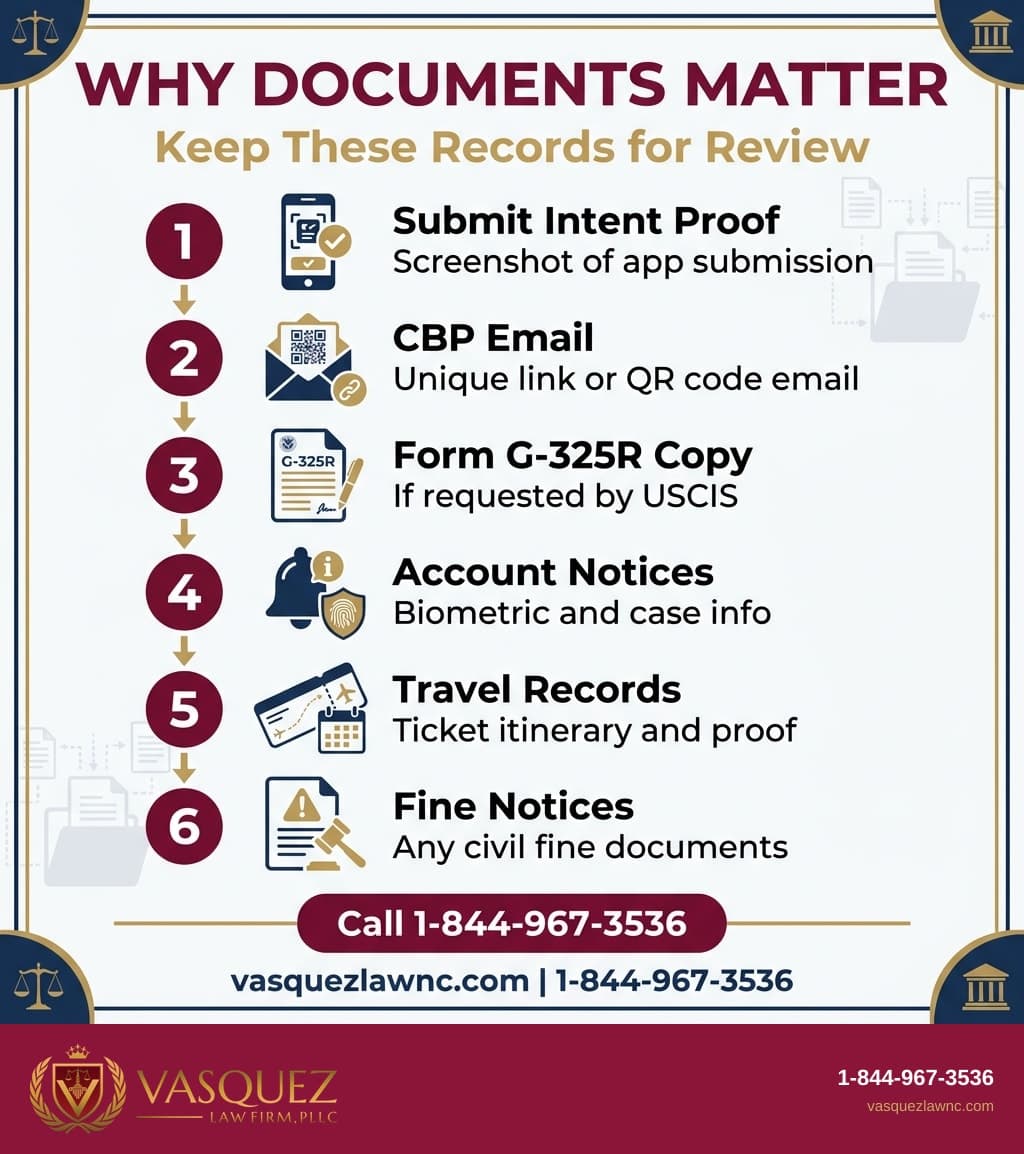
A person who uses the app should keep copies before, during, and after each step. Screenshots and account notices can help show what the person submitted. They can also show what the agencies requested. This is especially important if the person later needs to explain prior travel or a departure history in another immigration matter.
- Confirmation that the intent to depart was submitted.
- Any CBP email containing a unique link or QR code.
- A copy of the submitted Form G-325R, if requested.
- USCIS online account notices and biometric appointment details.
- USCIS Proof of G-325R Registration, if issued.
- Travel itinerary and evidence of completed departure.
- Any notice concerning civil fines or forgiveness.
Cases we handle often involve people who saved a ticket itinerary but did not preserve account notices. Those notices may show whether USCIS requested Form G-325R. They may also show whether biometrics were scheduled and what communication followed. A review by immigration counsel for voluntary departure decisions can help identify important records before travel.
Can family members travel together?
USCIS states that participants can leave with their children regardless of the children’s citizenship status. That statement concerns travel with family through the program. It does not replace an individual review of each family member’s immigration history, status, or future options.
What happens after Form G-325R is submitted?
After a person submits Form G-325R, USCIS may schedule a biometric services appointment. The appointment may take place at a local Application Support Center. The appointment notice is placed in the USCIS online account. It is not mailed as a paper notice. USCIS also says it will issue Proof of G-325R Registration after processing.
The person should check the online account regularly. A person may need to reschedule for good cause. To request rescheduling through the USCIS online account, the person must submit the request at least twelve hours before the original appointment time and establish good cause. Someone who misses an appointment or needs to act closer to the appointment time should follow USCIS instructions and contact its Contact Center.
After USCIS completes processing, a Project Homecoming representative contacts the person. The representative may use the phone or email provided. The representative will discuss next steps regarding the intent to depart. This sequence makes account access and accurate contact information central to the process.
Why should future immigration options be reviewed first?
USCIS states that leaving voluntarily may improve future immigration options. It also warns that remaining in the United States without authorization can bring serious consequences. The effect of departure depends on the facts. These facts may include prior immigration history, existing orders, applications, and family-based options.
What financial support does Project Homecoming describe?
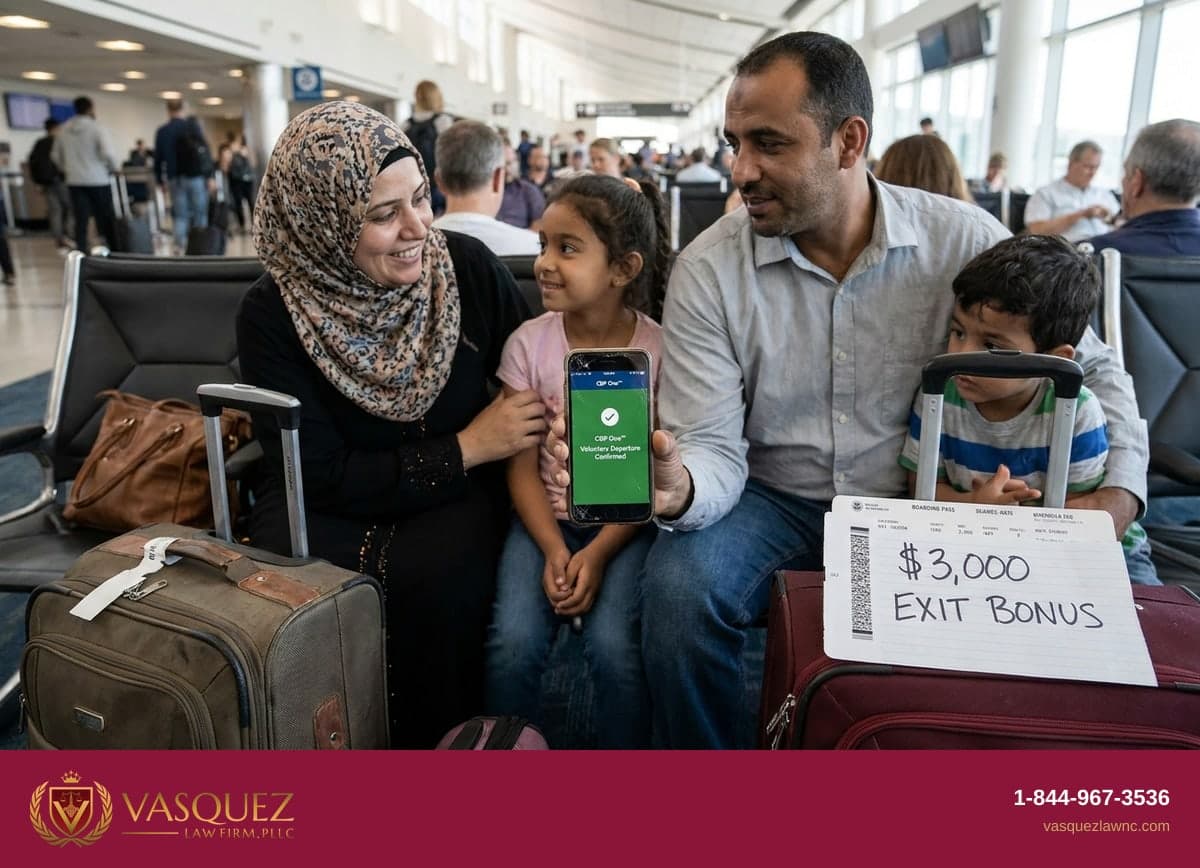
The USCIS alert describes three financial features. The government may purchase a one-way ticket. It may provide a $3,000 exit bonus after confirmation that the person has left the United States through the CBP Home app. It may also forgive outstanding civil fines for failure to depart after a final removal order or voluntary departure order.
The alert also describes document help and travel assistance for eligible participants. It says participants can plan an orderly departure. They can do so while wrapping up work, school, and personal matters. Eligibility and individual processing still matter. Do not assume that submitting an app entry alone resolves every immigration issue.
- Travel support may include a one-way departure ticket.
- The stated exit bonus is paid after confirmation of departure.
- Certain unpaid civil fines may be forgiven.
- CBP or USCIS may request more information.
Before choosing a departure path, discuss your immigration history and goals with the firm. Free evaluations are available, and Se Habla Español.
Get a Free Immigration Evaluation
Call 1-844-967-3536.
What mistakes can affect a Project Homecoming request?
A missed online notice can interrupt the process. USCIS says it places biometric appointment notices in the online account. It does not mail a paper copy. Check the account instead of waiting for postal mail.
- Sharing a unique link: Do not share a CBP link or QR code with another person.
- Using another pathway: Follow the unique link connected to the CBP submission.
- Skipping Form G-325R: Submit it through the named person’s account if CBP requests it.
- Missing biometrics: Attend the scheduled appointment or seek a timely reschedule for good cause.
- Relying on public deportation numbers: Review your own immigration record and goals.
- Leaving without records: Preserve confirmations, notices, and proof of travel.
- Making a family decision without review: Consider each family member’s facts separately.
If you remember one point: an intent to depart is a serious immigration decision. Preserve records and obtain individualized legal advice before submitting information or traveling.
How does the federal immigration framework apply nationwide?
Project Homecoming is a federal immigration process described by USCIS and administered with CBP involvement. According to USCIS, a person may depart to a home country. The person may also depart to another country where that person has legal status.
Federal law controls immigration consequences. The facts in a person’s record determine how that law may apply. The USCIS Policy Manual is a useful agency reference for broader immigration procedures. A related discussion of voluntary departure consequences is available in our voluntary departure bar overview.
When should you call an immigration lawyer now?
A prompt legal review is especially useful before a person records an intent to depart or boards a flight. Do not wait for a general article about deportation numbers to answer a question about your specific facts.
- You have a final removal order or a voluntary departure order.
- You received a CBP email requesting Form G-325R.
- You have a biometric appointment in your USCIS account.
- You have a pending immigration application or petition.
- You are considering departure with children.
- You need to understand possible future immigration options.
- You have received notices you do not understand.
About Vasquez Law Firm
Vasquez Law Firm provides immigration representation with bilingual support staff. The firm uses a direct and careful approach to high-stakes decisions. The firm’s Yo Peleo® commitment reflects a focus on protecting clients’ rights. It also reflects a focus on explaining procedures in plain language.
For immigration matters, the firm meets clients in Raleigh, NC and Orlando, FL. It also assists immigration clients nationwide. William J. Vasquez can review immigration history, agency notices, family circumstances, and practical goals. This review can happen before a person makes a departure decision.
Attorney trust and communication
Clear communication matters when an app, online account, and agency notices are involved. The firm can help clients organize questions and documents for an immigration evaluation. Se Habla Español.
Frequently Asked Questions
Does Project Homecoming provide a plane ticket?
USCIS states that the government will purchase a one-way departure ticket for eligible participants to travel to their home country or another country where they have legal status. The process starts with an intent to depart submitted in the CBP Home Mobile App. A person should keep the travel communications and ask for advice about how departure may affect future immigration plans.
What is the Project Homecoming exit bonus?
USCIS states that CBP Home is granting a $3,000 exit bonus after confirmation that the person has left the United States through the app process. The payment is tied to confirmed departure. It should not be treated as a substitute for reviewing immigration consequences, pending matters, or each family member’s circumstances before choosing to leave.
Why would USCIS request Form G-325R?
USCIS says not every person who submits an intent to depart will be referred for Form G-325R. CBP may seek the form when it needs more information to process the request. The agency gives examples involving someone who has not previously encountered or registered with the government, or an error in submitted biographic information or a photograph.
How will I receive a biometric appointment notice?
If USCIS schedules biometrics, the appointment notice appears in the USCIS online account. USCIS says it will send an email telling the person to check the account, but it also encourages people to monitor the account directly. The agency does not mail a paper copy of this appointment notice, so regular account access is important.
Can I reschedule a biometric appointment?
USCIS says a person who cannot attend for good cause may request a reschedule through the USCIS online account before the original appointment. An online rescheduling request must be made at least twelve hours before the scheduled appointment time, and the person must establish good cause. For a request closer to the appointment or after a missed appointment, USCIS directs people to contact its Contact Center.
Can children travel with a participant?
USCIS states that people can leave with their children regardless of the children’s citizenship status. That program feature does not make every family’s legal situation identical. A parent should consider each child’s status, travel documents, family circumstances, and possible future immigration options before organizing a departure through the app.
Are unpaid civil fines addressed through the program?
USCIS states that DHS will forgive outstanding civil fines for failure to depart after a final order of removal or a voluntary departure order. This feature concerns the civil fines described by the agency. It does not eliminate the need to understand the person’s broader immigration history, prior orders, applications, or potential consequences of leaving.
Should I decide based on ICE deportation numbers?
No public discussion of ICE deportation numbers can replace a review of your own facts. Project Homecoming involves a voluntary intent to depart, account notices, potential screening, and travel steps. Before using the CBP Home Mobile App, consider your immigration history, family situation, pending matters, and future goals with qualified legal guidance.
Sources and References
For a confidential review of your immigration situation, contact Vasquez Law Firm for a free evaluation. Deportation numbers cannot decide an individual case. Se Habla Español.
Start Your Free Evaluation Now
Call 1-844-967-3536.
ICE encounter or deportation risk?
Time-sensitive cases need quick action. We answer 24/7 for emergency immigration matters. Free 15-min call.
Keep Reading
For how Vasquez Law Firm can help, see our deportation defense page.
Reviewed by Attorney Vasquez, Managing Attorney

William Vasquez
Founder & CEO, Vasquez Law Firm, PLLC
William Vasquez is the founder and CEO of Vasquez Law Firm, PLLC, a results-driven firm specializing in immigration, criminal defense, personal injury, and workers' compensation. A U.S. Air Force veteran and recipient of the Joint Service Achievement Medal, William is dedicated to fiercely fighting for his clients' rights.
Related Legal Services
Need legal help? Learn more about learn about our immigration practice, or contact us for a free evaluation.
You can also visit NC immigration legal help for more information.