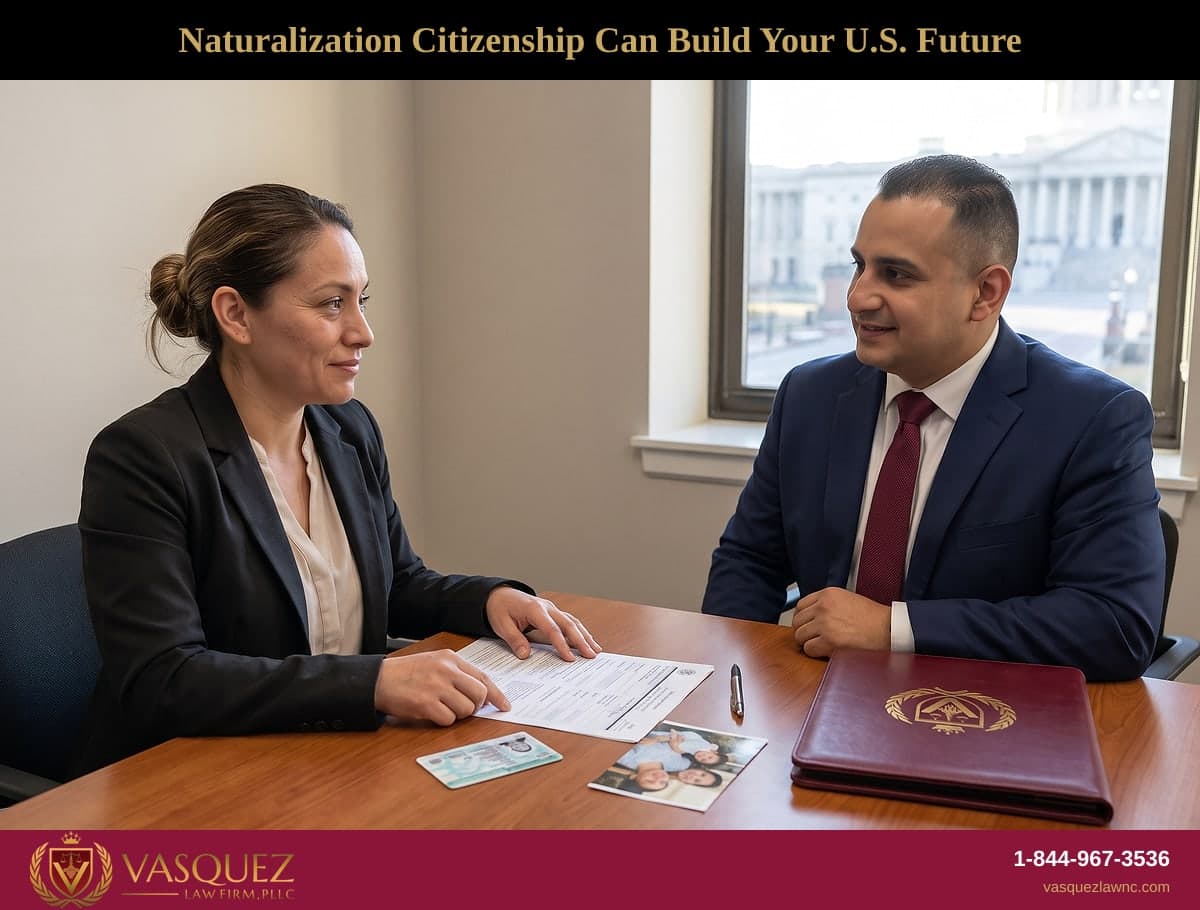
Naturalization Citizenship Can Build Your U.S. Future
By William J. Vásquez · Updated November 9, 2026
Naturalization citizenship starts with a green card. See USCIS pathways and prepare next steps. Contact Vasquez Law Firm for a free review today.
Published on November 7, 2026· Updated November 9, 2026
Talk to an immigration attorney
Free call. A clear plan for your case.
Free & confidential · Se habla espanol · Mon-Fri 8am-7pm, Sat 9am-2pm (ET)
Have questions? Talk to an attorney - free evaluation.
Call 1-844-967-3536Free Tool
Check Your USCIS Case Status Now
Enter your receipt number - get the official USCIS status in English or Spanish. No registration.
Naturalization Citizenship Can Build Your U.S. Future
Naturalization citizenship is the legal process that lets a lawful permanent resident become a U.S. citizen after meeting requirements set by Congress. USCIS lists several citizenship paths. These include paths for lawful permanent residents, spouses of U.S. citizens, military members, and certain children of U.S. citizens. Reviewing the correct path can help prevent filing errors.
Questions about naturalization citizenship can affect your family, work, travel, and long-term plans. Vasquez Law Firm offers free immigration consultations in Raleigh, NC and Orlando, FL. Se Habla Español.
Call 1-844-967-3536.
Quick Answer
Naturalization is the process by which a lawful permanent resident may receive U.S. citizenship after meeting congressional requirements under the Immigration and Nationality Act. Citizenship may also be acquired through U.S. citizen parents at birth or after birth, before age eighteen.
- Naturalization begins with lawful permanent resident status.
- USCIS identifies several possible citizenship paths.
- Marriage, military service, and parentage may affect the applicable path.
- A pathway review should happen before filing.
What does naturalization citizenship mean for a green card holder?
A person with a green card has lawful permanent resident status. That person is not automatically a U.S. citizen. The USCIS page titled Citizenship and Naturalization defines naturalization as the process through which U.S. citizenship is granted to a lawful permanent resident. The person must meet requirements established by Congress in the Immigration and Nationality Act.
Naturalization is the process by which U.S. citizenship is granted to a lawful permanent resident after meeting the requirements established by Congress in the Immigration and Nationality Act (INA).
That difference matters. Naturalization citizenship is one route to citizenship. Citizenship itself can come through more than one legal route. USCIS also explains that acquisition of citizenship comes through U.S. citizen parents. This can happen at birth or after birth but before age eighteen.
The Immigration and Nationality Act (INA) establishes the requirements for naturalization. Depending on your situation, there may be different ways to obtain citizenship. A person should not assume that a path applies only because it sounds familiar.
People seeking help with a citizenship path can review the firm’s immigration legal services for citizenship matters. The first question is usually not whether citizenship is valuable. The first question is which legal route fits the person’s history.
Naturalization versus citizenship
Naturalization is a process. Citizenship is the legal status that may result from that process. A person who acquired citizenship through a U.S. citizen parent may need a different review. That review may differ from the review for a lawful permanent resident seeking naturalization.
Which USCIS citizenship pathway may fit your situation?
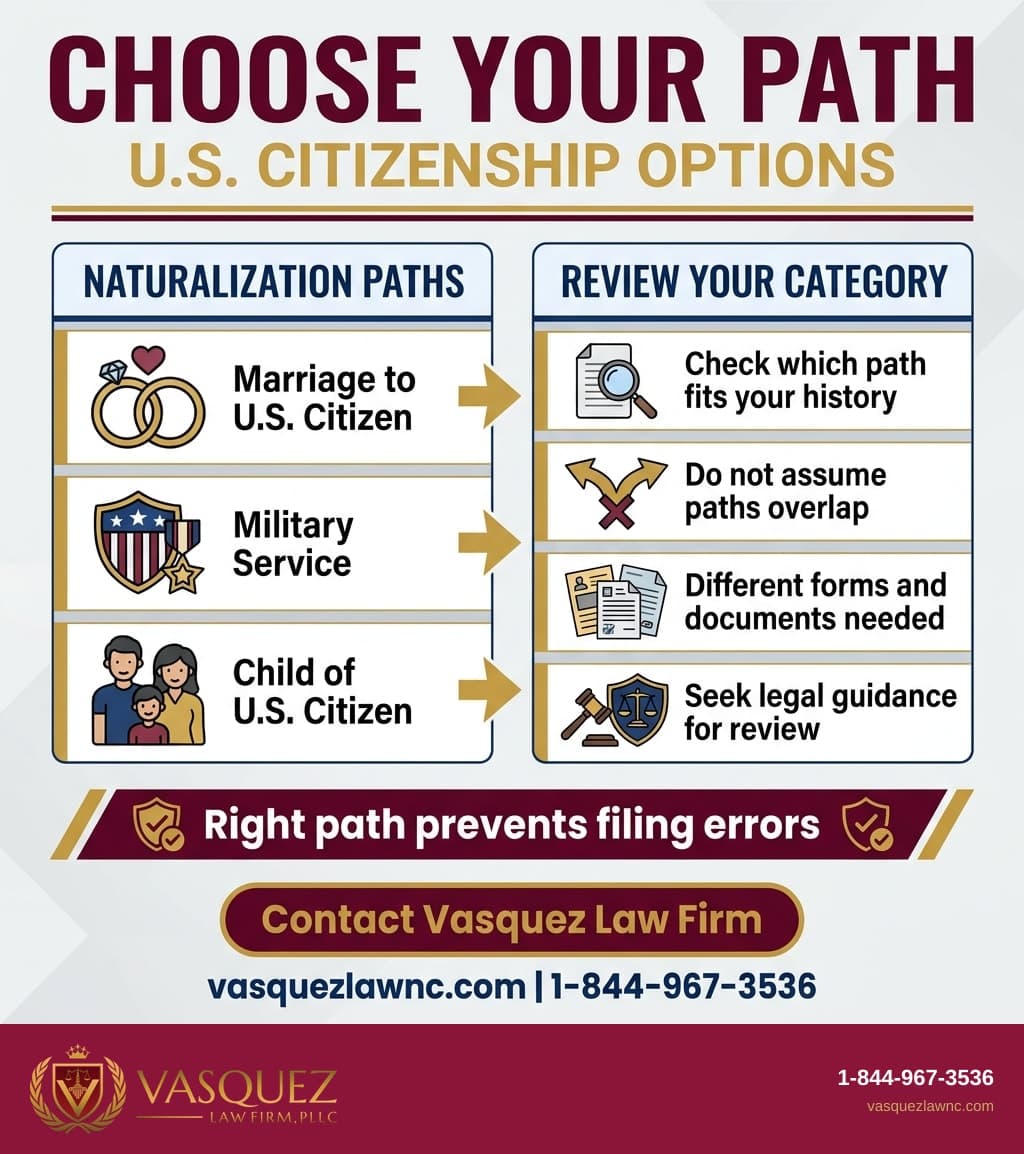
USCIS presents several starting points on its Citizenship and Naturalization page. They include a path for a lawful permanent resident. They include a path for a person married to a U.S. citizen. They also include a military path and a path for a child of a U.S. citizen. These categories start the review. They are not interchangeable labels.
Depending on your situation, there may be different ways to obtain citizenship.
The lawful permanent resident category on the USCIS page refers to a person who has held that status for five years. USCIS separately identifies people married to U.S. citizens. It also directs military members and children of U.S. citizens to different citizenship information.
Citizenship through a parent
Acquisition of citizenship is different from naturalization. Acquisition of citizenship means citizenship obtained through U.S. citizen parents. It may happen at birth or after birth, before age eighteen. This difference can change which documents and legal questions matter.
Military-related citizenship
USCIS lists service in the U.S. military as a separate path. It also directs readers to Citizenship for Military Family Members information. A review of military-related eligibility should use the facts that apply to the person.
Some readers also manage immigration court issues. The firm’s discussion of an immigration court hearing and legal preparation may help explain why the entire immigration history should be reviewed.
How does the naturalization process begin?
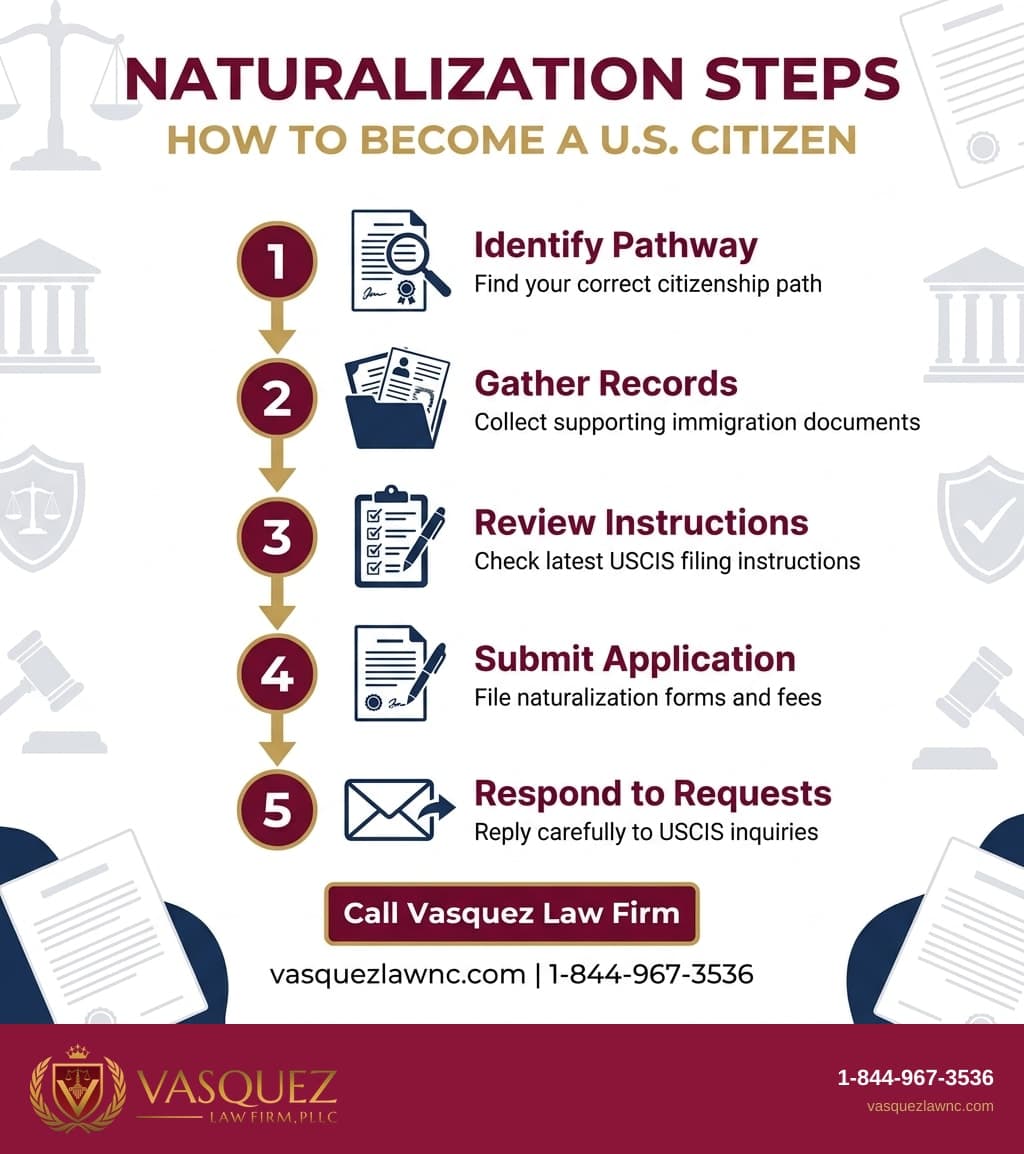
A strong naturalization process starts with finding the correct category. Do this before collecting papers. USCIS points readers to naturalization information and the USCIS Policy Manual. It also provides filing-fee materials and a naturalization fact sheet. The agency’s page also links to a resource called Ten Steps to Naturalization.
- Identify whether the matter concerns naturalization or acquisition of citizenship.
- Determine which USCIS pathway appears to apply.
- Collect records that support the selected pathway.
- Review the current agency instructions before submitting anything.
- Keep copies of every document and communication.
- Respond carefully to any agency request connected to the filing.
In our experience, applicants often arrive with a green card. However, they may not have an organized copy of their immigration history. The missed step is often identifying the legal issue. Is it naturalization? Or is it citizenship acquired through a parent? Resolving that issue first can keep the preparation focused.
USCIS publishes policy guidance at its USCIS Policy Manual. The manual is a useful agency resource. Personal facts still determine which evidence and legal route deserve attention.
Before you submit a citizenship application, request a free case review with Vasquez Law Firm. The firm meets immigration clients in Raleigh, NC and Orlando, FL. Se Habla Español.
Call 1-844-967-3536.
What documents support eligibility for naturalization?
A green card is the main starting document for a naturalization citizenship review. USCIS describes naturalization as a process for lawful permanent residents. Other records depend on the path. A person claiming citizenship through a U.S. citizen parent needs a different set of records. That set differs from the records for a lawful permanent resident applying through naturalization.
A practical record checklist
- Evidence of lawful permanent resident status.
- Identity records that match the immigration record.
- Records connected to a marriage-based pathway, if relevant.
- Military records, if that pathway is relevant.
- Documents concerning a U.S. citizen parent, if acquisition of citizenship is the issue.
- Copies of prior immigration filings and government notices.
- A written timeline of important immigration events.
Names, dates, and document details should match across the file. If records conflict, do not guess at an explanation. Gather the relevant documents. Then seek individualized guidance before filing.
Depending on your situation, there may be different ways to obtain citizenship. Explore the links below to help you determine what applies to you.
What affects the naturalization timeline and fee?
One applicant may focus on a naturalization fee. Another applicant may be deciding which citizenship route applies. USCIS lists filing fees among its additional resources. It also directs applicants to agency materials about naturalization. Before payment or submission, confirm the current agency instructions for the filing.
A useful timeline is not a promise of an outcome. It is an organized sequence. First, identify the path. Next, assemble records. Then prepare the filing. Monitor official communications. Preserve copies. Agency review times can vary based on the application and USCIS operations.
Cost factors to consider
- The filing fee shown in current USCIS materials.
- The cost of obtaining records needed for the chosen pathway.
- The need to correct inconsistent documents before filing.
- The scope of legal review needed for the person’s immigration history.
Do not rely on an old fee chart. Do not rely on a friend’s filing experience. USCIS provides a dedicated citizenship page. It also links to filing-fee information. Applicants should verify the current requirements before acting.
If a person has questions about a green-card-based citizenship path, the firm’s citizenship and immigration representation can provide a focused review of the available route.
Which naturalization citizenship mistakes can delay a filing?
A person who files under the wrong citizenship category can create confusion from the first page. USCIS clearly separates naturalization for lawful permanent residents from acquisition of citizenship through U.S. citizen parents. Treating them as the same process is a preventable mistake.
- Choosing a route by assumption: identify the USCIS pathway first.
- Calling every case naturalization: consider whether citizenship through a parent is the real issue.
- Using outdated instructions: check current USCIS materials before submission.
- Submitting incomplete personal records: build a pathway-specific checklist.
- Ignoring prior immigration paperwork: retain copies and review the full history.
- Relying on informal advice: compare it with USCIS guidance and personal facts.
- Failing to keep copies: preserve the complete filing and later notices.
If you remember one point: naturalization citizenship begins with the right legal category. A lawful permanent resident route, a marriage-related route, military service, and citizenship through a parent can call for different analysis.
When should you seek help with a citizenship application?
A filing becomes harder when the applicant cannot identify the correct path. It also becomes harder when the applicant cannot organize supporting records. These are practical reasons to seek a review before filing:
- You are unsure whether you are a lawful permanent resident applicant or may have acquired citizenship through a parent.
- You are married to a U.S. citizen and need to understand the applicable route.
- You have served in the U.S. military.
- You need to gather records connected to a U.S. citizen parent.
- Your immigration documents contain inconsistent personal information.
- You have prior immigration filings that need careful review.
- You need help reading USCIS instructions or agency notices.
Vasquez Law Firm handles immigration matters nationwide. A consultation can help organize questions before filing. It can also explain which information may matter for the path being considered.
About Vasquez Law Firm
Vasquez Law Firm provides immigration representation with a direct and caring approach. The firm’s Yo Peleo® commitment means standing up for clients. It also means explaining legal options in clear language. William J. Vasquez leads the firm. Bilingual support staff assist him.
The firm provides immigration services nationwide. It offers in-person immigration consultations in Raleigh, NC and Orlando, FL. Se Habla Español. The firm also handles personal injury, workers’ compensation, criminal defense, and traffic matters within its applicable service areas.
Attorney Trust and Experience
William J. Vasquez is admitted to the North Carolina State Bar and the Florida Bar. He has practiced for more than fifteen years. Immigration questions require individual review. The correct path depends on the applicant’s own facts and records.
Frequently Asked Questions
What is naturalization citizenship?
Naturalization is the process through which U.S. citizenship may be granted to a lawful permanent resident after the person meets requirements established by Congress in the INA. Citizenship is the legal status. Naturalization is one way to obtain it. USCIS also recognizes acquisition of citizenship through U.S. citizen parents at birth or after birth, before age eighteen.
Can a green card holder apply for citizenship?
USCIS describes naturalization as a process for lawful permanent residents. The agency’s citizenship page identifies a pathway for a lawful permanent resident of five years. Whether that category fits a particular person depends on the individual’s complete immigration facts and the requirements that apply to the filing.
Is naturalization the same as citizenship through a parent?
No. USCIS distinguishes naturalization from acquisition of citizenship. Naturalization concerns U.S. citizenship granted to a lawful permanent resident after meeting INA requirements. Acquisition concerns citizenship through U.S. citizen parents at birth or after birth, before age eighteen. The distinction affects the legal issue and the records a person should gather.
Does marriage to a U.S. citizen matter for citizenship?
USCIS identifies people married to U.S. citizens as a separate citizenship pathway. It should not be treated as a guarantee of citizenship or as a substitute for reviewing the requirements. A person considering this path should collect relevant relationship and immigration records and compare them with current USCIS instructions.
Does military service affect a citizenship pathway?
USCIS lists service in the U.S. military as a separate citizenship category. The agency also directs readers to information concerning Citizenship for Military Family Members. Military-related facts can affect the appropriate analysis, so the applicant should preserve relevant service records and review the pathway that applies to the individual circumstances.
Where can I check a naturalization filing fee?
USCIS lists filing fees as an additional citizenship resource. A person should consult current USCIS filing materials before submitting payment because agency instructions and fees should be verified at the time of filing. Do not base a filing decision on an old online chart or another applicant’s experience.
Are there other requirements for obtaining citizenship?
Depending on your situation, there may be other requirements that you must fulfill.
Is a naturalized citizen still a U.S. citizen?
Yes. Naturalization is the process by which U.S. citizenship is granted to an eligible lawful permanent resident. The route to citizenship may differ from acquisition through a U.S. citizen parent, but both concern U.S. citizenship. Questions about a particular history require a fact-specific review.
Ready to discuss naturalization citizenship? Contact Vasquez Law Firm for a free, confidential immigration consultation. Raleigh, NC and Orlando, FL appointments are available. Se Habla Español.
Start your free evaluation now
Call 1-844-967-3536.
Worried your citizenship will be questioned?
Recent enforcement makes documentation more important than ever. 15-min call to see what proof you need.
Keep Reading

For how Vasquez Law Firm can help, see our naturalization page.
Reviewed by Attorney Vasquez, Managing Attorney

William Vasquez
Founder & CEO, Vasquez Law Firm, PLLC
William Vasquez is the founder and CEO of Vasquez Law Firm, PLLC, a results-driven firm specializing in immigration, criminal defense, personal injury, and workers' compensation. A U.S. Air Force veteran and recipient of the Joint Service Achievement Medal, William is dedicated to fiercely fighting for his clients' rights.
Related Legal Services
Need legal help? Learn more about our immigration legal services, or contact us for a free evaluation.
You can also visit our NC immigration team for more information.