USCIS Reaches Both FY 2027 H-1B Caps
FY 2027 H-1B registration closed March 19, and USCIS reached both caps. Check selection rules and request a free evaluation with counsel today.
Published on October 20, 2026· Updated October 22, 2026
Talk to an immigration attorney
Free call. A clear plan for your case.
Free & confidential · Se habla espanol · Mon-Fri 8am-7pm, Sat 9am-2pm (ET)

Have questions? Talk to an attorney - free evaluation.
Call 1-844-967-3536Free Tool
Check Your USCIS Case Status Now
Enter your receipt number - get the official USCIS status in English or Spanish. No registration.
March 19, 2026, marked the close of the FY 2027 H-1B registration window. USCIS has since announced that it received enough petitions to reach both the regular H-1B cap and the advanced degree exemption cap. For workers whose careers depended on a selection notice, the result depends on one account status. It also depends on the employer’s next filing steps.
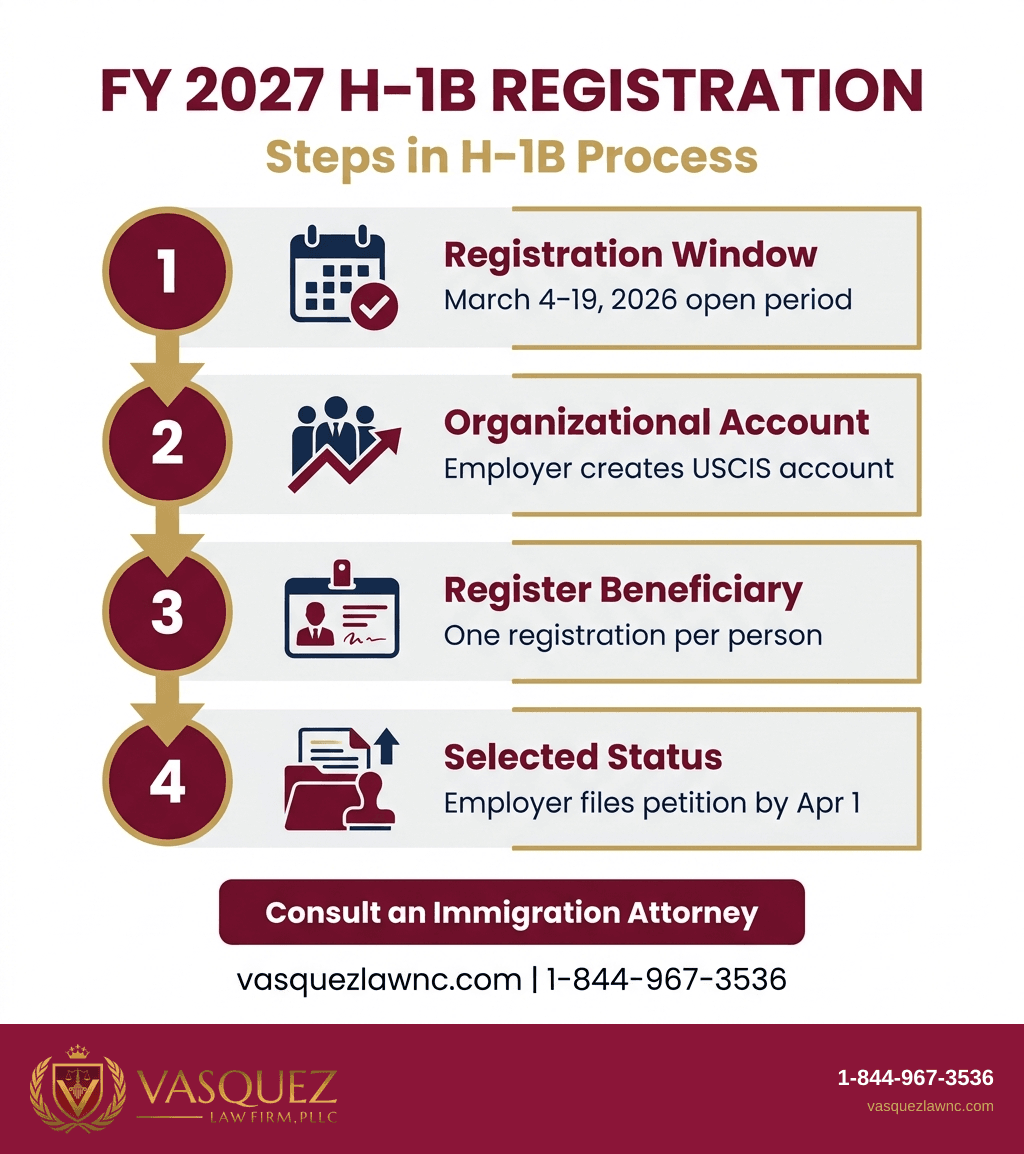
Employers could submit registrations from noon Eastern on March 4 through 5:00 p.m. Eastern on March 19. A selected registration allowed the employer to file a cap-subject H-1B petition.
Need a Work Visa or Permit?
H-1B, TN, L-1, and more. We help workers and employers navigate the visa process.
This article gives general information. It is not legal advice for any person or employer. Employers and workers reviewing a selection, duplicate entry, or filing issue can speak with our immigration attorneys. Consultations are available by virtual Zoom or phone.
What happened with FY 2027 H-1B registration?
USCIS states that the FY 2027 H-1B cap has been reached. The agency received enough petitions for the congressionally mandated regular cap of 65,000. It also received enough petitions for the U.S. advanced degree exemption, often called the master’s cap, of 20,000.
The page was last reviewed September 21, 2026. It confirms the key result for FY 2027. Cap-subject filings now depend on registrations selected during the agency’s process.
The initial registration period for the FY 2027 H-1B cap opened at noon Eastern on March 4, 2026, and closed at 5:00 p.m. Eastern on March 19, 2026.
The registration system separates an early electronic entry from the later petition. A prospective petitioner is also called a registrant. That employer had to create a USCIS organizational account. It also had to register each prospective beneficiary and pay the required registration fee. USCIS then conducted its selection process after the window closed.
The earliest filing date for petitions based on registrations selected in the initial process was April 1. USCIS intended to notify selected registrants by March 31 through their online accounts. A worker cannot file the employer’s H-1B petition independently. The employer that registered the worker must receive the selection notice. That employer must also file the petition.
Why the number of registrations changed
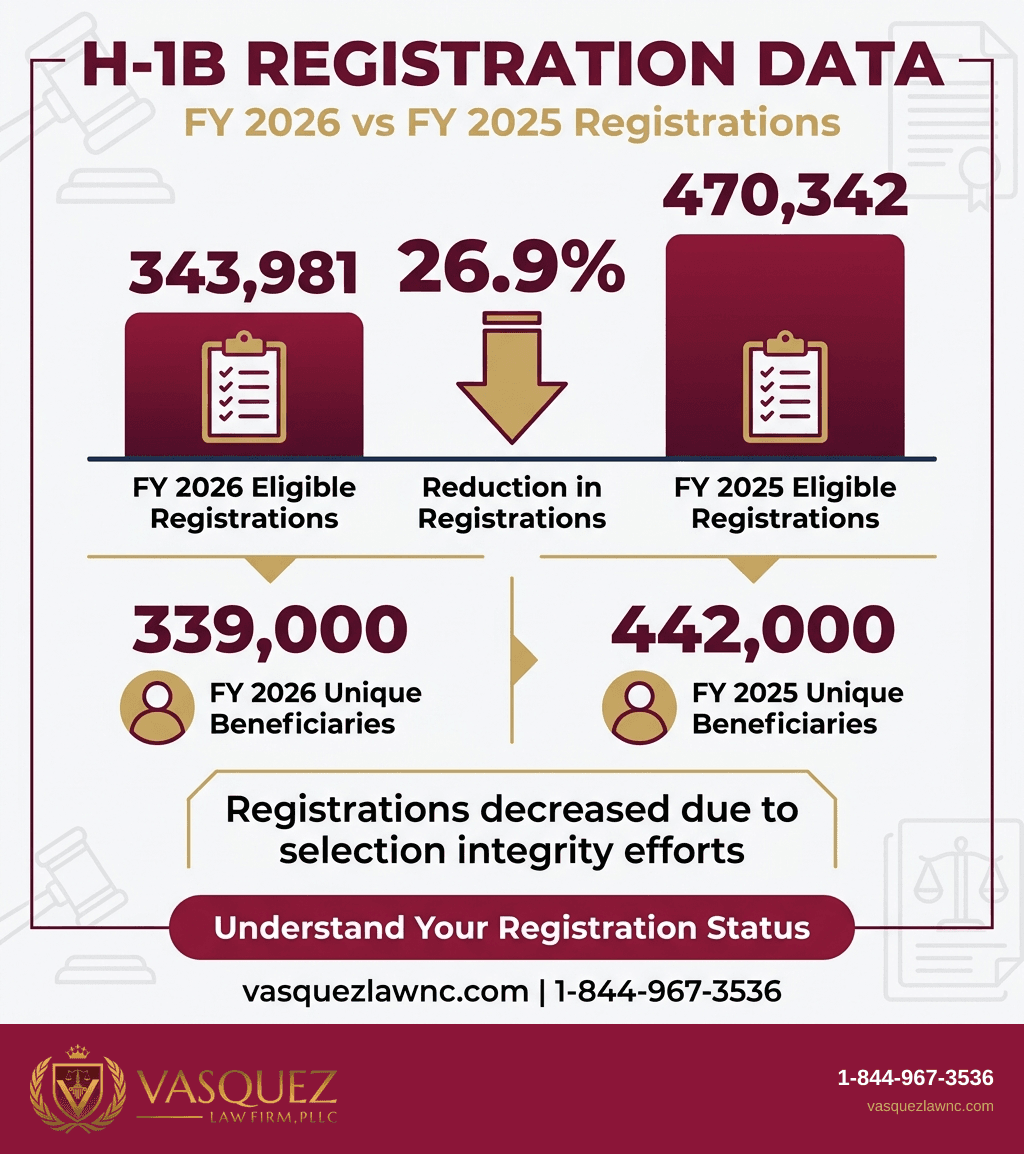
USCIS reported a sharp drop in eligible registrations in the prior cap season. FY 2026 had 343,981 eligible registrations. FY 2025 had 470,342. That was a 26.9% reduction. The agency also reported about 339,000 eligible unique beneficiaries in FY 2026. That number was down from about 442,000 in FY 2025.
The agency links part of the decline to beneficiary-centric selection and integrity efforts. This approach selects unique beneficiaries. It does not let several registrations for one person multiply that person’s chance of selection.
Who does the FY 2027 H-1B registration process reach?
The process reaches prospective petitioners seeking to file cap-subject H-1B petitions. This includes employers registering beneficiaries eligible for the advanced degree exemption. Each registration covered one beneficiary. The prospective petitioner needed an organizational account. This was true even when the employer worked with an attorney or accredited representative.
USCIS says a registrant must provide the highest Occupational Employment and Wage Statistics, or OEWS, wage level that the offered wage equals or exceeds. The level must match the relevant Standard Occupational Classification code and intended work area. In a weighted selection, USCIS generally uses the highest qualifying OEWS wage level for the beneficiary.
That wage-level requirement matters because the registration must match the job offer the employer can support. The registrant attests under penalty of perjury that the job offer is bona fide. Bona fide means genuine. The registrant also attests that the offered salary meets or exceeds the selected wage level. An inaccurate entry can affect the ability to file. It can also affect the petition later.
H-1B cap-subject beneficiaries, including those eligible for the advanced degree exemption, must have a valid “Selected” registration notification for that specific fiscal year for a registrant or representative to properly file an H-1B cap-subject petition.
A person may have registrations from more than one prospective petitioner. However, each individual prospective petitioner may submit only one registration for the same beneficiary in a fiscal year. If more than one registration from the same petitioner or its authorized representative remained submitted for that beneficiary when the initial registration period closed, USCIS removes all of that petitioner’s registrations for that beneficiary from selection. Before the period closed, the petitioner could delete extra submissions to leave only one registration.
USCIS lists several account statuses. “Selected” permits a cap-subject petition filing. “Submitted” means the registration remains eligible for selection unless USCIS later invalidates it. “Not Selected” means it cannot support a cap-subject filing. “Denied” can reflect invalid passport or travel-document information. It can also reflect duplicate registrations from the same registrant for the beneficiary.
What the current result means
Reaching both FY 2027 caps means a registration that was not selected cannot become a cap-subject FY 2027 petition. A selected registration still required a properly prepared petition. USCIS may deny a petition or revoke an approval if the registration relied on a false attestation.
In our experience, the first question is often whether an employer’s “Submitted” status can be treated like a selection notice. It cannot. The status labels have different consequences. Employers should preserve account records, payment confirmations, registration details, and any selection notice.
What law governs an H-1B cap registration?
USCIS identifies the FY 2027 limits as 65,000 under the regular cap and 20,000 under the advanced degree exemption.
These figures describe the regular H-1B visa cap and the U.S. advanced degree exemption cap. The electronic registration process decides who may proceed with a cap-subject petition.
USCIS’s registration page describes a beneficiary-centric selection process. It also refers to the final rule titled Improving the H-1B Registration Selection Process and Program Integrity. The agency says the process seeks to deter efforts to gain an unfair advantage. The concern involves multiple registrations for the same beneficiary.
The rules also address consequences after registration. Under 8 C.F.R. § 214.2(h)(10)(ii) and 8 C.F.R. § 214.2(h)(11)(iii)(A)(2), USCIS may deny or revoke a petition based on a registration containing a false attestation. The agency may also refer the person or entity that submitted a false attestation to federal law enforcement agencies.
Passport information is part of eligibility
USCIS requires valid passport or travel-document information. This includes the document number, country of issuance, and expiration date. Entries such as “NA” or “00000” are invalid. A registration with invalid information is not properly submitted under the agency’s process.
What should an employer or worker do after FY 2027 H-1B registration?
Start with the USCIS online account. The registrant and its representative should review the status for each beneficiary. They should preserve the status screen. They should also compare it with the records used for registration. A selected notice should match the fiscal year and the specific beneficiary.
- Confirm the employer identity. The petitioning employer must be the registrant named in the selected record.
- Review the job details. Compare the role, Standard Occupational Classification code, work area, offered wage, and selected OEWS wage level with the planned petition.
- Check travel-document data. Confirm that the passport or travel-document number, country of issuance, and expiration date are valid and consistent with the registration.
- Audit duplicate risk. Review internal records and communications with representatives to confirm the employer submitted only one registration for the beneficiary.
- Keep payment records. USCIS treats failed or invalid payments as an invalidated registration.
The FY 2027 registration fee was $215 for each beneficiary. The fee was non-refundable. The U.S. Department of the Treasury approved an increase in the daily credit-card transaction limit to $99,999.99 per credit card for online FY 2027 H-1B registrations and petitions. The daily credit-card transaction limit for petitions sent by mail remained $24,999.99 per credit card.
Employers planning ahead should use the duplicate-checker function and the downloadable .csv tool. USCIS says these tools do not guarantee that a duplicate will be avoided. Coordination between company personnel and authorized representatives remains essential.
Need a document-level review of an H-1B selection or registration record? Vasquez Law Firm offers free immigration evaluations nationwide by Zoom or phone. Request a free evaluation with our business immigration legal team. Se Habla Español.
What should employers watch after the FY 2027 H-1B cap was reached?
USCIS online accounts remain the direct channel for selection notices and status updates. The agency’s H-1B Electronic Registration Process page explains that registrations not selected in an initial random selection may remain “Submitted.” They may remain in that status unless denied or invalidated. This can continue until USCIS determines that the cap has been reached. USCIS has now reported that both FY 2027 caps are full.
Employers should continue to watch their account records and USCIS announcements for the fiscal year. They should also watch the USCIS Policy Manual. They should watch the H-1B registration page as well. These sources may provide agency guidance affecting future filings.
What's Your Immigration Situation?
Answer 3 questions - we'll tell you your options
Question 1 / 3
What best describes your situation?
Keep Reading
The rule for FY 2027 is clear. An employer needs a valid “Selected” registration notification for that beneficiary and fiscal year. The employer needs it to properly file a cap-subject H-1B petition. For future cap seasons, employers can reduce preventable problems. They should organize job, wage, and passport records before the registration period opens.

Frequently Asked Questions
What was the FY 2027 H-1B registration deadline?
The FY 2027 initial registration period closed at 5:00 p.m. Eastern on March 19, 2026. It opened at noon Eastern on March 4. USCIS conducted selections after the registration window closed, so employers did not need to submit on the opening day. The window is now closed, and USCIS reports that both FY 2027 caps have been reached.
What were the FY 2027 H-1B visa caps?
USCIS states that it reached the congressionally mandated 65,000 regular H-1B cap and the 20,000 U.S. advanced degree exemption cap. The advanced degree exemption is commonly called the master's cap. A valid selection notice for the beneficiary and fiscal year—not eligibility for the advanced degree exemption alone—allowed a registrant to file a cap-subject petition.
What did the FY 2027 H-1B registration fee cost?
The registration fee was $215 for each beneficiary in the FY 2027 H-1B cap process. USCIS required payment before a registrant could submit a registration for that beneficiary. The fee was non-refundable, including when a registrant deleted a duplicate entry or USCIS removed a duplicate registration from the selection process.
Can one employer submit two registrations for the same worker?
No. A prospective petitioner could have only one registration submitted for a beneficiary in the fiscal year. If more than one registration submitted by or for the same prospective petitioner remained when the initial registration period closed, USCIS would invalidate all registrations from that petitioner for that beneficiary. Before closing, the petitioner could delete extra submissions to leave only one registration. Other prospective petitioners could register the same person, provided each submitted only one registration.
What does “Submitted” mean in an H-1B account?
“Submitted” means USCIS received the registration and it was eligible for selection. After the initial selection process, it could remain eligible for a later selection unless USCIS invalidated it. It did not authorize a cap-subject petition filing. Only a valid “Selected” status for that beneficiary and fiscal year allowed a registrant or representative to properly file.
Can USCIS deny an H-1B petition after selection?
Yes. USCIS says it may deny a petition or revoke an approved petition if the registration contained a false attestation and therefore was not properly submitted. The agency requires attestations that the registration is accurate, reflects a bona fide job offer, meets the selected OEWS wage level, and was not coordinated to unfairly increase selection chances.
Sources and legal references
This information is general and may not fit every employer or beneficiary. For advice about a specific matter, contact Vasquez Law Firm for a free consultation. Business immigration consultations are offered nationwide by Zoom or phone, with in-person immigration consultations available in Raleigh, NC and Orlando, FL. Schedule your free consultation.
Reviewed by Attorney Vasquez, Managing Attorney

William Vasquez
Founder & CEO, Vasquez Law Firm, PLLC
William Vasquez is the founder and CEO of Vasquez Law Firm, PLLC, a results-driven firm specializing in immigration, criminal defense, personal injury, and workers' compensation. A U.S. Air Force veteran and recipient of the Joint Service Achievement Medal, William is dedicated to fiercely fighting for his clients' rights.
Related Legal Services
Need legal help? Learn more about experienced immigration attorneys in Charlotte, or contact us for a free evaluation.
You can also visit statewide immigration legal services for more information.