BIA Remand Jurisdiction Clarified in 2026 Appeals
BIA remand jurisdiction now returns to the Immigration Judge after a remand. Protect your record, understand hearings, and request a free evaluation today.
Published on October 12, 2026
Talk to an immigration attorney
Free call. A clear plan for your case.
Free & confidential · Se habla espanol · 24/7

Have questions? Talk to an attorney - free evaluation.
Call 1-844-967-3536Worried how the latest immigration news affects you?
Schedule a confidential case review with an immigration attorney - know exactly where you stand.
USCIS Case Status
Check your USCIS case status
Enter your receipt number and get the official status. Free, no registration.
BIA Remand Jurisdiction Clarified in 2026 Appeals
On October 2, 2026, the Board of Immigration Appeals clarified an important procedure for people fighting removal. After the Board sends a case back, BIA remand jurisdiction ends. The Immigration Judge then regains authority over the case. The ruling, Matter of C-M-H-H-, 30 I&N Dec. 124 (BIA 2026), also held that a new hearing is not automatically required after remand.
This difference can affect whether a person gets another chance to give testimony. It can also affect whether the Immigration Judge issues a new decision based on the existing record. People with a pending appeal or remanded removal case should understand the case's procedural posture. Procedural posture means the case's current place and status in the legal process. They should not assume that they will receive another hearing. This article provides general legal information, not individual legal advice.
For families facing removal proceedings, the record already created can carry enormous weight. Our immigration attorneys regularly assess how procedural orders affect the evidence a person can submit. They also assess what relief the person may still pursue. Relief means legal protection or another result that can prevent removal.
What did the BIA decide about remand jurisdiction?
The Board dismissed the appeal in Matter of C-M-H-H-, 30 I&N Dec. 124 (BIA 2026). The case involved a native and citizen of El Salvador. The Department of Homeland Security filed the notice to appear on June 30, 2020. The notice alleged removability under INA § 237(a)(1)(B), 8 U.S.C. § 1227(a)(1)(B). The allegation was based on presence in the United States in violation of law.
The respondent conceded removability. This means the respondent agreed that the government had shown a legal basis for removal. The respondent requested asylum, withholding of removal, and protection under the Convention Against Torture. This protection is commonly called CAT protection. An Immigration Judge denied those applications. In a September 24, 2021 decision, the Board found that the asylum claim was waived. It returned the case for more fact-finding and legal analysis on withholding and CAT.
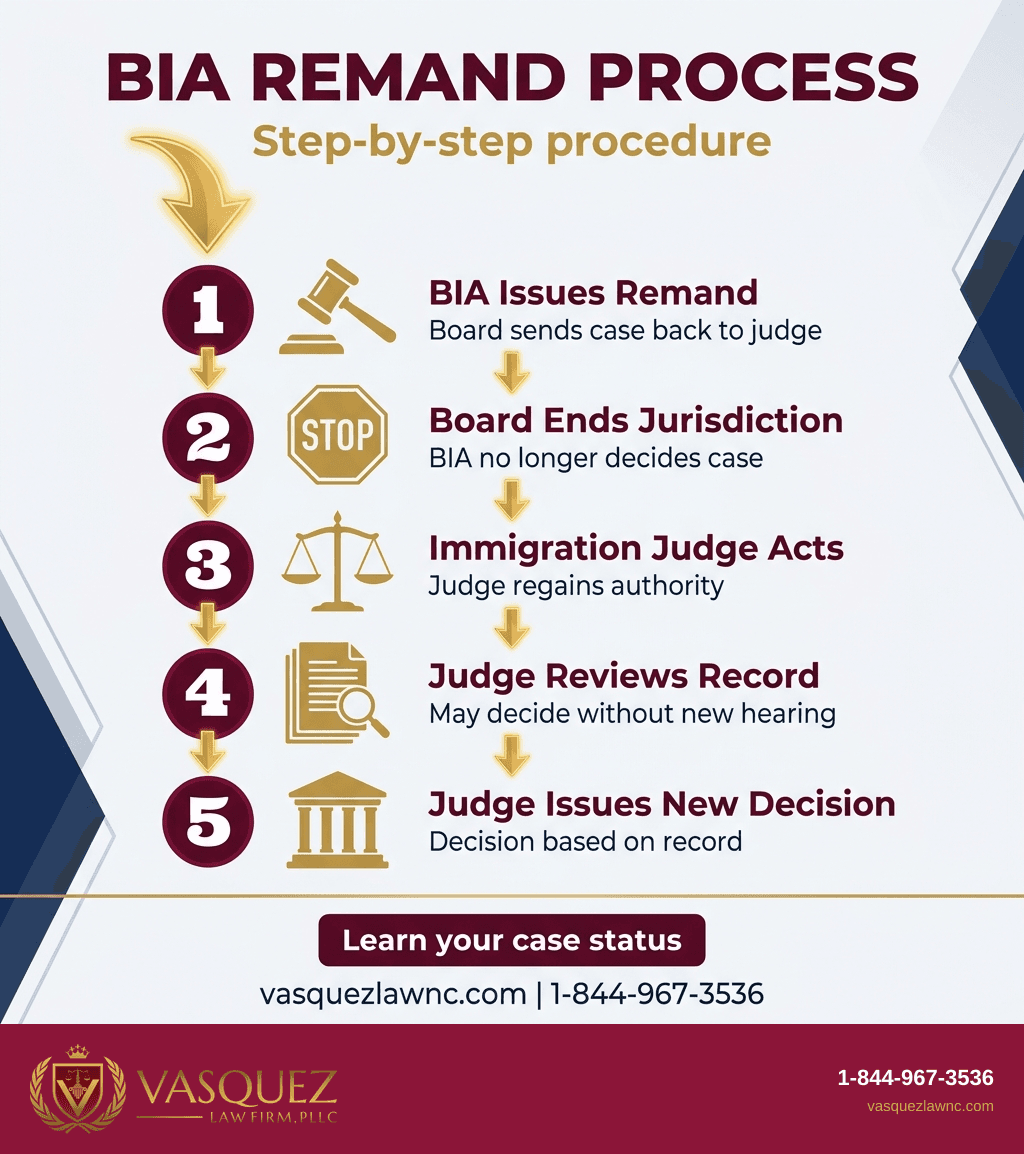
After remand, the Immigration Judge reviewed the existing record. The judge issued another decision without holding an additional hearing. The judge again denied withholding of removal and CAT protection. The respondent appealed. The respondent argued that the court should have reopened the record. The respondent also argued that the court should have allowed more testimony and evidence.
The Board does not retain jurisdiction after remanding the record to the Immigration Court.
The Board clarified its 1978 decision in Matter of Patel, 16 I&N Dec. 600. Once the Board remands a record, the Board explained, the Immigration Judge gets jurisdiction again under the governing regulations. Jurisdiction means the legal authority to decide a case or issue. That clarification is the central development in this BIA remand jurisdiction decision.
The Board also found no due process violation. Due process means the basic legal right to a fair procedure. The Board found no violation from issuing a new decision without a new hearing. It noted that the respondent had a full and fair chance to present the claims before the earlier remand. The Board denied oral argument under 8 C.F.R. § 1003.1(e)(7). It then dismissed the appeal.
Who can this BIA remand jurisdiction ruling affect?
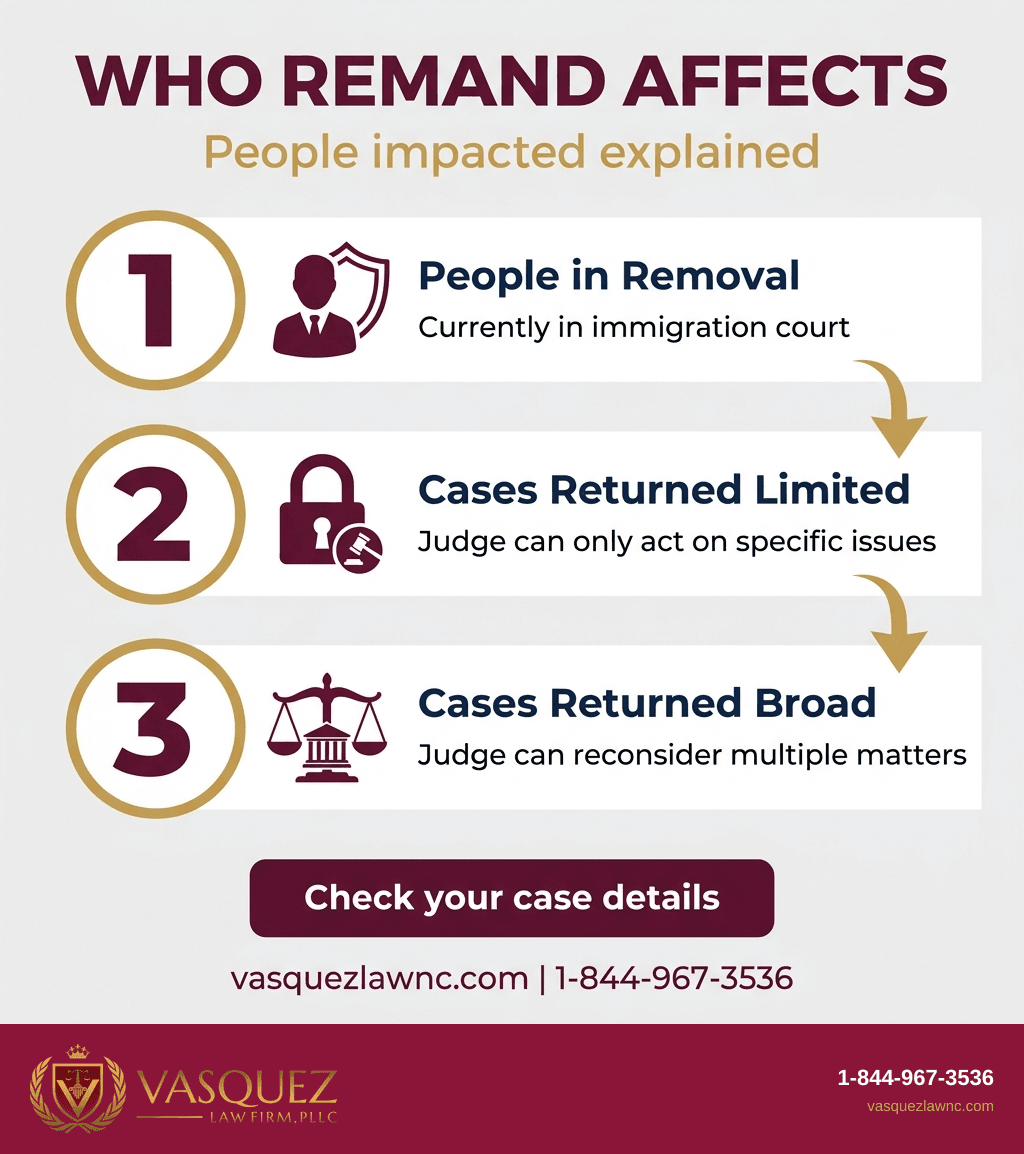
This decision matters most to people in removal proceedings. It applies when their records have been sent back from the Board of Immigration Appeals to an Immigration Court. The decision concerns the Immigration Judge's authority after remand. It does not create a new immigration benefit or protection category.
People whose cases return for a limited purpose
A remand can be narrow. The Board explained that it may return a case for a specific purpose. In that situation, the Immigration Judge may act within that purpose. The judge may not revisit issues that the Board already resolved. The decision cites background and security check remands under 8 C.F.R. § 1003.47(h) as an example.
In that setting, the wording of the remand order matters. A judge may consider the issue sent back. The judge may then issue an order on the relief or protection tied to that remand. The judge cannot use a limited remand to reconsider the Board's earlier ruling.
People whose cases return without limits
The Board said that an unqualified remand gives the Immigration Judge broader authority. An unqualified remand is an order that does not state a specific limit. The judge may address matters that are appropriate under the Immigration and Nationality Act and regulations. The judge must still follow the terms of the Board's order.
Still, broader authority does not mean an automatic second merits hearing. A merits hearing decides the main claims for immigration relief. In Matter of C-M-H-H-, the Board held that the earlier remand did not direct the judge to take new testimony. It also did not direct the judge to reopen the record. The judge could reassess withholding and CAT claims by using the evidence already in the file.
The Immigration Judge’s issuance of a new decision on remand without holding another hearing did not violate the Board’s remand order nor deprive the respondent of due process.
The cases we handle often turn on a practical question raised right after remand. Does the order permit new evidence? Or does it require the judge to decide from the existing record? Readers can also review our discussion of BIA asylum abandonment rules. That article gives another example of how procedure can affect available relief.
What law governs an Immigration Judge after remand?
Federal immigration regulations divide authority between Immigration Judges and the Board of Immigration Appeals. Under 8 C.F.R. §§ 1003.1(b) and 1003.3, the Board has appellate jurisdiction while an appeal is pending. Appellate jurisdiction means authority to review a lower decision. After a remand, the Board held, the Immigration Judge gets jurisdiction again. This result follows 8 C.F.R. §§ 1003.10 and 1240.1.
What an Immigration Judge may do
Section 1003.10(b) gives Immigration Judges independent judgment and discretion. Discretion means the power to choose among lawful options. The section permits action needed or appropriate to resolve matters within the judge's authority. Section 1240.1(a)(1)(iv) also authorizes other action that follows applicable law and regulations.
The Board paired those provisions with an important limit. An Immigration Judge cannot reconsider a prior Board decision just because the case returned to Immigration Court. That principle appears in Matter of M-D-, 24 I&N Dec. 138 (BIA 2007). The 2026 decision discusses that case.
When reopening may be available
A motion to reopen is a request to consider new facts after proceedings have ended or moved forward. The Board explained that an Immigration Judge may decide a properly filed motion to reopen after jurisdiction returns. Under 8 C.F.R. § 1003.23(b)(3), the person filing the motion must submit material evidence. The evidence must have been unavailable before. It also must not have been possible to discover or present it at the prior hearing.
In this case, the respondent did not establish material changed country conditions. The respondent also did not establish ineffective assistance of counsel or previously unavailable material evidence. Ineffective assistance of counsel means serious lawyer error that harms a person's case. The Board therefore found no basis to reopen. That analysis is separate from the general rule on BIA remand jurisdiction. Still, it shows why preserving evidence matters from the first merits hearing.
What should I do if my removal case is remanded?
The first document to read after remand is the Board's written order. Save the complete decision. Include the order section and every instruction that defines the remand's scope. Scope means the limits of what the order covers. A limited order can restrict what the Immigration Judge may revisit. An unqualified order may allow broader proceedings.
Build a clear procedural file
Collect the notice to appear, Immigration Judge decisions, Board decisions, hearing notices, appeal filings, prior exhibits, and proof of service. Proof of service shows that a document was delivered in the required way. Keep a dated timeline of every hearing, filing, and order. Compare the Board's directions with the Immigration Court's next notice.
If you believe important evidence was unavailable at the earlier hearing, preserve documents showing when it became available. Also preserve documents showing why it could not have been discovered sooner. A motion to reopen has requirements under the regulations. Simply saying that more evidence exists will not by itself show eligibility.
Protect the record before the next decision
Ask an attorney to review the remand order. The review should determine whether the order calls for a new hearing, more findings, review of existing evidence, or a specific procedural action. Do not assume that a remand creates a chance to repeat testimony. The result in Matter of C-M-H-H- shows why that assumption can be costly.
For guidance on Immigration Court procedures, our nationwide immigration legal team can review the posture of a removal case. Se Habla Español. Request a free evaluation through Vasquez Law Firm's contact page.
What should I watch after a BIA remand?
The next controlling event in a remanded case is usually the Immigration Court's action. That action must stay within the Board's order. Watch for a hearing notice, briefing instruction, decision, or other filing notice. Keep copies of every document submitted to or received from the court.
The key question is whether the Board's language limits the remand to a specific issue. Another question is whether the Board returns the case without a stated limitation. That language sets the range of matters the Immigration Judge may address. It does so under the Board's explanation of BIA remand jurisdiction.
In an individual case, it may not yet be settled whether the specific remand order permits new testimony. It may instead require a decision from the existing record. The reliable step is to read the order itself. Also monitor the official EOIR filing and hearing communications in the case.
People tracking related removal developments may find our report on pop-up immigration courts in 2026 useful. Federal court procedure and immigration court procedure are different. Case-specific advice therefore remains important.
Frequently Asked Questions
What is BIA remand jurisdiction?
BIA remand jurisdiction describes which immigration adjudicator has authority after the Board sends a case back to Immigration Court. In Matter of C-M-H-H-, the Board clarified that it does not retain jurisdiction after remanding the record. The Immigration Judge reacquires authority and must proceed under the remand order and federal regulations.
Does a remand guarantee another Immigration Court hearing?
No. The Board held that another hearing was not required in this case because its earlier order did not direct the Immigration Judge to reopen the record or take further testimony. The respondent had already received a full and fair opportunity to present the claims. The specific wording of the remand order remains central.
Can an Immigration Judge reconsider what the BIA already decided?
No. The Board explained that an Immigration Judge may not reconsider a prior Board decision after remand. If the remand has a limited purpose, the judge may act only within that boundary. The judge may address unresolved matters as permitted by an unqualified remand, the INA, and applicable regulations.
What is withholding of removal?
Withholding of removal is protection under INA § 241(b)(3), 8 U.S.C. § 1231(b)(3). In this decision, the respondent sought it along with CAT protection. The Immigration Judge concluded that the respondent did not meet the burden of proof, and the Board adopted and affirmed that conclusion after reviewing the record.
What is CAT protection?
CAT protection refers to regulations implementing the Convention Against Torture. The relevant regulations include 8 C.F.R. §§ 1208.16(c), 1208.17, and 1208.18. In Matter of C-M-H-H-, the Board upheld the denial of CAT protection because it agreed that the respondent did not meet the applicable burden of proof.
Can new evidence support a motion to reopen after remand?
It can, if the motion meets the regulatory standard. The Board explained that a properly filed motion to reopen requires material evidence that was previously unavailable and could not have been discovered or presented at the former hearing. The decision found that this respondent had not established such a basis for reopening.
Need a careful review of a remand order or removal case? Vasquez Law Firm offers free immigration consultations for clients nationwide, with in-person consultations in Raleigh, NC and Orlando, FL. Request your free evaluation to discuss your circumstances. This article is general information, not legal advice, and no outcome can be guaranteed.
Sources
Reviewed by Attorney Vasquez, Managing Attorney
Need legal help?
Immigration in NC and FL. Personal injury and workers compensation across NC. Criminal defense in Johnston, Harnett, Pitt and Cumberland counties, and traffic tickets in 11 NC counties. Tell us your county and we will tell you exactly what we can do.
Keep Reading


William Vasquez
Founder & CEO, Vasquez Law Firm, PLLC
William Vasquez is the founder and CEO of Vasquez Law Firm, PLLC, a results-driven firm specializing in immigration, criminal defense, personal injury, and workers' compensation. A U.S. Air Force veteran and recipient of the Joint Service Achievement Medal, William is dedicated to fiercely fighting for his clients' rights.
Related Legal Services
Need legal help? Learn more about immigration lawyers in North Carolina, or contact us for a free evaluation.
You can also visit NC immigration legal help for more information.