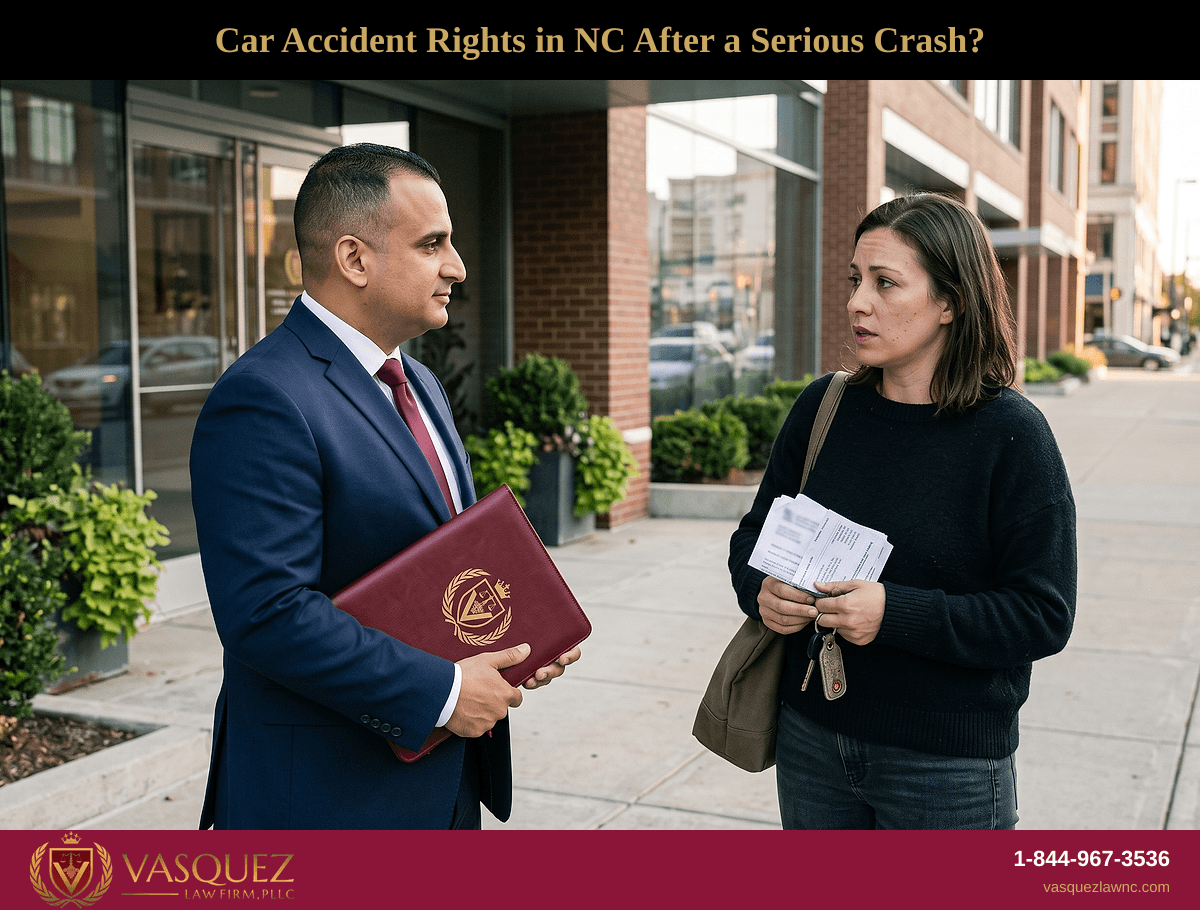
Car Accident Rights in NC After a Serious Crash?
What are your legal rights after a serious car accident in NC? Protect evidence, understand insurance options, and call for a free case evaluation.
Published on October 17, 2026· Updated October 17, 2026
Injured? Get what your case is worth
Free review.
Free & confidential · Se habla espanol · Mon-Fri 8am-7pm, Sat 9am-2pm (ET)
Have questions? Talk to an attorney - free evaluation.
Call 1-844-967-3536Get What Your Injury Is Worth
Schedule your consultation.
Car Accident Rights in NC After a Serious Crash?
A serious crash can leave you with injuries, vehicle damage, and insurance calls at the same time. After a serious car accident in North Carolina, your legal rights include collecting information, choosing a repair shop, making available insurance claims, and disputing some value decisions. This guide explains practical steps described by the N.C. Department of Insurance.
If a serious crash has disrupted your life, Vasquez Law Firm offers free case evaluations by phone for people anywhere in North Carolina. Se Habla Español.
Call 1-844-967-3536.
Quick Answer
After a serious North Carolina car accident, protect safety first. Call police when injuries or a hit and run are involved. Collect identifying and insurance details. Report the claim. An insurer investigates fault. A disagreement about negligence or value may require further action.
- Move to a safe place if possible.
- Record driver, vehicle, witness, and policy details.
- Keep repair estimates and medical bills.
- Do not agree to forget the accident.
- Ask for legal guidance if negotiations fail.
What legal rights do you have after a serious car accident?
A driver may leave a crash scene because the damage seems minor. Later, the driver may find hidden vehicle damage or an injury. For this reason, the N.C. Department of Insurance tells drivers not to make an agreement to forget the collision.
Don’t agree to forget about the accident. You may have hidden damages, unknown injuries or later find that a lawsuit has been filed against you.
Your immediate rights include choosing the repair shop you prefer. An insurance company may suggest a facility. Its suggestion does not remove your right to choose. Read more about North Carolina personal injury representation after a collision if injury losses and insurance questions become harder to handle.
There are different claim paths. A first-party claim is a claim under your own policy. A third-party claim seeks payment under another person’s liability coverage. It applies when that person is legally responsible. The N.C. Department of Insurance explains that an assigned adjuster will identify the next claim steps.
Fault and contributory negligence
Fault matters because North Carolina follows contributory negligence. Contributory negligence means that a person’s own conduct helped cause the accident. The Department explains that a driver who contributed to the accident may be barred from collecting damages on a liability claim. An adjuster investigates negligence. Negligence means failing to use reasonable care. A dispute about negligence may ultimately be resolved in court.
N.C. Gen. Stat. § 20-279.21 addresses motor vehicle liability insurance requirements. It does not decide fault in a specific crash. Evidence can matter when the parties disagree. This evidence may include the crash report, photographs, witness contact information, and vehicle damage.
What should you do immediately after an accident?
The first practical decision is safety. Stop your car in a safe place. Move your car, if needed, to protect against further damage and keep from blocking traffic. Call the police, especially when there are injuries or hit and run accidents.
- Get the other driver’s name, address, telephone number, license plate, and driver’s license number.
- Record the insurer name and policy number exactly as shown on the insurance card.
- Get witness names, addresses, and telephone numbers.
- Contact your insurance agent or insurance company to report the claim.
- Contact the other driver’s insurer when that person may be responsible for your loss.
A crash report can help preserve basic collision information. The North Carolina DMV explains how to obtain North Carolina crash reports. Keep a copy with your photographs, repair records, and claim letters or emails.
Documents to preserve
Save the policy information exactly as recorded. Also save witness details, repair estimates, bills, and letters or emails from insurers. If an adjuster asks for information, keep a copy of what you provide. A complete file makes it easier to check whether an offer covers the losses claimed.
We often see injured people arrive with photographs and medical bills. They may not have the other driver’s policy details or witness contacts. Those early records can become important if fault is disputed. Preserving them promptly is practical.
How does insurance handle vehicle repair and total loss?
A repair dispute often starts with an estimate that seems too low. For a repairable vehicle, the insurer is responsible for repair costs in the claim situations described by the Department. You may choose your own repair shop. This remains true even if the insurer recommends another facility.
No insurance company shall require the use of after-market parts unless the part is equal to the original part in terms of fit, quality, performance and warranty.
The Department states that estimates must include modifications required by the use of qualifying after-market parts. If repairs equal or exceed 75 percent of the vehicle’s preaccident actual cash value, the insurer must consider the vehicle a total loss. Actual cash value means the local market value of the totaled vehicle.
Using the appraisal provision
For a disagreement about the amount payable under your own collision or comprehensive coverage, you can elect to use your policy’s appraisal provision. An appraisal provision is a policy process for deciding a dispute about value or loss. You and the insurer choose competent appraisers. Those appraisers select an umpire. They state actual cash value and loss separately. They submit unresolved differences to the umpire. A decision by any two is binding under the process described by the Department.
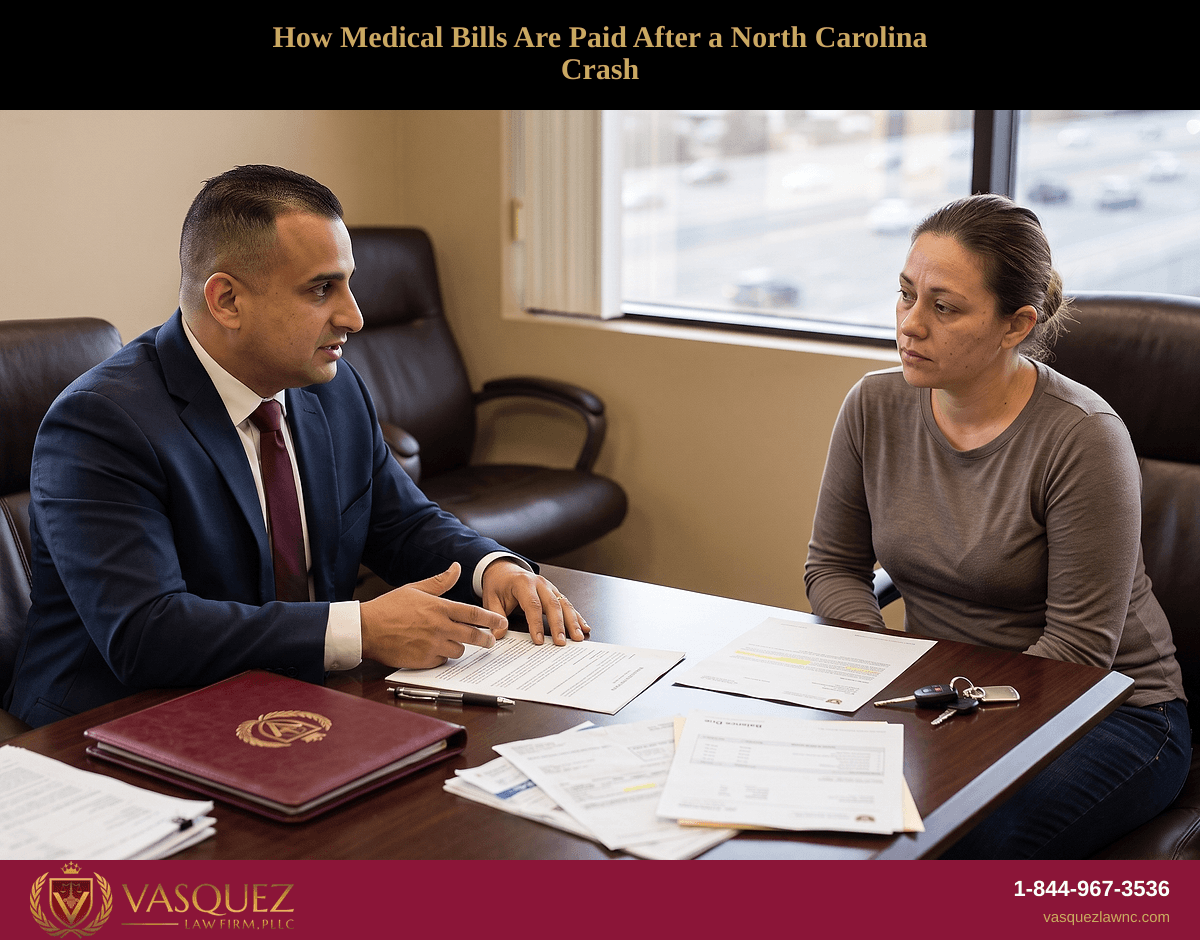
Each side pays its chosen appraiser. The sides share appraisal and umpire expenses equally. Third-party claimants may instead use their own collision or comprehensive coverage, if available. Their insurer may then seek recovery from the liable company. Consider reviewing our guide to medical bills after a North Carolina accident when injury treatment and vehicle losses overlap.
What losses can an injury claim include after a crash?
A hospital visit after a serious crash can create several types of loss. The Department states that purchased Medical Payments coverage may help with doctor and hospital bills regardless of fault. Bodily injury claims can include doctor and hospital bills, laboratory fees, lost wages, and pain and suffering directly resulting from the accident.
Pain and suffering does not have a standard formula under the North Carolina General Statutes. The Department explains that the statutes provide no guidelines for calculating the amount owed for pain and suffering. Therefore, review a settlement offer against the records that support the claimed loss. Do not accept an offer based only on a general impression.
For help assessing available choices, the firm’s car accident injury claim services in North Carolina focus on the records, insurance coverage, fault questions, and losses involved. This is general information. It is not a prediction about any settlement.
Reviewing a settlement offer
Ask whether the offer identifies vehicle damage, medical bills, wage loss, and other claimed losses. Compare the offer with the documents already collected. If you cannot agree with the insurance company about the value of a bodily injury claim, the Department advises seeking legal advice.
What mistakes can hurt your car accident claim?
One common mistake is treating a collision as finished before all damage is known. Another mistake is discarding the exact policy information, repair estimate, or witness contact information collected at the scene. Each item may matter if an insurer questions responsibility or the amount of loss.
- Leaving without key details: Record driver, plate, insurer, and policy information.
- Skipping witness contacts: Obtain names, addresses, and telephone numbers.
- Accepting a shop requirement: Remember that you can select your repair shop.
- Ignoring an estimate dispute: Review the appraisal provision in your own policy.
- Forgetting your own coverage: Check whether collision, comprehensive, or Medical Payments coverage applies.
- Settling without records: Compare an offer with bills, estimates, and other documentation.
- Assuming fault is simple: Contributory negligence can make fault disputes significant.
If you remember one point, preserve information before memories, records, and physical evidence become harder to locate.
How do North Carolina car accident rules affect your next step?
North Carolina insurance questions can depend on whether you are a first-party claimant or a third-party claimant. A claimant is a person making an insurance claim. You can elect to use your own policy’s appraisal provision when you disagree with your collision or comprehensive insurer about actual cash value or the amount of loss. A third-party dispute may require continued negotiation with the company’s appraiser or a court decision.
The N.C. Department of Insurance’s auto and vehicle insurance information describes consumer insurance topics. After a serious crash, keep every policy document and adjuster communication together. This file helps identify which claim path is being discussed.
When should you call a lawyer after a serious accident?
A consultation can help before an insurance disagreement becomes fixed. Call for a free case evaluation if any of these circumstances apply:
- You were injured and have doctor, hospital, or laboratory bills.
- The insurer disputes who caused the accident.
- You are concerned that contributory negligence will be raised.
- The vehicle is treated as a total loss.
- You disagree with actual cash value or a repair estimate.
- You are considering appraisal under your own policy.
- You received a settlement offer that does not match your records.
- You need help organizing claim documents and communications.
Vasquez Law Firm provides bilingual support for North Carolina injury matters. Se Habla Español.
Call 1-844-967-3536.
About Vasquez Law Firm
Vasquez Law Firm handles immigration, personal injury, workers’ compensation, criminal defense, and traffic violation matters. For personal injury cases, the firm serves people throughout North Carolina by phone. It offers bilingual support staff for clear communication.
William J. Vasquez leads the firm with a client-focused approach. The firm’s motto, Yo Peleo®, reflects a commitment to standing up for clients while treating them with care and respect. Se Habla Español.
Attorney trust and experience
William J. Vasquez is admitted to the North Carolina State Bar. A serious collision involves facts, insurance documents, and personal consequences. The firm can explain the process and discuss whether a free case evaluation is appropriate.
Frequently Asked Questions
Should I call police after a car accident?
The N.C. Department of Insurance advises calling police, especially when injuries occurred or the crash involved a hit and run. Move the vehicle to a safe place if needed to protect against further damage or avoid blocking traffic. The police call does not decide every insurance issue, but it is one of the accident checklist steps described by the Department.
Can I choose my own repair shop?
Yes. The Department explains that an insurer may recommend a repair shop, but you have the right to select the repair shop of your choice. The amount the insurer determines is payable under the policy is paid whether or not you use the recommended repair service. Preserve estimates and related communications for your records.
What happens if my car is a total loss?
Under the Department’s explanation, a vehicle must be considered a total loss when the total repair cost equals or exceeds 75 percent of its preaccident actual cash value. The insurer is responsible for actual cash value, which represents the vehicle’s local market value. Keep documents that identify the valuation and repair figures.
What can a bodily injury claim include?
The Department states that bodily injury claims can include doctor and hospital bills, laboratory fees, lost wages, and pain and suffering directly resulting from the accident. Purchased Medical Payments coverage may assist with doctor and hospital bills regardless of fault. The documents supporting each claimed loss can be important during insurance discussions.
How is fault decided after a North Carolina accident?
An insurance adjuster investigating the accident attempts to determine negligence or fault. The Department explains that North Carolina contributory negligence can bar a driver from collecting damages on a liability claim if that driver contributed to the accident. A disagreement over negligence may ultimately need resolution in court.
What if I disagree with my insurer’s vehicle value?
If you are a first-party claimant and disagree with the amount of loss, review the appraisal provision in your policy. The Department describes a process involving appraisers selected by you and the insurer, plus an umpire selected by the appraisers. The process addresses actual cash value and the amount of loss.
Can I use my own collision coverage after another driver caused the crash?
The Department explains that a third-party claimant who disagrees with the liable company’s amount may file a claim under personal collision or comprehensive coverage, if that coverage exists. The person’s insurer can then seek recovery from the liable company. Review your policy and claim options carefully before making decisions.
Should I accept a settlement offer after a serious car accident?
Compare any offer with the records of vehicle damage and injury-related losses. The Department explains that North Carolina statutes provide no guidelines for calculating pain and suffering. If you and the insurance company cannot agree on the value of a bodily injury claim, seeking legal advice may help you understand the available options.
Sources and References
- N.C. Department of Insurance, After an Accident
- North Carolina DMV Crash Reports
- N.C. Department of Insurance Auto and Vehicle Insurance
After a serious crash, preserve your records and get clear information about your choices. Contact Vasquez Law Firm for a free case evaluation. Se Habla Español.
Start Your Free Evaluation Now
Call 1-844-967-3536.
Injured through no fault of your own?
15-min case review — we tell you what your claim is worth.

Keep Reading


For how Vasquez Law Firm can help, see our car accidents page.
Reviewed by Attorney Vasquez, Managing Attorney

William Vasquez
Founder & CEO, Vasquez Law Firm, PLLC
William Vasquez is the founder and CEO of Vasquez Law Firm, PLLC, a results-driven firm specializing in immigration, criminal defense, personal injury, and workers' compensation. A U.S. Air Force veteran and recipient of the Joint Service Achievement Medal, William is dedicated to fiercely fighting for his clients' rights.
Related Legal Services
Need legal help? Learn more about our personal injury legal services, or contact us for a free evaluation.
You can also visit our NC injury attorneys for more information.