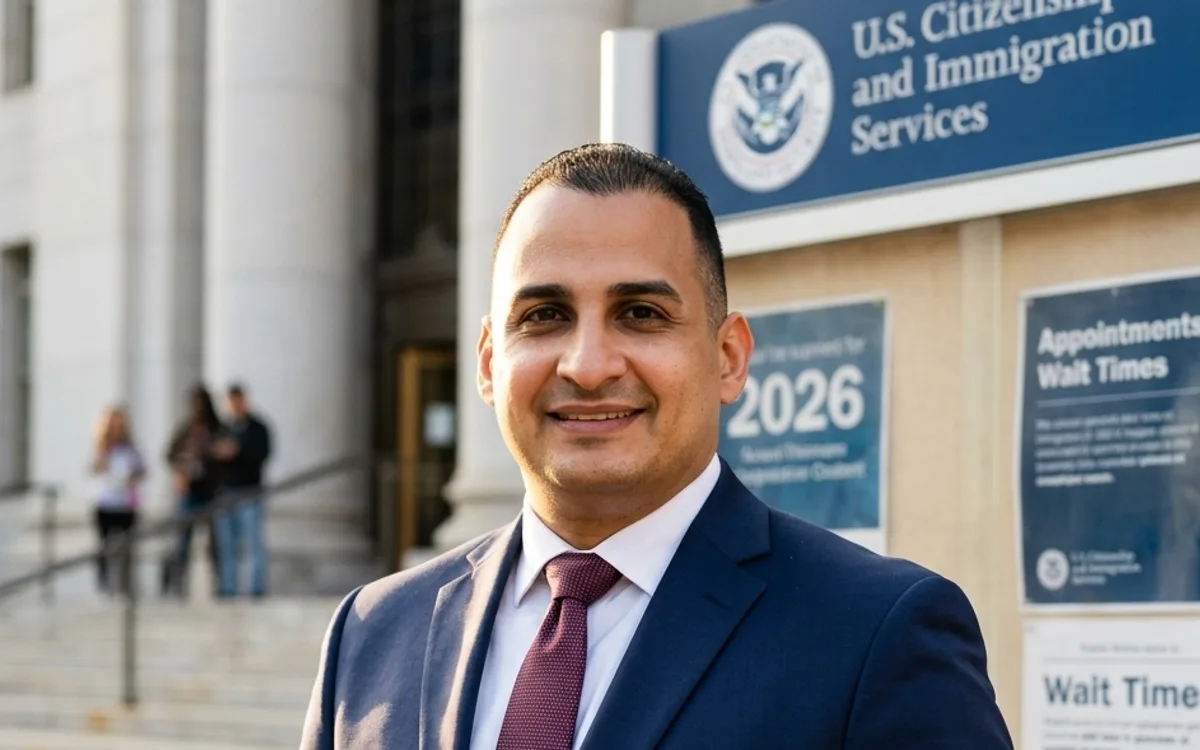
In 2026, the State Department narrowed interview-waiver eligibility, moved staff toward high-backlog posts, and raised visa fees, pushing more applicants back into in-person interview lines and adding weeks to wait times at busy consulates. Immigrant visa cases still run through the National Visa Center on a separate, generally slower track than nonimmigrant visas. Check your specific consulate's current wait time before assuming a date holds.
Last updated March 3, 2026. Reviewed by William J. Vasquez, managing attorney at Vasquez Law Firm, PLLC, admitted to the North Carolina State Bar, with more than 20 years handling consular processing appeals and family-based petitions filed out of North Carolina.
The Bureau of Consular Affairs changed three things at once starting in January 2026. It narrowed the interview waiver under INA §222(h) to applicants renewing the same visa class within 12 months of expiration, down from a much wider window in prior years. It shifted consular officer staffing toward posts carrying the largest first-time applicant backlogs. It also raised the machine-readable visa application fee. Together, those changes pushed people who used to qualify for mail-in renewal back into interview lines, which is the mechanical reason wait times grew this year, not a general slowdown across the board.
'Clients call assuming the embassy lost their file,' Vasquez said. 'Usually the appointment system just reclassified them. Someone who renewed by mail in 2023 may now need a full interview slot because the waiver window shrank. We check the post's current category rules before telling a client what to expect, because the rules differ by consulate and by visa class.'
Immigrant visa cases and nonimmigrant visa cases move on separate tracks. The National Visa Center collects your DS-260 and civil documents first, then transfers the file to the consulate only after your priority date is current on the monthly Visa Bulletin. Nonimmigrant applicants skip the NVC and schedule directly through the consulate's own online system after filing Form DS-160. A post can have a short tourist-visa wait and a long immigrant-visa backlog at the same time.
Below are appointment wait times for six high-volume posts, pulled from the State Department's public visa wait-time tracker at travel.state.gov on March 3, 2026. These figures move weekly. Treat them as a snapshot, not a promise.
| Post | Visitor visa wait | Student visa wait | Immigrant visa interview backlog |
|---|---|---|---|
| Ciudad Juarez, Mexico | 62 days | 12 days | 4-6 months |
| Mexico City, Mexico | 210 days | 18 days | 5-7 months |
| Manila, Philippines | 340 days | 21 days | 8-10 months |
| Santo Domingo, Dominican Republic | 285 days | 30 days | 6-8 months |
| New Delhi, India | 410 days | 45 days | 9-11 months |
| Bogota, Colombia | 190 days | 25 days | 5-7 months |
A refusal slip is not always a denial. A consular officer issues a §221(g) refusal when the case needs more documents or more review before a final decision, and the code on the slip controls what happens next.
| §221(g) code | What it means | Typical resolution time |
|---|---|---|
| Administrative processing | Security or database check pending | 60 to 180 days |
| Missing documents | Consulate needs a specific form or record | 2 to 4 weeks after you submit it |
| Ineligibility waiver needed | Applicant must file Form I-601 or I-212 | 6 to 18 months |
| Further review of eligibility | Officer wants supervisory sign-off | 30 to 90 days |
Interview waivers are not applied the same way across visa categories, and the 2026 rule change did not touch every category equally.
| Visa category | Waiver eligible in 2026 | Renewal window required |
|---|---|---|
| B1/B2 visitor | Yes, same class only | Within 12 months of expiration |
| F-1 student | Limited; first-time applicants excluded | Within 12 months, same school |
| H-1B specialty worker | Yes, same employer | Within 12 months |
| L-1 intracompany transfer | Case by case, post discretion | Within 12 months |
| Immigrant visa (all categories) | No | In-person interview always required |
How does a multiple-entry visa renewal appointment differ from a first-time application? A renewal applicant who still qualifies for the waiver under the 12-month rule can often submit documents through a drop-box or courier process without an interview. Someone renewing after the 12-month window, or switching visa categories, goes back into the standard interview queue at that post's current wait time.
Can a dependent or derivative applicant, a spouse or minor child on a K, H-4, or immigrant visa petition, be scheduled with the principal applicant? Usually yes, but the consulate schedules dependents as separate case numbers linked to the principal's file. If the principal's priority date retrogresses on the Visa Bulletin after NVC has already scheduled the interview, the consulate can cancel and rebook the entire family unit rather than just the principal.
Does paying an expedite request change the wait time? Expedite requests are granted for a documented emergency, such as a death in the family or an employer's documented urgent need, not for general impatience. Most posts decide expedite requests within a few business days, but approval does not guarantee a specific new date.
What should you do if your case sits in administrative processing past 180 days? You can submit a status inquiry through the consulate's own online form, and after significant delay some applicants file a writ of mandamus in federal district court to compel a decision. That litigation step is separate from anything the consulate itself controls, and it does not guarantee a faster or favorable outcome, only a court order requiring the agency to act.
If your appointment moved, your case came back with a §221(g) code, or you are not sure whether your renewal still qualifies for the waiver, our immigration team can review your NVC file and consulate correspondence before you commit to travel for a second interview. This page is part of our broader Immigration Law coverage, alongside our material on adjustment of status and family-based petitions. Call our office or submit the intake form on our immigration law page, and bring your DS-160 or DS-260 confirmation number to the consultation so we can check the current rule for your specific post and visa class.