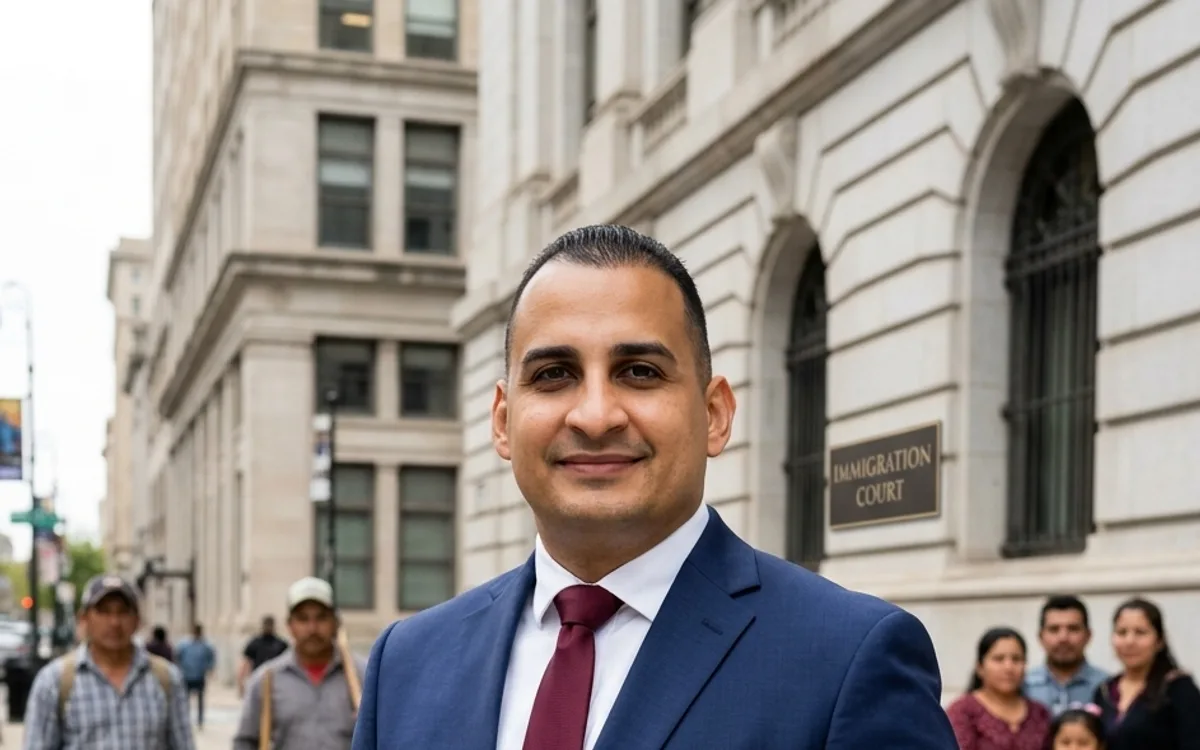
H-2A fraud enforcement in North Carolina runs on three separate tracks: DOL Wage and Hour Division audits that recover back wages and can debar an employer for one to five years, USCIS site visits that can revoke a labor certification, and criminal referrals to Homeland Security Investigations and the U.S. Attorney's Office that carry visa-fraud and forced-labor charges. Workers who report fraud may qualify for a U visa or T visa without losing status.
Last updated: February 2026.
Analysis by William J. Vasquez, founding attorney of Vasquez Law Firm, who has represented H-2A workers in Wage and Hour Division audits and in U visa and T visa filings across North Carolina.
How does H-2A fraud enforcement actually work in 2026?
Three different agencies can come after the same H-2A employer, and each one moves on its own clock. A civil wage complaint, a USCIS site visit, and a criminal referral are not the same case, and a worker's rights look different in each one.
DOL's Wage and Hour Division handles unpaid wages and program violations under 20 C.F.R. Part 655, Subpart B. USCIS's Fraud Detection and National Security Directorate checks whether the job actually matches what the employer filed on ETA Form 9142A. Homeland Security Investigations, working with the U.S. Attorney's Office for the Eastern District of North Carolina, pursues criminal charges under 18 U.S.C. § 1546 (visa fraud) and, when workers were coerced or confined, N.C. Gen. Stat. § 14-43.11 (human trafficking).
Comparing the three enforcement tracks
| Track | Lead agency | What triggers it | Legal basis | Possible outcome | Typical timeline |
|---|---|---|---|---|---|
| Civil wage-hour audit | DOL Wage and Hour Division | Worker complaint, random audit, or referral from the N.C. Department of Labor's Agricultural Safety and Health Bureau | 20 C.F.R. Part 655, Subpart B | Back wages, civil penalties, 1 to 5 year debarment | 3 to 12 months from opening letter to determination |
| Labor certification integrity check | USCIS Fraud Detection and National Security Directorate | Unannounced site visit tied to an approved ETA Form 9142A petition | 8 U.S.C. § 1188 | Revocation of certification, denial of future petitions | Site visit often within 6 months of approval; file can reopen for up to 5 years |
| Criminal referral | HSI Charlotte Field Office, prosecuted by the U.S. Attorney's Office, Eastern District of N.C. | Evidence of visa fraud, contract substitution, or forced labor | 18 U.S.C. § 1546; N.C. Gen. Stat. § 14-43.11 | Indictment, prison time, forfeiture of farm assets | Investigations commonly run 1 to 3 years before an indictment |
North Carolina matters here more than most states. The North Carolina Growers Association, based in Vass, has long been described in federal wage-hour litigation and agricultural labor reporting as the largest H-2A users' association in the country, filing job orders for hundreds of member farms. That volume is part of why North Carolina has consistently ranked among the top few states for certified H-2A positions in DOL's Office of Foreign Labor Certification annual performance reports, and why it draws a proportionate share of WHD audits and HSI referrals.
DOL's 2024 H-2A worker protection final rule, phased in through 2025, added an explicit anti-retaliation provision and tightened job-order disclosure requirements. That gives WHD another basis to act when an employer punishes a worker for reporting fraud, separate from the underlying wage claim itself.
How does a DOL Wage and Hour Division audit unfold?
An audit does not start with a lawsuit. It starts with a letter requesting payroll records, the clearance order, and housing inspection reports going back at least two years, sometimes three if the investigator suspects a willful violation under the extended statute of limitations at 29 U.S.C. § 255.
Investigators then interview workers, sometimes on the farm, sometimes off-site if workers are afraid to speak near a supervisor. If the review finds unpaid wages, illegal deductions, or a job order that promised one wage rate and paid another, WHD issues a determination letter assessing back wages and, in repeat or willful cases, referring the employer for debarment under 20 C.F.R. § 655.182. That debarment runs 1 to 5 years and bars any new H-2A petitions during that window, which for a grower dependent on seasonal labor can end that farm's next harvest.
Employers can appeal a determination to a DOL administrative law judge, but the appeal must be filed within 30 days of the letter. Workers do not need to wait for that appeal to resolve, and back wages already owed do not disappear because a worker went home or moved to a different H-2A job.
Can H-2A workers get a U visa or T visa if they report fraud?
Yes, and reporting fraud does not require staying with the employer who committed it. Two forms of relief cover most H-2A fraud cases: the U visa, for victims of a qualifying crime who help law enforcement, and the T visa, for victims of a severe form of trafficking, including forced labor.
The U visa requires a signed law enforcement certification, Form I-918 Supplement B, from an agency such as HSI or a local prosecutor confirming the worker was helpful in investigating or prosecuting the crime. The T visa does not require that certification in every case; workers under 18, or those who can show trauma-related incapacity, are excused from the cooperation requirement, though most adult applicants still need to show cooperation with any reasonable request from law enforcement.
U visa vs. T visa for H-2A workers
| Factor | U visa | T visa |
|---|---|---|
| Underlying harm | Qualifying crime: extortion, forced labor, witness tampering, felonious assault | Severe form of trafficking, including forced labor or debt bondage |
| Law enforcement certification | Required (Form I-918, Supplement B) | Not always required; trauma and minor-age exceptions apply |
| Annual cap | 10,000 principal petitions (INA § 214(p)(2)); demand exceeds the cap most years | 5,000 principal petitions (INA § 214(o)(2)); rarely reached |
| Work authorization while pending | Available after a bona fide determination, ahead of final adjudication | Available upon approval; interim relief can be requested sooner |
| Path to a green card | After 3 years in U status | After 3 years in T status, or sooner if the case concludes early |
| Must the worker still work for the sponsoring farm | No | No |
Because of the U visa cap, USCIS's own published processing times show petitioners waiting years just for a bona fide determination, and additional years after that for a visa number once a fiscal year's cap is reached. The T visa rarely hits its cap, which is one reason our office checks T visa eligibility first in any case involving confiscated documents, debt bondage, or confinement, not just unpaid wages.
What does a typical recruitment-fraud scheme look like?
Most of the schemes HSI and DOL investigate in North Carolina do not start on the farm. They start overseas, with a recruiter charging a worker an illegal placement fee, sometimes thousands of dollars, for an H-2A job that either does not exist or pays far less than the wage rate certified on the job order. Federal regulations at 20 C.F.R. § 655.135(j) already bar an H-2A employer from collecting recruitment fees from the worker or from a foreign recruiter acting for the employer, so a fee charged at recruitment is itself evidence in a WHD or HSI case even if the employer claims it never touched the money.
Contract substitution is the second common pattern: a worker signs one job order at home and is handed a different one, with a lower wage or a different crop and location, after arriving in North Carolina. That substitution alone supports a civil wage claim, and if paired with threats or confiscated passports, it can support a trafficking charge under N.C. Gen. Stat. § 14-43.11.
Frequently asked questions
How long can DOL debar an H-2A employer? One to five years under 20 C.F.R. § 655.182, with the length tied to whether the violation was willful, whether it is a repeat offense, and how many workers were affected.
How far back can I claim unpaid wages? Generally two years under the Fair Labor Standards Act, extended to three years if the violation was willful. File before that window closes; DOL and private wage claims both run on this clock.
Do I have to still work for the employer to report fraud or apply for a U visa or T visa? No. Both forms of relief are built for workers who already left, were fired, or went home. Staying employed is not a requirement, and in confiscated-document or debt-bondage cases, staying is often the more dangerous option.
Will talking to HSI or a DOL investigator get me deported? Cooperating with a criminal or labor investigation is the basis for U visa and T visa eligibility, not a deportation trigger. A bona fide U visa determination from USCIS can provide deferred action and work authorization while the petition is pending.
What happens to my status if my employer is debarred mid-season? Debarment stops the employer from filing new H-2A petitions; it does not automatically end a worker's current status. A worker can transfer to another certified H-2A employer, but the transfer has to happen before the current authorized stay expires.
How long does a U visa petition actually take in 2026? Years, not months. USCIS's published processing times show a multi-year wait just to reach the bona fide determination stage, and the 10,000-visa annual cap adds more waiting after approval before a visa number becomes available.
Can the N.C. Department of Labor inspect my housing? Yes. The Agricultural Safety and Health Bureau inspects H-2A employer-provided housing for compliance with state and federal standards, separate from any DOL Wage and Hour Division wage investigation.
Do I need to hire a lawyer to file a wage complaint with DOL? No. Any worker can call the Wage and Hour Division directly at 1-866-487-9243 to start a complaint without an attorney. A lawyer becomes more useful once the case involves a parallel U visa or T visa filing, where the law enforcement certification and the immigration petition have to be built together.
The workers who call after an HSI interview or a DOL audit almost always ask the same question first, says William J. Vasquez: am I going to be deported for talking to investigators. The answer is almost always no, and cooperating is often what opens the door to a U visa certification in the first place.
This page sits inside our broader immigration law coverage, next to our explanation of U visas for crime victims and our page on what happens after an HSI worksite raid. Workers deciding whether to report a recruiter or an employer should also look at continued presence, the short-term protection DHS can grant during an active trafficking investigation, since it can bridge the gap while a T visa petition is prepared. Employers facing a Wage and Hour Division audit should read our page on responding to a Department of Labor wage investigation before the 30-day appeal window starts running, because the record built in the first two weeks after the determination letter usually decides the appeal.
If you're an H-2A worker who was charged an illegal recruitment fee, handed a different job than the one you signed for, or told to stay quiet after an injury, call the Wage and Hour Division at 1-866-487-9243 to start a wage complaint on your own today. If your case also involves confiscated documents, threats, or an open HSI investigation, Vasquez Law Firm can review whether a U visa or T visa filing protects your status while that investigation continues.