Can You Choose Your Workers Comp Doctor in North Carolina?
Can you choose your workers comp doctor in NC? Understand second opinions, treatment changes, and urgent motions. Call for a free evaluation.
Published on October 12, 2026
Hurt on the job?
Free review of your workers' comp claim.
Free & confidential · Se habla espanol · 24/7

Have questions? Talk to an attorney - free evaluation.
Call 1-844-967-3536Hurt on the Job? Claim What You Are Owed
A review of your workers' comp claim - we handle the fight.
Can You Choose Your Workers Comp Doctor in North Carolina?
Choosing or changing your doctor under NC workers comp can affect treatment, work restrictions, and disability benefits. N.C. Gen. Stat. § 97-25 places medical compensation with the employer. It also provides defined paths for a second opinion, a provider change, emergency treatment, and medical disputes before the N.C. Industrial Commission. This guide explains the written-request process. It also explains which evidence can matter.
Need help protecting medical treatment after a workplace injury? Vasquez Law Firm offers free case evaluations by phone anywhere in North Carolina. Se Habla Español.
Call now: 1-844-967-3536
Quick Answer
Usually, the employer provides medical compensation in a North Carolina workers compensation claim. Medical compensation means payment for medical care allowed under the workers compensation law. An injured employee may seek a second opinion in writing. The employee may also request an Industrial Commission order after a denial or failed agreement. The employee may ask to change treatment when the evidence shows that change is reasonably necessary.
- Make second-opinion requests in writing.
- A denial or no good-faith agreement after 14 calendar days permits a Commission request.
- Provider changes require Commission approval and supporting evidence.
- Do not refuse Commission-ordered treatment without understanding the consequences.
Who chooses your workers comp doctor in North Carolina?
A worker hurt on a warehouse floor may need an exam that same day. Under N.C. Gen. Stat. § 97-25(a), the employer provides medical compensation. This starting point matters before you choose your own doctor. It also matters before you switch doctors or pay for care outside the authorized treatment plan.
Medical compensation shall be provided by the employer.
The statute also allows an injured employee to select a health care provider of the employee's choosing. The N.C. Industrial Commission must approve that choice. The Commission is the state agency that handles North Carolina workers compensation disputes. The Commission may order necessary treatment if a controversy arises. A controversy is a serious disagreement about a claim or treatment. This rule is different from assuming that a private appointment will automatically become covered medical compensation.
Review the firm’s North Carolina workers compensation representation page if a provider dispute is affecting care. A medical choice can involve diagnosis, pain relief, work limits, therapy, surgery recommendations, and the period of disability. The period of disability means the time when the injury keeps a worker from working or earning as before. These issues can affect both care and benefits.
Why authorized care matters
The statute directs the Commission to decide whether a requested change is reasonably necessary to effect a cure, provide relief, or lessen the period of disability. “Reasonably necessary” asks whether the requested care is needed based on the medical and claim evidence. These are the practical issues to document. Records that explain a diagnosis, a treatment recommendation, or worsening symptoms can help focus a request on the legal standard. A clear record can also help show why the requested provider or treatment is different from the care already offered.
How do you request a workers comp second opinion?
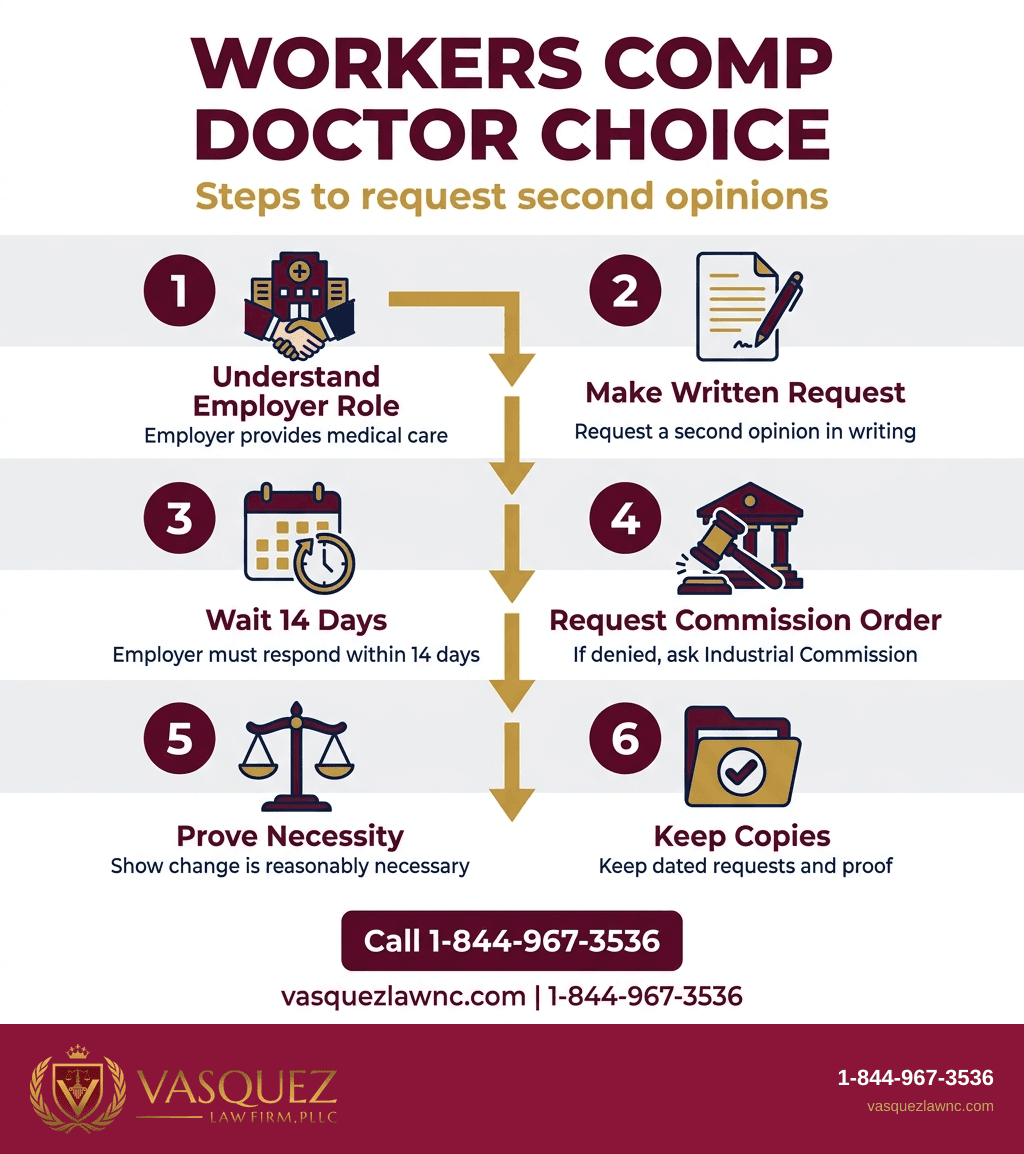
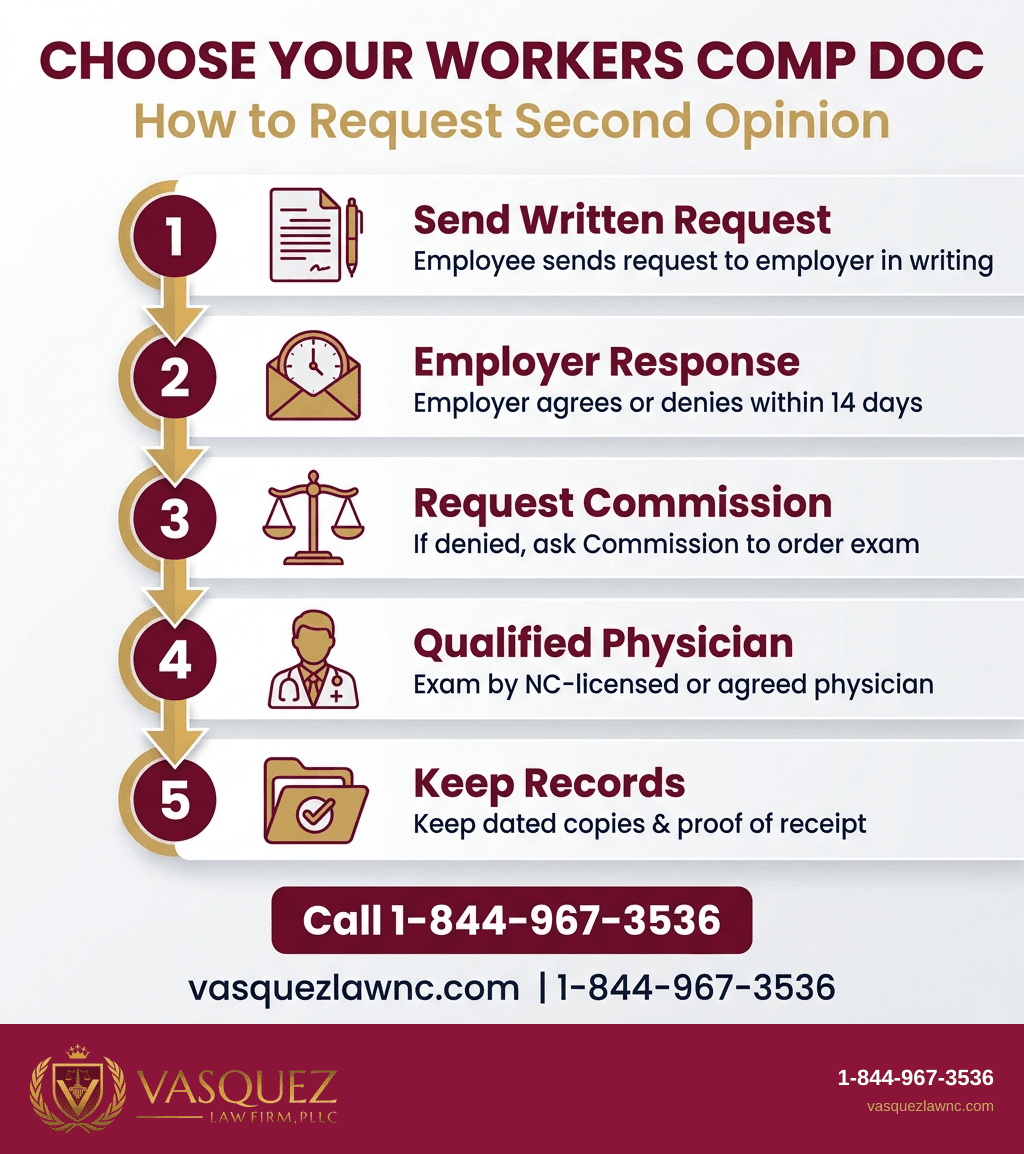
Imagine that a treating provider recommends one course of care. You want another qualified physician to examine you. N.C. Gen. Stat. § 97-25(b) begins with a written request from the employee to the employer. The employer may agree to authorize and pay for a second opinion examination. The examination must be with a duly qualified physician licensed in North Carolina.
The parties may also agree to a physician licensed in another state. The Commission may order that examination as well. If the written request is denied within 14 calendar days after receipt, the employee may ask the Industrial Commission to order a second opinion. The same is true if the parties cannot in good faith agree on the provider within that period. “Good faith” means an honest effort to reach an agreement. The employer bears the expense on the same terms and conditions as medical compensation.
What the written request should preserve
Keep a dated copy of the request. Keep proof that the employer received it. Identify the requested second opinion examination. Name the qualified provider if one has been proposed. Explain the medical concern that prompted the request. Use clear, specific language. Avoid turning a medical request into a broad argument about every issue in the claim. A focused request makes the medical question easier to identify.
For the larger claims process, see steps for filing a North Carolina workers compensation claim. The Industrial Commission’s injured worker information is also a useful official starting point. Keep copies of messages, letters, delivery records, and responses. Those materials can show when the request was sent and when it was received.
How can you change doctors in a NC workers comp claim?
A patient may feel that treatment is not relieving symptoms. The patient may also believe that a different specialty is needed. Under N.C. Gen. Stat. § 97-25(c), an employee who wants to select a provider must obtain Industrial Commission approval. The employee must prove, by a preponderance of the evidence, that the change is reasonably necessary to effect a cure, provide relief, or lessen disability. Preponderance of the evidence means that the requested change is more likely than not supported by the whole record.
In order for the Commission to grant an employee's request to change treatment or health care provider, the employee must show by a preponderance of the evidence that the change is reasonably necessary to effect a cure, provide relief, or lessen the period of disability.
The Commission may give less weight, or no weight, to an opinion from a provider an employee saw before first seeking written authorization from the employer, insurer, or Commission. This means the Commission may not rely heavily on that opinion. It may also disregard the opinion. That makes the order of actions important. A worker should understand the authorization process before arranging care with another provider.
Cases we handle often involve a worker who has already made an appointment elsewhere before sending a written authorization request. The question at the first evaluation is usually whether a recommendation, diagnosis, or work restriction can be documented through the authorized process. Planning the request before switching doctors can protect the medical issue for the Commission. It can also help preserve a clear timeline. The timeline should show the symptoms, the treatment already received, the requested change, and the medical reason for that change.
To discuss a treatment dispute, call Vasquez Law Firm for a free case evaluation. You can also review how workers compensation claims in North Carolina are evaluated. Bring available medical records and written communications to the discussion. These documents may help explain what treatment was authorized and what treatment was requested.
What happens if medical treatment is disputed or urgent?
A delayed treatment recommendation can create a dispute that needs a prompt ruling. N.C. Gen. Stat. § 97-25(f) allows a party to file a medical-compensation motion with the Executive Secretary. A motion is a written request asking the Commission to make a ruling. Unless good cause supports more response time, the Commission decides that administrative motion within 30 days of filing. Good cause means a legally accepted reason for allowing more time.
Either party may seek reconsideration or request an expedited formal hearing. Reconsideration means asking the decision-maker to review the ruling again. For an expedited hearing limited to medical compensation or a medical issue, the Commission sets a hearing within 30 days of the motion or appeal. The record closes within 60 days unless the parties agree otherwise or the Commission orders otherwise. The award is filed within 15 days after the record closes. The record is the evidence and arguments considered in deciding the issue.
Emergency medical motions
An emergency medical motion goes to the Office of the Chief Deputy Commissioner. The Chief Deputy or designee rules within five days of receipt unless the matter is determined not to be an emergency. A designee is a person authorized to act for an official. The motion must explain the diagnosis and recommendation. It must explain the time-sensitive need, with relevant dates and potential harm. It must identify known expert opinions and include supporting records. It must also describe efforts to resolve the dispute informally.
- Attach relevant medical records in your possession.
- State the recommended treatment and why time matters.
- Identify known second-opinion or independent examiner opinions.
- Describe informal efforts to resolve the issue.
Appeals generally do not stay the decision while an appeal is pending. A stay temporarily stops a decision from taking effect. A stay request is separately considered. The factors include immediate irreparable harm, treatment cost and nature, delay risks, authorized-provider recommendations, and reasonable alternatives. Irreparable harm means harm that cannot be adequately repaired later with money or another remedy.
What if you need emergency treatment after a workplace injury?
A worker may need urgent care when the employer has failed to provide medical compensation. N.C. Gen. Stat. § 97-25(e) addresses that circumstance. If another physician is called in an emergency because of that failure, the Industrial Commission may order the employer to pay the reasonable cost of that service. The provision does not automatically make every outside visit covered. The emergency and the employer’s failure must fit the rule.
This provision is specific to an emergency and an employer’s failure to provide medical compensation. Preserve records from the visit. Include the date, diagnosis, treatment, discharge instructions, and bills. These records can show what happened and why care was needed. If an unsafe workplace condition remains, workers may also review OSHA’s safety and health complaint information.
Which medical cost factors can matter?
The statute identifies employer-paid medical compensation. It also identifies employer-paid second opinions when ordered or agreed under the statute. It identifies reasonable emergency service costs when ordered by the Commission. In a motion, the nature and cost of requested medical relief are factors for a possible stay. Those details should be accurate and supported by records. Include estimates, bills, treatment descriptions, and information about delay when those items are available.
What mistakes can hurt a workers comp doctor request?
One missed written request can affect how the Commission views later provider opinions. N.C. Gen. Stat. § 97-25(c) permits the Commission to discount an opinion from a provider seen before the worker first requested written authorization. Use this checklist before switching doctors under workers comp:
- Skipping the written request: Send the request before pursuing a provider change.
- Using vague reasons: Connect the request to cure, relief, or a shorter disability period.
- Ignoring the 14-day second-opinion process: Preserve the date the employer received your request.
- Leaving out medical records: Include documents that support the recommendation.
- Calling every dispute an emergency: Explain time-sensitive harm and relevant dates for emergency relief.
- Refusing ordered medical compensation: Understand that refusal can bar further compensation while it continues.
- Ignoring a suspension order: Read the specified action needed to end a suspension and reinstate compensation.
If you remember one point: a request to change doctors is strongest when it is written, timely, and tied to medical evidence showing why the change is reasonably necessary. Keep a copy of every important document. Note each date. Ask for help if you do not understand an order or deadline.
What North Carolina rules apply to treatment refusals and appeals?
N.C. Gen. Stat. § 97-25(d) states that refusing medical compensation ordered by the Industrial Commission bars further compensation until the refusal stops. Compensation is not paid for the suspension period unless the Commission finds the circumstances justified the refusal. An order suspending compensation under N.C. Gen. Stat. § 97-18.1 must identify the action required to end the suspension and reinstate compensation. Read the order carefully. It may identify a specific treatment step or other action.
The statute also provides appeal routes after medical rulings. A Deputy Commissioner’s decision may be appealed under N.C. Gen. Stat. § 97-84 and then to the Full Commission under N.C. Gen. Stat. § 97-85. The Full Commission must decide an appeal of a Deputy Commissioner’s medical-motion decision within 60 days after the notice of appeal is filed. An appeal is a formal request for review of a decision. Filing rules and deadlines can affect whether an appeal moves forward.
The N.C. Industrial Commission workers compensation claims page identifies the agency that administers this North Carolina process. For a broader overview, read our North Carolina workers compensation guide. Official instructions and claim documents can help you understand the process. They do not replace advice about the facts of a specific claim.
When should you call about a workers comp doctor dispute?
Call for a free case evaluation when treatment is delayed. Call when a written second-opinion request is denied. You should also call when you cannot reach good-faith agreement on a provider after 14 calendar days. Prompt review can help organize the request, treatment records, and appropriate procedural path. A procedural path is the correct step for presenting the issue to the employer or Commission.
- You need a second opinion examination.
- You want to change treatment or providers.
- You received an order concerning medical compensation.
- Recommended care has a time-sensitive medical need.
- You are considering care outside the authorized process.
- Your compensation has been suspended after a treatment dispute.
About Vasquez Law Firm
Vasquez Law Firm represents people with North Carolina workers compensation matters by phone throughout the state. William J. Vasquez leads a firm focused on immigration, personal injury, workers compensation, criminal defense, and traffic violations. The firm’s Yo Peleo® commitment means treating each medical-treatment dispute with care and direct communication.
Our bilingual support staff can communicate in English and Spanish. Se Habla Español. The firm provides free case evaluations so an injured worker can better understand the process before making a decision. A case evaluation is an opportunity to discuss the claim and possible next steps. It is not a promise about the result of a claim.
Frequently Asked Questions
Can I choose my own doctor for workers comp in North Carolina?
You may select a health care provider of your choosing subject to Industrial Commission approval. For a requested change, you must show by a preponderance of the evidence that it is reasonably necessary to effect a cure, provide relief, or lessen disability. Seek written authorization before obtaining an outside opinion because the Commission may discount earlier provider opinions.
How do I request a second opinion?
Send a written request to the employer asking for a second opinion examination. The employer may agree to authorize and pay for a qualified physician. If the request is denied within 14 calendar days after receipt, or the parties cannot agree in good faith on a provider during that period, you may request that the Industrial Commission order the examination.
Who pays for a workers comp second opinion?
When the employer agrees to authorize the examination, or the Industrial Commission orders it under N.C. Gen. Stat. § 97-25(b), the employer bears the expense on the same terms and conditions as medical compensation. Keep the written request and communications because they establish the procedural history of the second-opinion issue.
What must an emergency medical motion include?
An emergency motion must explain the diagnosis and treatment recommendation requiring emergency attention. It must state why the request is time-sensitive, identify relevant dates and potential adverse consequences, address known expert opinions, include supporting records in the movant’s possession, and represent that informal resolution was attempted.
What happens if I refuse Commission-ordered treatment?
Refusing medical compensation ordered by the Industrial Commission can bar further compensation until the refusal ends. Compensation is not paid for the suspension period unless the Commission finds the circumstances justified the refusal. A suspension order under N.C. Gen. Stat. § 97-18.1 must state the action required to end the suspension and reinstate compensation.
How quickly is a medical motion decided?
An administrative medical motion is decided within 30 days of filing unless good cause supports more response time. An emergency medical motion is ruled on within five days of receipt unless it is determined not to be an emergency. An expedited formal hearing on a medical dispute is held within 30 days of filing the motion or appeal.
Can I appeal a medical treatment ruling?
Yes. The statute permits appeals from a Deputy Commissioner’s decision under N.C. Gen. Stat. § 97-84 to the Full Commission under N.C. Gen. Stat. § 97-85. A decision is generally not stayed during an appeal. The Full Commission must render its decision on a medical-motion appeal within 60 days after the notice of appeal is filed.
When can emergency care be paid in a workers comp claim?
If an emergency occurs because the employer failed to provide medical compensation, another physician may be called to treat the injured employee. The Industrial Commission may order the employer to pay the reasonable cost of that service. Preserve the medical records, bills, and details showing why immediate treatment was needed.
Sources and References
- N.C. Industrial Commission, Workers' Compensation Claims
- N.C. Industrial Commission, Injured Workers
- OSHA, File a Safety and Health Complaint
Choosing or changing your doctor under NC workers comp deserves careful attention before treatment decisions are made. Contact Vasquez Law Firm for a free case evaluation by phone anywhere in North Carolina.
Start Your Free Evaluation Now
Call 1-844-967-3536. Se Habla Español.
Hurt at work? You have rights.
NC workers' comp covers medical bills and lost wages — even for undocumented workers. 15-min call to see what you qualify for.
Keep Reading

For how Vasquez Law Firm can help, see our workplace injuries page.
Reviewed by Attorney Vasquez, Managing Attorney

William Vasquez
Founder & CEO, Vasquez Law Firm, PLLC
William Vasquez is the founder and CEO of Vasquez Law Firm, PLLC, a results-driven firm specializing in immigration, criminal defense, personal injury, and workers' compensation. A U.S. Air Force veteran and recipient of the Joint Service Achievement Medal, William is dedicated to fiercely fighting for his clients' rights.
Related Legal Services
Need legal help? Learn more about NC workers compensation legal team, or contact us for a free evaluation.
You can also visit NC workers comp legal help for more information.