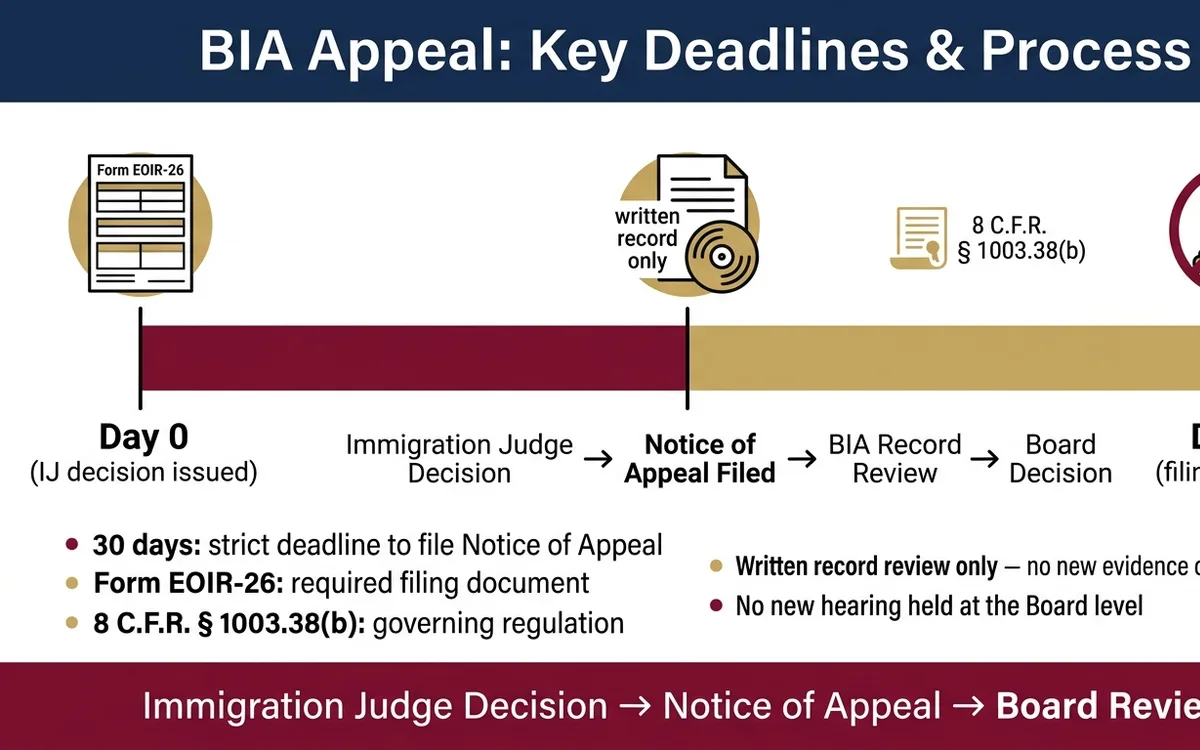
The immigration judge ruled against you. Maybe it was a denial of asylum, cancellation of removal, or a waiver you thought you had proven. Now you have an order of removal in hand and a strict clock running: 30 days from that decision to file a Notice of Appeal with the Board of Immigration Appeals, per 8 C.F.R. § 1003.38(b).
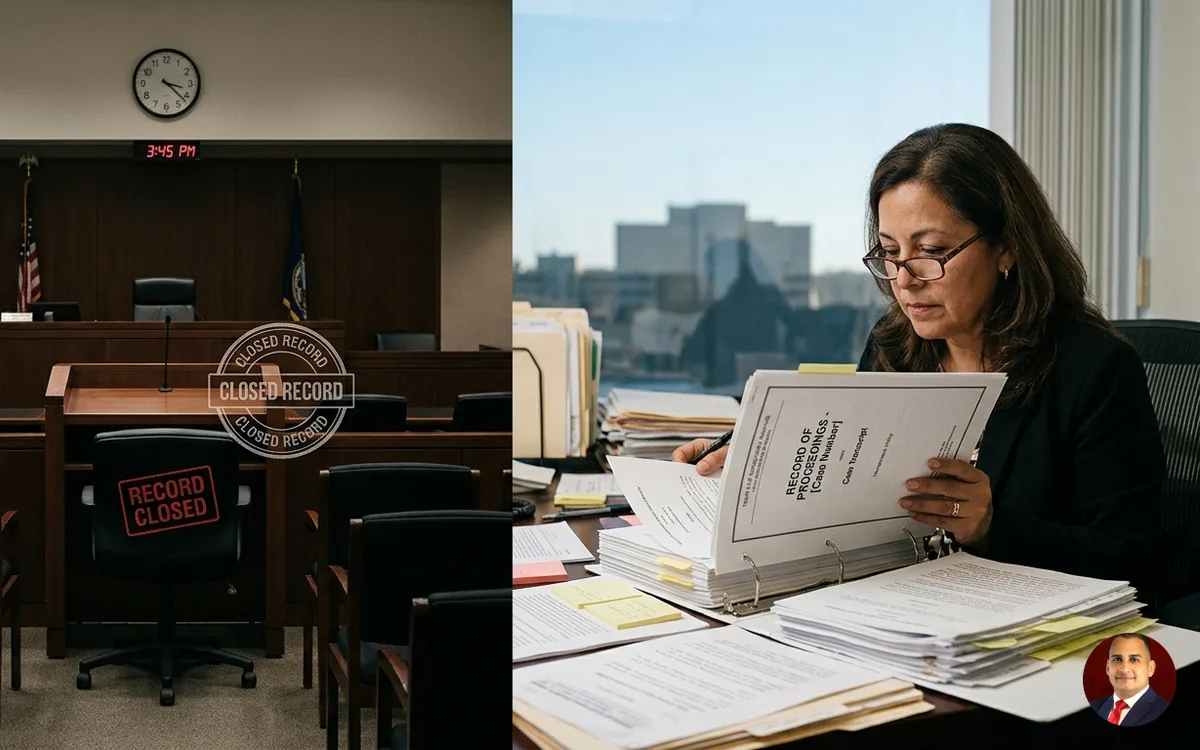
There is no do-over hearing at the Board. The BIA does not take new testimony. It reviews the written record, the transcript of what you and your witnesses said, the exhibits the judge admitted, and the judge's decision, looking for legal error. That shift, from telling your story to proving the judge got the law or the facts wrong on paper, is disorienting if you have not worked with appellate practice before.
You are not just afraid of losing again. You are afraid the Board will barely look at it and affirm anyway. That fear is reasonable, and addressing it starts with an honest look at your transcript, not a promise about the result.
A BIA appeal asks the Board of Immigration Appeals to review an immigration judge's decision for legal or factual error. You must file Form EOIR-26, Notice of Appeal, within 30 days of the decision, per 8 C.F.R. § 1003.38(b). The Board reviews the written record only; it does not hold a new hearing.
The Hard Truth
Most BIA appeals do not change the outcome. EOIR's FY2023 Statistics Yearbook reports the Board completed roughly 29,000 appeals that year, and the large majority ended in dismissal, meaning the immigration judge's removal order stood. Only a minority were sustained outright or remanded back to the immigration judge for further proceedings.
That is the baseline you are working against. The Board applies a deferential standard to the judge's factual findings, called 'clearly erroneous' review, under Matter of R-S-H-, 23 I&N Dec. 629 (BIA 2003). It will not re-weigh credibility findings or substitute its own view of the facts simply because it might have ruled differently given the same record.
Legal questions get a different, fresher look. How the judge applied the statute or regulation is reviewed de novo, under 8 C.F.R. § 1003.1(d)(3)(i), and that is usually where a real appeal has to live. A brief that just re-argues the facts, telling the Board the client is credible and deserves relief, loses far more often than it wins. A brief that identifies a specific legal or procedural error, the wrong standard applied, material record evidence ignored, due process denied, gives the Board something it can actually act on.
What Happens If You Wait
Miss the 30-day deadline and the immigration judge's order becomes administratively final under 8 U.S.C. § 1229a(c)(5). There is no late appeal for simply running out of time. ICE can then execute the removal order, and reopening the case later requires a motion to reconsider or motion to reopen, each with its own narrow deadline and a higher bar to clear than a direct appeal.
Filing late is not the only way to lose the appeal before it is heard. If you do not serve a copy of the Notice of Appeal on the ICE Office of Chief Counsel in Charlotte at the same time you file with the Board, a concurrent service requirement under the BIA Practice Manual, Chapter 3, the Board can reject the filing on procedural grounds before it reaches the merits.
There is a second clock most people do not know about until it is almost too late. If the Board affirms and you want a federal court to look at it, you then have only 30 days from the Board's order to file a petition for review with the U.S. Court of Appeals for the Fourth Circuit, under 8 U.S.C. § 1252(b)(1). That deadline does not pause while you search for a lawyer, and it does not restart if you were confused about the Board's decision date.
Step-by-Step Process
How Long Do You Have to Appeal an Immigration Judge's Decision?
You have 30 days from the date the immigration judge issues an oral or written removal order to file Form EOIR-26, Notice of Appeal, with the Board of Immigration Appeals, per 8 C.F.R. § 1003.38(b). The 30 days run from the decision date, not from when paperwork arrives in the mail.
Step 1: Order the Hearing Transcript
Before anyone can argue the judge made a legal error, they need the record of what was actually said. Request the recording from the Charlotte Immigration Court (EOIR), 5701 Executive Center Dr., Charlotte, NC. The Board eventually supplies a transcript as part of the appeal record, but reviewing the audio early lets an attorney flag specific moments, a mischaracterized answer, an objection wrongly overruled, that belong in the brief.
Step 2: File Form EOIR-26 and Serve ICE
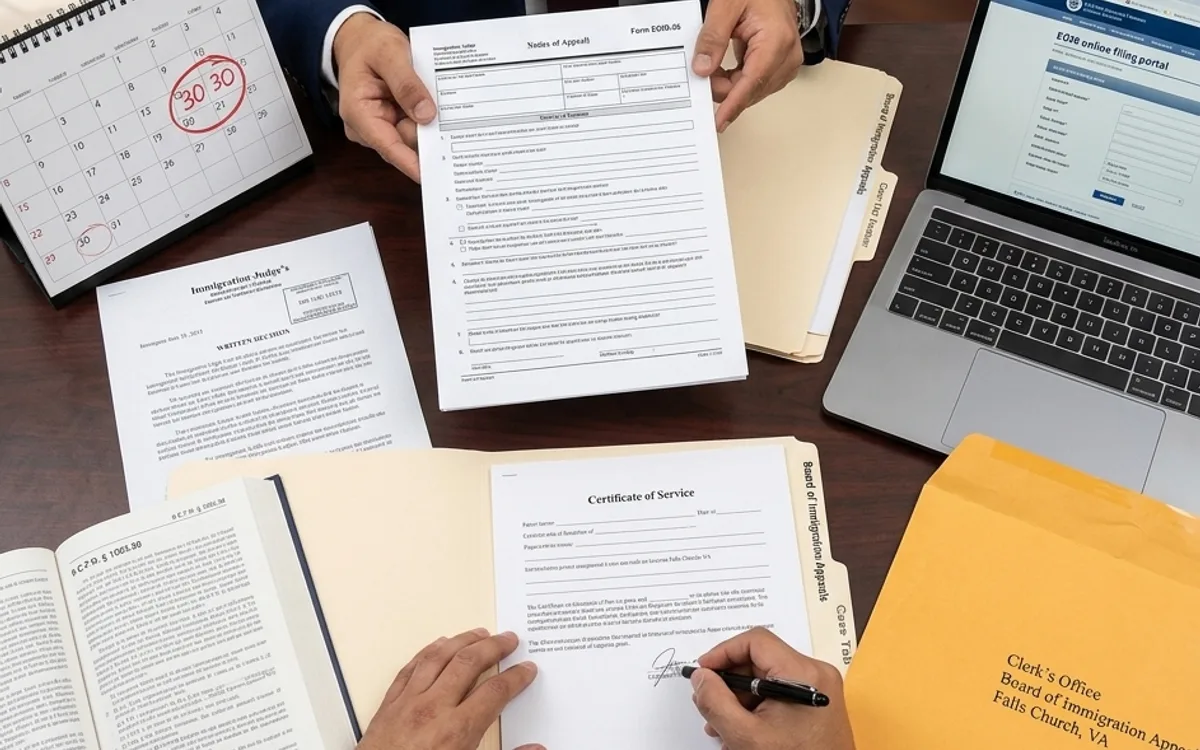
File the Notice of Appeal with the Board within the 30-day window. If the case originated at the Charlotte Immigration Court, serve a copy the same day on the ICE Office of Chief Counsel in Charlotte, per the concurrent service requirement in the BIA Practice Manual, Chapter 3 (justice.gov/eoir). Missing either piece can get the appeal rejected on a technicality, regardless of how strong the underlying argument is.
Step 3: Pay the Fee or File a Fee Waiver
Filing the Notice of Appeal carries a fee, listed in the EOIR fee schedule referenced in the BIA Practice Manual, Chapter 3. If you cannot afford it, file Form EOIR-26A, a fee waiver request, supported by a statement of income, assets, and expenses. A Notice of Appeal filed without either the fee or a completed waiver can be rejected outright, so this is not optional paperwork.
Step 4: The Automatic Stay of Removal
A timely appeal of a removal order generally triggers an automatic stay of removal under 8 C.F.R. § 1003.6, meaning ICE cannot execute the order while the appeal is pending. This stay does not cover every case. Certain criminal grounds of removal and some detained respondents fall outside it, so confirm your specific status with an attorney rather than assuming you are protected.
Step 5: The Briefing Schedule
Once the Notice of Appeal is docketed, the Board issues a briefing schedule, typically giving the appealing party about 21 days after the transcript is complete to file an opening brief, with the opposing party given time to respond. Briefs must follow the page-limit and formatting rules in the BIA Practice Manual, Chapter 3. There is no hearing at this stage and no chance to add live testimony, so the brief carries the entire argument.
Step 6: Oral Argument, Rarely Granted
Oral argument before the Board exists under the regulations but is granted only occasionally, usually in cases the Board flags as raising a novel or recurring legal question. Most appeals are decided on the briefs alone, often by a single Board member rather than a three-member panel, per 8 C.F.R. § 1003.1(e)(4).
Step 7: The Board's Decision
The Board can affirm the immigration judge, affirm without a full written opinion (an 'affirmance without opinion' or AWO, which adopts the judge's decision as the final ruling), reverse the decision, or remand the case back to the immigration judge for further proceedings. An AWO still counts as a final Board decision you can take further.
Step 8: Petition for Review
If the Board affirms and the case is going further, the next filing is a petition for review with the Fourth Circuit (for cases arising from the Charlotte Immigration Court), due within 30 days of the Board's final order under 8 U.S.C. § 1252(b)(1). That is a different court, a different procedural rulebook, and usually a different kind of brief than the one filed with the Board.
A Real-World Example
This is a composite scenario based on common patterns, not an actual client. A respondent at the Charlotte Immigration Court was denied cancellation of removal after the judge found the hardship to his U.S. citizen children did not rise to 'exceptional and extremely unusual,' the statutory standard under 8 U.S.C. § 1229b(b)(1)(D). He had 30 days to decide whether to appeal.
Within the first week, his attorney ordered the hearing recording and listened to it against the written decision. The recording showed the judge had focused almost entirely on one child's medical condition and never addressed testimony about a second child's documented learning disability, evidence that was already in the record but absent from the judge's hardship analysis.
The attorney filed Form EOIR-26 within the deadline, served the ICE Office of Chief Counsel in Charlotte the same day, and confirmed the automatic stay of removal applied under 8 C.F.R. § 1003.6. When the briefing schedule issued, the opening brief argued that the judge's failure to address material record evidence was legal error, not a request for the Board to simply re-weigh the facts.
From there, the case sat in the Board's queue awaiting a decision, which is where every BIA appeal sits once briefing closes. There is no hearing to attend and no additional testimony to give at this stage. The waiting period itself, often many months, is part of what a BIA appeal actually involves, regardless of how the brief was written.
William J. Vasquez has spent more than 15 years focused on immigration law, including removal defense and appellate practice before the Board of Immigration Appeals. He is admitted to practice before the federal immigration courts and the Board nationwide, consistent with 8 C.F.R. § 1292.1, and before the U.S. Court of Appeals for the Fourth Circuit, the circuit that reviews BIA decisions arising from the Charlotte Immigration Court.
Appellate work reads a transcript the way an editor reads a draft, looking for the sentence the judge got wrong instead of retelling the client's story with more feeling. William J. Vasquez's practice includes that kind of record review: identifying where an immigration judge misapplied a legal standard, overlooked material evidence, or denied a procedural right, and building that into a brief that meets the BIA Practice Manual's formatting and argument requirements.
A full attorney profile, including bar admissions and professional affiliations, is available on our attorney profile page.
Key Terms Explained
Notice of Appeal (Form EOIR-26): The form that starts a BIA appeal, due within 30 days of the immigration judge's decision under 8 C.F.R. § 1003.38(b).
Form EOIR-26A: The fee waiver request filed alongside the Notice of Appeal for respondents who cannot pay the filing fee, supported by a statement of income, assets, and expenses.
Board of Immigration Appeals (BIA): The administrative body within the Executive Office for Immigration Review (EOIR) that reviews immigration judge decisions nationwide, based on the written record rather than new testimony.
Clearly Erroneous Standard: The deferential standard the Board applies to an immigration judge's factual findings, meaning the Board will not overturn a fact finding unless it is left with a firm conviction the judge was mistaken, per Matter of R-S-H-, 23 I&N Dec. 629 (BIA 2003).
De Novo Review: Fresh, non-deferential review the Board applies to legal questions, such as whether the judge applied the correct legal standard, under 8 C.F.R. § 1003.1(d)(3)(i).
Affirmance Without Opinion (AWO): A Board decision that adopts the immigration judge's decision as the final agency ruling without a separate written opinion, issued under 8 C.F.R. § 1003.1(e)(4).
Stay of Removal: A hold on executing a removal order. Filing a timely appeal generally triggers an automatic stay under 8 C.F.R. § 1003.6, though exceptions apply in some detained and criminal-ground cases.
Motion to Reopen: A request asking the judge or Board to reconsider a case based on new facts or evidence not available at the original hearing, generally due within 90 days of the final decision under 8 C.F.R. § 1003.23(b)(1).
Motion to Reconsider: A request asking the judge or Board to revisit a decision based on an error of law or fact in the existing record, generally due within 30 days under 8 C.F.R. § 1003.23(b)(1).
Petition for Review: The filing that asks a U.S. Court of Appeals, the Fourth Circuit for Charlotte-origin cases, to review a final BIA order, due within 30 days of that order under 8 U.S.C. § 1252(b)(1).
Frequently Asked Questions
Q: How long do I have to appeal an immigration judge's removal order? A: You have 30 days from the date of the immigration judge's decision to file Form EOIR-26, Notice of Appeal, with the Board of Immigration Appeals, per 8 C.F.R. § 1003.38(b). Missing that date makes the removal order administratively final under 8 U.S.C. § 1229a(c)(5).
Q: What if I cannot afford the BIA appeal filing fee? A: File Form EOIR-26A, a fee waiver request, along with the Notice of Appeal, supported by a statement of your income, assets, and expenses. The Board can reject a Notice of Appeal filed without either the fee or a completed waiver.
Q: Can I submit new evidence during a BIA appeal? A: No. The Board reviews only the existing hearing record and the judge's decision. If you have new evidence that was unavailable at your hearing, the correct filing is usually a motion to reopen, not a direct appeal, and it carries its own deadline under 8 C.F.R. § 1003.23(b)(1).
Q: What happens if the Board affirms without issuing a written opinion? A: An affirmance without opinion (AWO), issued under 8 C.F.R. § 1003.1(e)(4), adopts the immigration judge's decision as the Board's final ruling. It still counts as a final order you can take to the Court of Appeals within 30 days under 8 U.S.C. § 1252(b)(1).
Q: Will I stay in detention while my BIA appeal is pending? A: Filing a timely appeal generally triggers an automatic stay of removal under 8 C.F.R. § 1003.6, but that stay does not automatically mean release from custody. Custody and bond are handled separately, often through a bond redetermination request, and some criminal grounds of removal fall outside the automatic stay entirely.
Q: How much does it cost to hire an attorney for a BIA appeal? A: Fees vary by case complexity and the length of the hearing transcript. Immigration representation, including appellate work, is billed directly rather than on a contingency basis, since there is no monetary recovery for the fee to be conditioned on; a consultation can give you a specific quote for your record.
Clients come to our immigration team after a loss in court, often frightened and unsure whether an appeal is worth pursuing. Reviews from those clients describe an intake process that is direct about the odds, explains what the transcript review actually found, and sets expectations about how long the Board's queue can run.
We do not publish outcome statistics, because case results are not objectively verifiable and do not predict what will happen in the next case. What we can describe, and what clients consistently mention, is the process: a real transcript review, a specific legal theory before anything is filed, and plain answers about what a given filing can and cannot do.
An appeal is a narrow, deadline-driven filing, not a second trial. If you are still inside the 30-day window, the honest first step is to have someone read your transcript and tell you, plainly, whether there is a legal argument here or not.
If an immigration judge ordered your removal and the 30-day clock is running, call our office for a review of your transcript and decision before you file anything. Our immigration team handles Notices of Appeal, EOIR-26A fee waiver requests, and BIA briefing for clients whose cases originated at the Charlotte Immigration Court, and can walk through whether a motion to reopen, a motion to reconsider, or a petition for review fits your case better than, or alongside, a direct BIA appeal. Schedule a consultation now; every day matters against this deadline.