You worked for the United States government in Afghanistan, as an interpreter, a cultural advisor, or a contractor on a US-funded project. That service is the reason your family may now be a target. It is also the reason federal law gives you a path to a Special Immigrant Visa, if you can prove it.
The wait is the hardest part. Months pass with no update from the National Visa Center. A supervisor who could verify your service moves, retires, or becomes impossible to reach, while the threat against your family does not pause for processing times.
If your family is still in Afghanistan, that threat does not fade with time, and there are still ways to push a stalled case forward.
An Afghan SIV attorney helps interpreters and contractors document 12 months of qualifying US government service, build the Chief of Mission approval package, track Form I-360 petitions at USCIS Nebraska Service Center, and file federal mandamus actions under the Afghan Allies Protection Act of 2009 when cases stall for years.
The Hard Truth
The Afghan SIV pipeline moves slowly because of how it's designed and because of years of backlog. Delay in processing usually points to missing paperwork, not a failed claim of service. Chief of Mission approval alone can take months to years depending on the Department of State's Afghan SIV Unit caseload. A denial at the COM stage is common. Usually the cause is a missing employer verification letter or a direct supervisor's letter of recommendation, meaning the file is incomplete, not that the service never happened.
There is no guaranteed timeline and no guaranteed approval. An attorney cannot make the State Department or USCIS move faster through persuasion alone. What an attorney can do is rebuild missing evidence, correct an incomplete record, and when the delay itself becomes unreasonable, ask a federal court to order an answer.
What Happens If You Wait
Every month of delay carries a cost beyond frustration. Supervisors who could sign an employment verification letter are discharged from the military, change duty stations, or lose contact with their former units, sometimes permanently. A threat report that would support your case gets harder to document the longer you wait, because witnesses disperse and records disappear.
The National Visa Center can also mark a case for administrative closure after a period of inactivity, which restarts steps you already completed. If you are still in Afghanistan while your case sits unresolved, each month of delay is a month your family remains in the position your US service created.
Step-by-Step Process
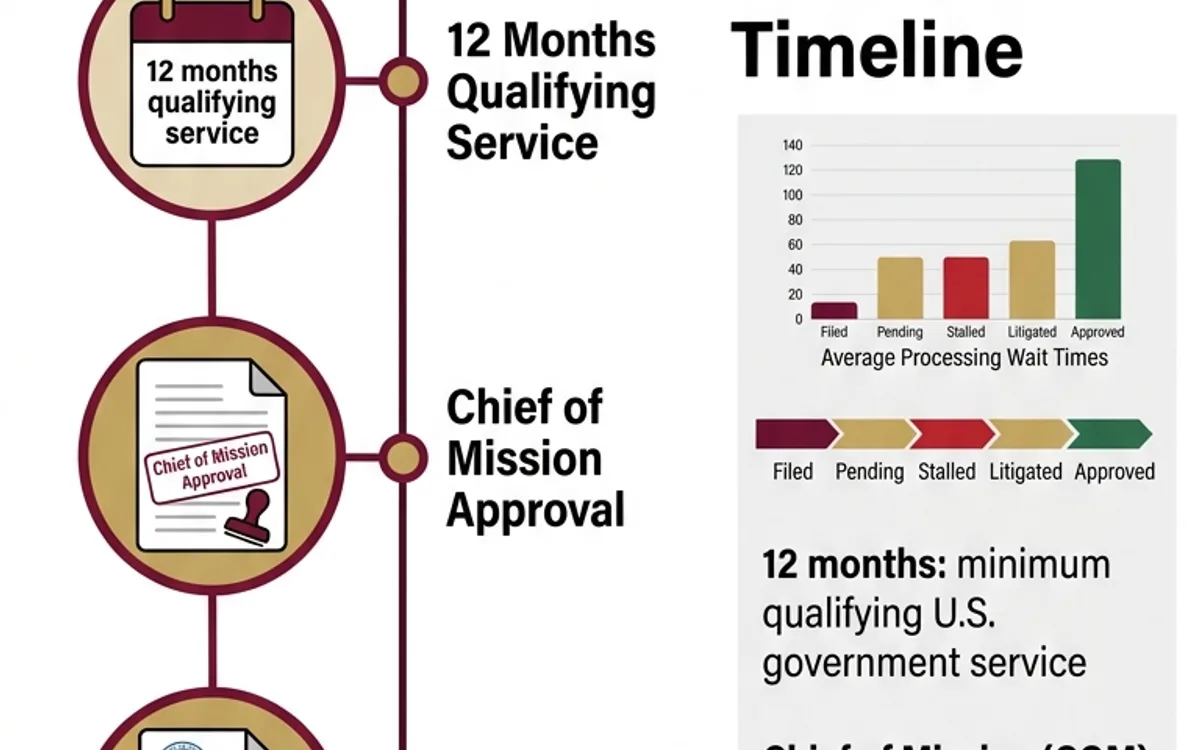
Step 1: Confirm qualifying service. You need at least 12 months of employment by, or on behalf of, the US government in Afghanistan, under the Afghan Allies Protection Act of 2009, Pub. L. 111-8, Div. F, Title VI, Section 602. This includes work as an interpreter, translator, or another role directly supporting US military or diplomatic missions.
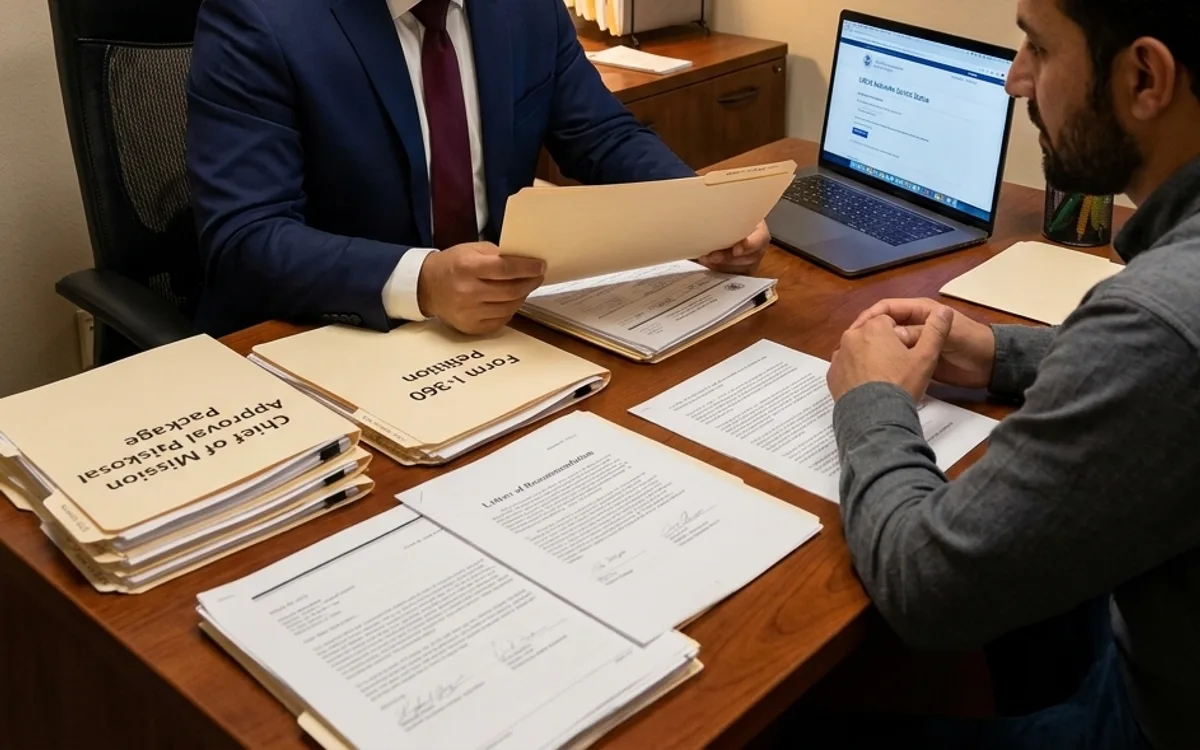
Step 2: Build the Chief of Mission (COM) application. Submit it to the Department of State's Afghan Special Immigrant Visa Unit. The file needs a letter of recommendation from a direct supervisor, HR or contract verification of your employment dates, and evidence of an ongoing threat connected to that service.
Step 3: Wait for COM approval. If approved, your case moves toward visa processing. If the Department of State denies it, you can reapply with corrected or supplemental evidence.
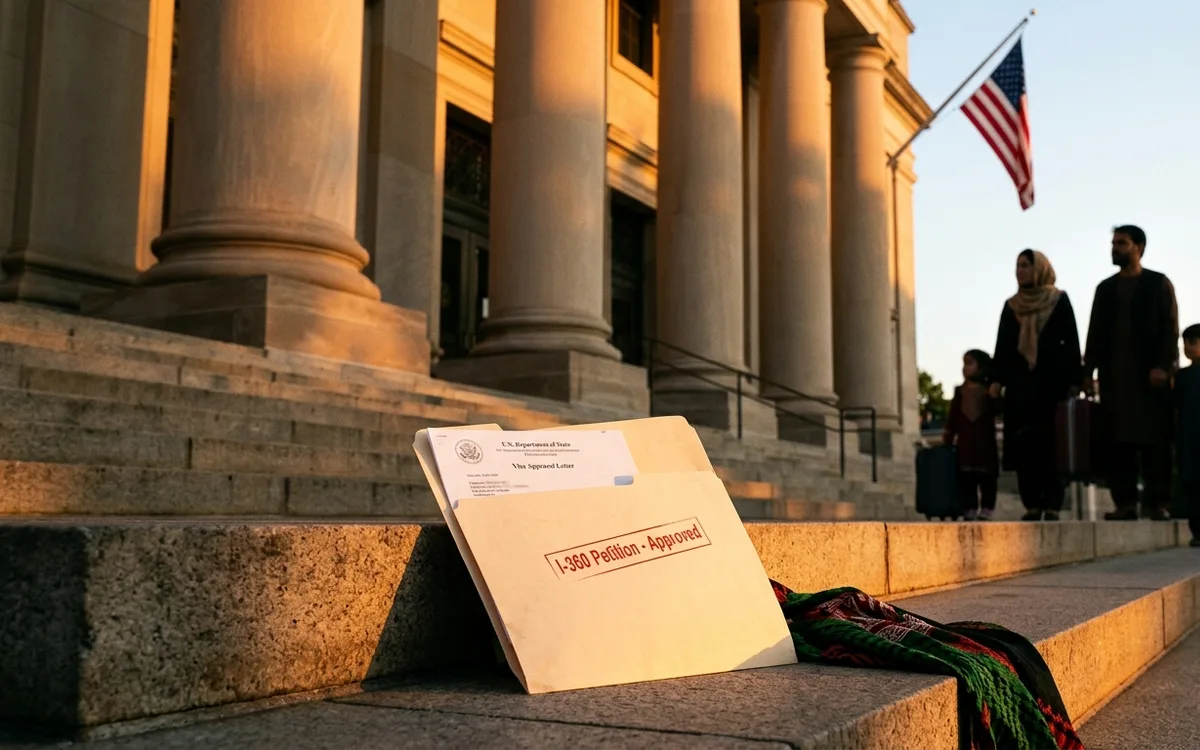
Step 4: Petition review. Depending on your case's procedural posture, Form I-360, Petition for Amerasian, Widow(er), or Special Immigrant, may be reviewed by USCIS at the Nebraska Service Center to confirm your SIV classification.
Step 5: National Visa Center processing. The NVC collects Form DS-260 and civil documents, and adds derivative family members, your spouse and unmarried children under 21 per INA Section 101(b)(1), to the case.
Step 6: Medical exam and interview. You will complete a medical exam and attend an interview at the US embassy currently processing Afghan SIV cases, which is Islamabad since the US embassy in Kabul ceased operations.
Step 7: Visa issuance and travel. Once issued, your visa carries a limited validity window for travel to the United States. Families resettling in North Carolina often arrive through Raleigh-Durham International Airport, where resettlement agencies including World Relief Durham coordinate arrival support.
Step 8: If your case stalls. When COM adjudication or NVC processing exceeds a reasonable period with no decision, our attorneys can evaluate whether to file a mandamus action or an Administrative Procedure Act Section 706(1) claim in federal district court to compel a decision, the same theory of unreasonable delay at issue in Afghan and Iraqi Allies Under Serious Threat of Death Due to Their Work for the United States Government v. Blinken, No. 1:18-cv-01388 (D.D.C.).
A Real-World Example
Consider a composite example based on the kind of case our attorneys handle. An interpreter worked alongside a US Army unit in Kunar province for just over a year, then the unit rotated home and he lost contact with his direct supervisor. When he applied for Chief of Mission approval, the Department of State denied the case for insufficient proof of his qualifying service.
Our team located the unit's deployment records through a Freedom of Information Act request and found a former platoon sergeant willing to confirm the work in a sworn statement. We resubmitted the COM application with the sergeant's letter, payroll records, and a contractor's HR confirmation attached. The case moved to National Visa Center processing, where the applicant's spouse and two children were added as derivative applicants.
As of this writing, the family's case is in the interview-scheduling stage at the embassy in Islamabad. This reflects the kind of evidence-rebuilding work the SIV process often requires. It does not describe a guaranteed result for any individual case.
William J. Vasquez is admitted to the North Carolina State Bar and to the Fourth, Fifth, and Eleventh Circuit Courts of Appeals, with years of experience handling federal immigration matters, including Special Immigrant Visa cases for Afghan interpreters and contractors. Because Special Immigrant Visa and Board of Immigration Appeals matters are federal and administrative, an attorney licensed in good standing in a single US state bar may represent SIV applicants and their families nationwide, under 8 C.F.R. 1292.1.
Mr. Vasquez has prepared federal mandamus and Administrative Procedure Act filings addressing unreasonable delay in immigration adjudications, the same legal theory courts have applied to stalled Afghan SIV cases. He works directly with evidence problems specific to this visa category: missing supervisor letters, incomplete HR verification, and threat documentation gathered from a country where records are hard to obtain. Our team coordinates with Fort Liberty veteran networks in Fayetteville, North Carolina, when a former service member's firsthand account can help verify an applicant's work.
Key Terms Explained
Chief of Mission (COM) approval: A determination by the Department of State confirming that an Afghan SIV applicant meets the statutory service and threat requirements before visa processing can continue.
Form I-360: The petition form, Petition for Amerasian, Widow(er), or Special Immigrant, used to establish Special Immigrant classification; for Afghan SIV cases it is reviewed at the USCIS Nebraska Service Center.
National Visa Center (NVC): The Department of State office that processes an approved SIV case after COM approval, collects civil documents, and schedules the visa interview.
Derivative status: The immigration status extended to a principal applicant's spouse and unmarried children under 21, per INA Section 101(b)(1), allowing them to immigrate with or follow the principal applicant.
Afghan Allies Protection Act of 2009: The federal law, Pub. L. 111-8, Div. F, Title VI, Section 602, that created the Afghan SIV program and defines the 12-month qualifying employment requirement.
Mandamus action: A lawsuit filed in federal district court asking a judge to order a government agency to act on a case that has been pending for an unreasonable period.
APA Section 706(1): A provision of the Administrative Procedure Act allowing a federal court to compel agency action unlawfully withheld or unreasonably delayed.
Frequently Asked Questions
Q: What happens if my Chief of Mission application is denied? A: A COM denial allows reapplication with corrected or additional evidence, such as a new supervisor statement or updated HR verification; our attorneys review the denial letter to identify exactly what evidence was found insufficient.
Q: What if I lost my employment verification letter or cannot reach my former supervisor? A: You can often rebuild this evidence through Freedom of Information Act requests for unit or contract records, affidavits from coworkers, payroll records, or a sworn statement from anyone who can confirm your dates and duties of service.
Q: My SIV case has been at the National Visa Center for over a year with no update. What can I do? A: You can request a case status update directly through the NVC, and if the delay continues without explanation, your attorney can evaluate a federal mandamus or APA Section 706(1) lawsuit asking a court to compel a decision.
Q: Can my spouse and children come with me on my Afghan SIV? A: Yes. Your spouse and unmarried children under 21 can be included as derivative applicants, and they are added during National Visa Center processing once your Chief of Mission approval and petition are confirmed.
Q: Where will my visa interview take place? A: Afghan SIV interviews are currently conducted at the US embassy in Islamabad, Pakistan, since the US embassy in Kabul ceased operations; interview scheduling wait times vary by case.
Families who have worked with our office describe a process where someone finally explains what stage their case is in and what document is still missing. We do not publish outcome statistics for immigration cases, because Chief of Mission and visa decisions are made by the Department of State and USCIS, not by any law firm. What we can tell you is how many SIV and federal immigration cases our attorneys have handled, and the specific evidence gaps we have worked through for Afghan applicants.
If your case is early in the process, the single most useful thing you can do today is gather every document connected to your US employment, pay records, contracts, ID badges, emails, before more time passes and that evidence becomes harder to find.
Our immigration team reviews Afghan Special Immigrant Visa cases at every stage, from a first Chief of Mission application to a petition stalled at the National Visa Center for years. Schedule a consultation with our office to have your case, your evidence, and your options for moving it forward reviewed directly.