Fake USCIS Calls and Emails: How to Spot Government Impersonation Scams
Learn how immigrant scams work in 2026 and how to protect yourself. Get trustworthy help with immigrant scams from Vasquez Law. Call now for a free consultation.
Published on May 4, 2026
Talk to an immigration attorney
Free call. A clear plan for your case.
Free & confidential · Se habla espanol · Mon-Fri 8am-7pm, Sat 9am-2pm (ET)

Have questions? Talk to an attorney - free evaluation.
Call 1-844-967-3536Free Tool
Check Your USCIS Case Status Now
Enter your receipt number - get the official USCIS status in English or Spanish. No registration.
Fake USCIS Calls and Emails: How to Spot Government Impersonation Scams
Scammers frequently pose as U.S. Citizenship and Immigration Services (USCIS) or other government agencies to frighten people into sending money or handing over personal information. These schemes prey on fear and urgency. Knowing how the real agency actually communicates makes it far easier to recognize a fake and protect yourself.
Need legal help?
Immigration in NC and FL. Personal injury and workers compensation across NC. Criminal defense in Johnston, Harnett and Pitt counties, and traffic tickets in 10 NC counties. Tell us your county and we will tell you exactly what we can do.
How Real USCIS Communication Works
USCIS generally communicates about your case in writing, by mail, through official notices sent to the address on file. USCIS does not demand payment by gift card, prepaid debit card, wire transfer, or cryptocurrency. Government agencies do not accept those forms of payment, and any request for them is a strong sign of a scam. USCIS also does not call to threaten you with immediate arrest, deportation, or the loss of your immigration status if you fail to pay a fee over the phone. Official fees are paid through established, documented channels—not to a caller who pressures you to act within minutes.

Be especially skeptical of anyone who insists on secrecy, tells you not to talk to a lawyer or family member, or claims that a small "fee" will make a legal problem disappear. Real agencies do not operate that way.
Common Signs of an Impersonation Scam
Watch for these red flags: a caller ID that appears to show a government number (caller ID can be faked); demands for immediate payment to avoid arrest or deportation; requests for gift cards, wire transfers, or cryptocurrency; threats and high-pressure urgency; an email address or website that looks slightly off from an official ".gov" address; requests for your full Social Security number, bank details, or immigration document numbers; and poor grammar or generic greetings like "Dear Customer." Scammers may also "spoof" a real agency name and logo to look convincing, so appearance alone is never proof.
How to Verify a Real Notice or Case Status
What's Your Immigration Situation?
Answer 3 questions - we'll tell you your options
Question 1 / 3
What best describes your situation?
Keep Reading
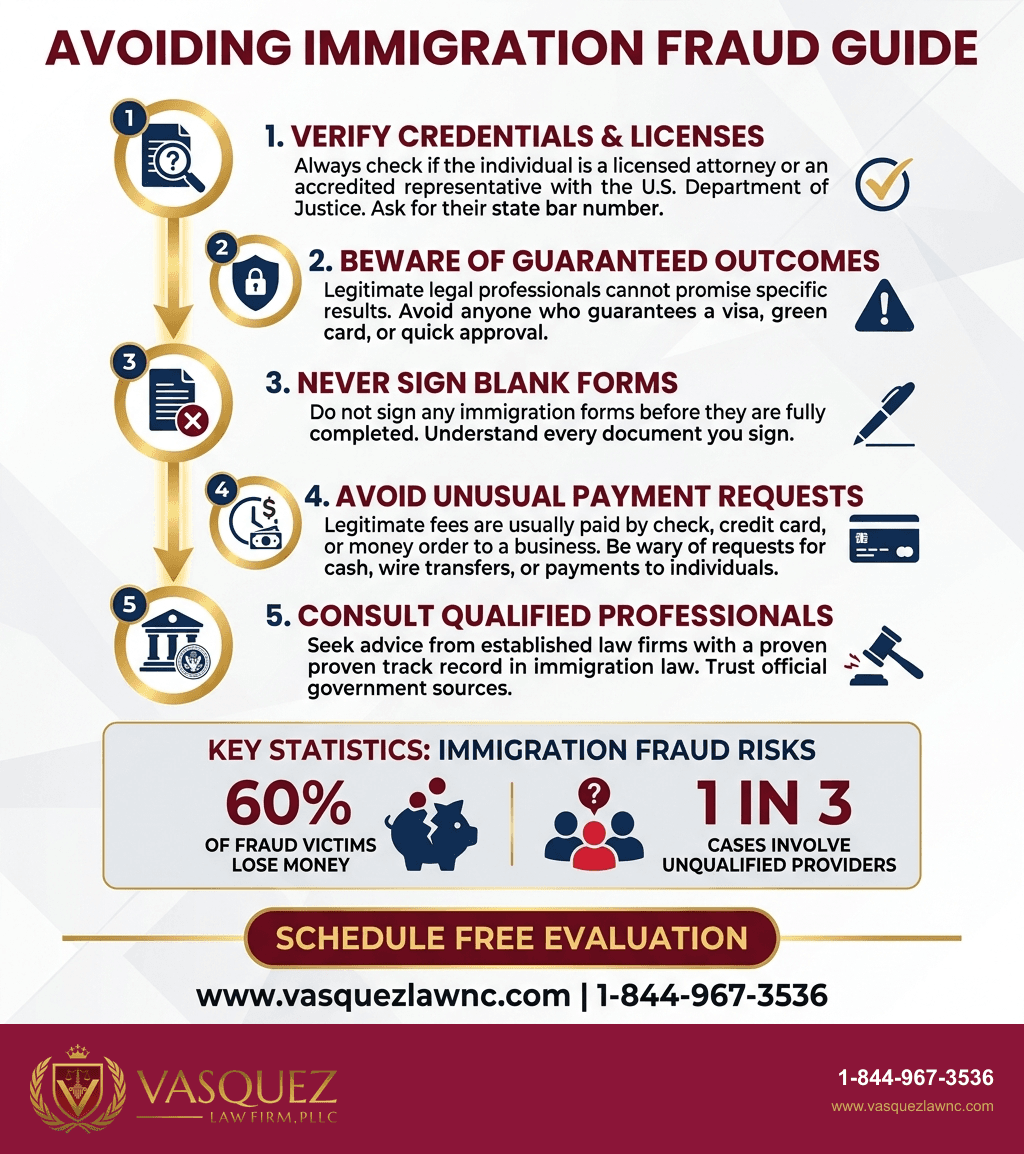
If you receive a notice or call that claims to be from USCIS, do not act on the caller's instructions in the moment. Instead, verify independently. You can generally check the status of a pending case through official USCIS online tools using your receipt number, or by contacting USCIS through the official phone number and website listed on genuine government pages—not a number provided by the suspicious caller or email. Compare any notice you receive against the official records and formats you already have. When in doubt, slow down: legitimate matters can wait the few minutes it takes to confirm.
What to Do If You Receive a Suspicious Call or Email

Do not send money, gift cards, or personal information. Hang up on a threatening caller, and do not click links or open attachments in a suspicious email. Write down what happened—the phone number, the email address, what was said or requested. You can report suspected government impersonation to the appropriate consumer-protection authorities, and you should tell trusted family members so they are not caught off guard by a similar call. If you are worried the contact may relate to a real issue with your case, consult a licensed immigration attorney before responding.
How Vasquez Law Firm Can Help
If you have received a call, email, or notice that you are not sure is real, we can help you sort out what is legitimate and what is not before you take any action. Our attorneys can review your actual case status and explain your options clearly, so fear and pressure do not drive your decisions. Call Vasquez Law Firm today at 1-844-967-3536 for a free evaluation. It costs nothing to get clarity and peace of mind.

William Vasquez
Founder & CEO, Vasquez Law Firm, PLLC
William Vasquez is the founder and CEO of Vasquez Law Firm, PLLC, a results-driven firm specializing in immigration, criminal defense, personal injury, and workers' compensation. A U.S. Air Force veteran and recipient of the Joint Service Achievement Medal, William is dedicated to fiercely fighting for his clients' rights.
Related Legal Services
Need legal help? Learn more about our immigration legal services, or contact us for a free evaluation.
You can also visit immigration lawyers serving all of North Carolina for more information.

