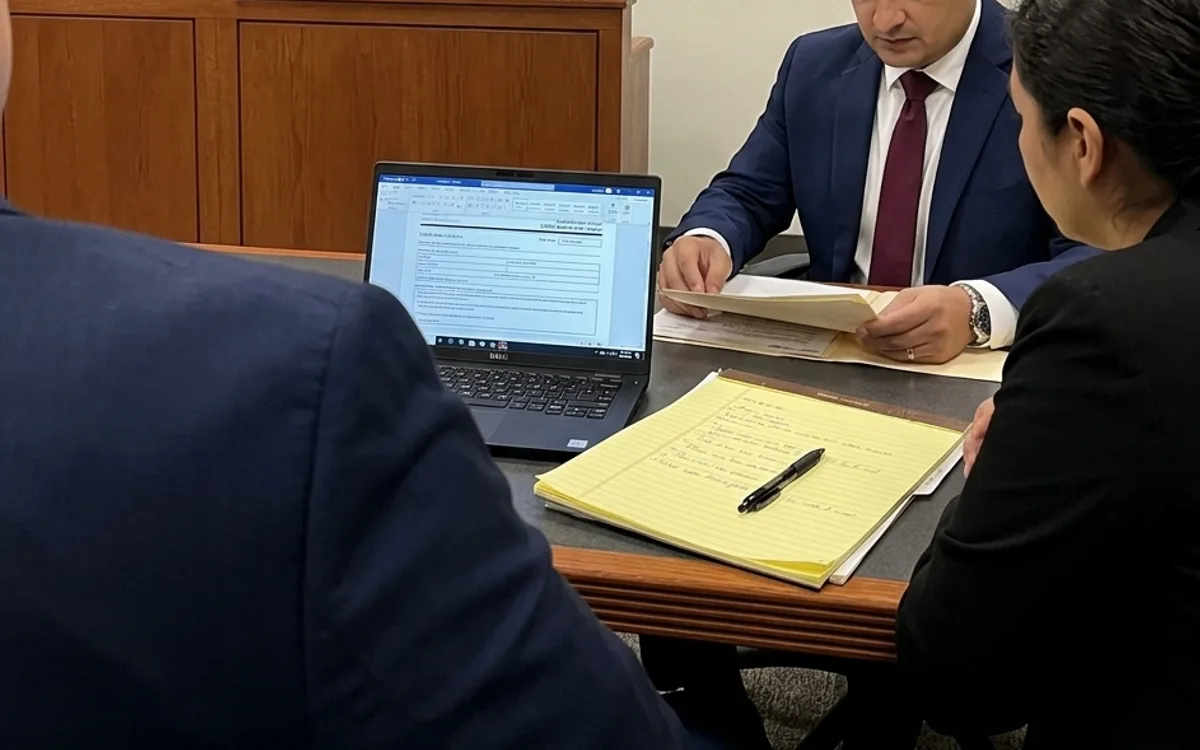
You applied for asylum because you were afraid to go home. An interview with a USCIS asylum officer seemed like the next step, a chance to explain your case to one government official in a private room. Instead, a notice arrived saying your case is going straight to an immigration judge.
That notice does not mean your asylum claim is over. It means the venue changed, the stakes changed, and the clock is now running on deadlines a judge will enforce strictly.
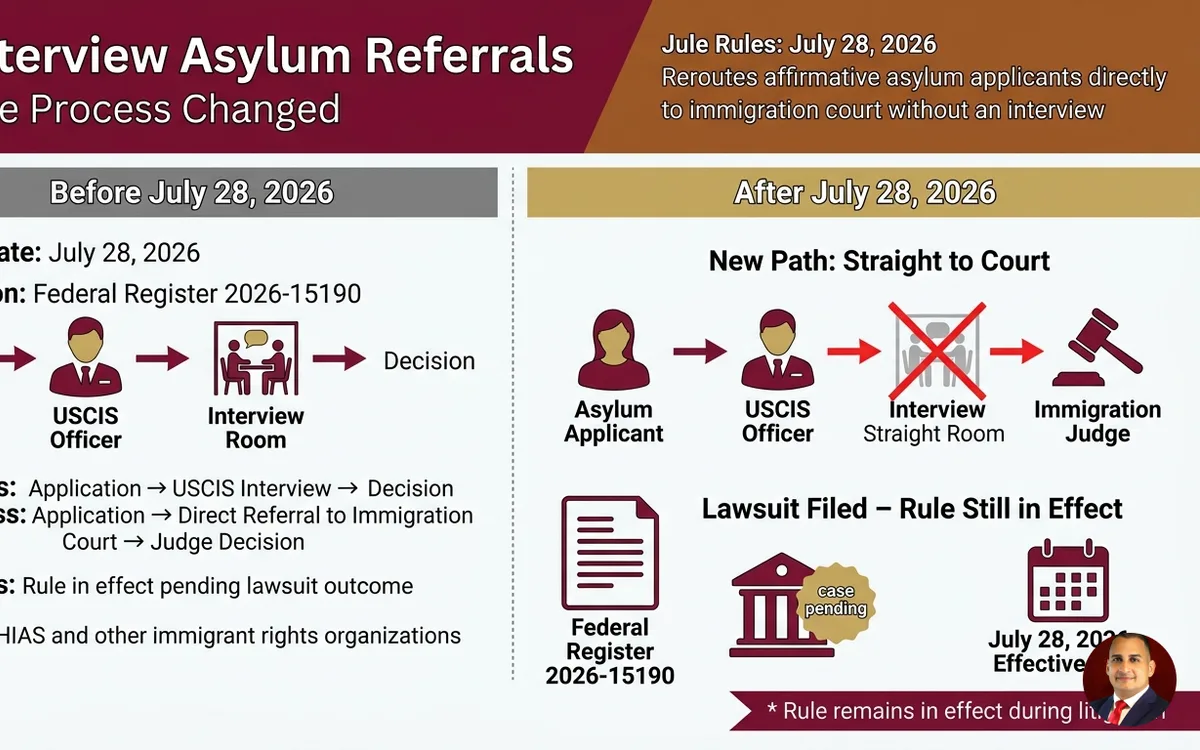
A July 28, 2026 federal rule lets USCIS skip the asylum interview and refer affirmative applicants straight to immigration court for a judge to decide the case (Federal Register 2026-15190). HIAS and other immigrant rights groups have sued, arguing the rule violates due process and federal rulemaking law. The rule remains in effect while that case is pending.
The Hard Truth
Will the Lawsuit Stop the Rule Before My Case Is Affected?
Probably not in time to help you. HIAS and a coalition of refugee resettlement organizations filed suit in federal court challenging the no-interview referral rule, arguing it violates the Administrative Procedure Act and due process protections recognized in cases like Grace v. Whitaker, 344 F. Supp. 3d 96 (D.D.C. 2018), which addressed procedural safeguards around asylum-related interviews (per HIAS's statement). A separate coalition that includes the American Association of University Professors has challenged related immigration policies affecting green card applicants, though that case addresses a different group of people (per AAUP's statement). Neither lawsuit has produced a nationwide injunction as of this writing, and the referral rule published as Federal Register 2026-15190 remains in effect.
If you receive a referral notice today, you cannot wait for litigation to resolve your case for you. Federal court challenges to immigration rules commonly take months or years to reach a final ruling, and a further appeal to the Fourth Circuit Court of Appeals in Richmond, the circuit that covers North Carolina, could extend that timeline again.
The Real Odds Once You're Referred to Immigration Court
An immigration judge has more authority to deny your claim outright than an asylum officer did. Asylum officers could only grant a case or refer it onward; a judge can deny asylum, order removal, and set a departure deadline in the same hearing. The Charlotte Immigration Court, like EOIR nationally, is working through a backlog that exceeded 3.6 million pending cases as of fiscal year 2024 (per TRAC Immigration's court backlog data). Your case takes a place in that line, and the wait for a final hearing can run one to three years depending on the court's current docket.
What Happens If You Wait
What Happens If You Miss Your Immigration Court Date?
An immigration judge can order you removed in absentia if you do not appear, meaning the case proceeds and concludes without you in the room. Under 8 U.S.C. § 1229a(b)(5), that in absentia removal order is difficult to reopen later and generally requires proof that you did not receive proper notice or that exceptional circumstances kept you from appearing. Once that order issues, you lose the chance to present your asylum claim to the judge at all.
Why Waiting to Respond to a Notice to Appear Makes Things Worse
Every day you wait to confirm your hearing date, mailing address, and attorney of record with EOIR Charlotte Immigration Court is a day closer to a missed deadline. The Form I-589 you already filed with USCIS carries over to the court record, but the judge sets new deadlines for additional evidence, country-condition documentation, and witness lists. Miss one of those deadlines and the judge can treat the application as abandoned or proceed without the evidence you needed. Address changes must be filed on Form EOIR-33 within five days of moving, per the Immigration Court Practice Manual, or a hearing notice sent to an old address can still count as proper notice.
Step-by-Step Process
What Happens Step by Step After a No-Interview Referral in North Carolina?
USCIS Charlotte Field Office issues a referral notice instead of an interview appointment. The notice explains that your Form I-589 is being sent to the immigration court rather than decided by an asylum officer.
The Department of Homeland Security files a Notice to Appear with EOIR Charlotte Immigration Court, starting removal proceedings. If you do not receive a copy, call EOIR's automated case hotline at 1-800-898-7180 to check your hearing location and date using your alien registration number.
Your first hearing is a master calendar hearing, a short procedural session, typically 5 to 15 minutes, where the judge confirms your identity and address and sets a schedule for filing evidence. This is not the hearing where your asylum claim gets decided.
Before your individual (merits) hearing, you or your attorney file updated country-condition evidence and a witness list by the judge's deadline, using EOIR's ECAS electronic filing system if represented by counsel registered to file electronically.
At the individual hearing, the judge reviews your I-589 testimony and evidence without the benefit of an earlier USCIS interview, meaning your account is evaluated fresh by someone who can grant asylum, grant a lesser form of relief, or order removal.
A denial can be appealed to the Board of Immigration Appeals within 30 days. A BIA denial can then be challenged through a petition for review filed with the U.S. Court of Appeals for the Fourth Circuit in Richmond, generally within 30 days of the BIA's decision under 8 U.S.C. § 1252(b)(1).
Our asylum process overview covers how affirmative applications are built before a referral happens, and our removal defense page covers what to expect once a case reaches EOIR regardless of how it got there.
A Real-World Example
Example: How a Referral Without Interview Unfolds in Charlotte Immigration Court
Consider a composite example based on the pattern we are seeing under the new rule, not a real client. A woman from Honduras filed Form I-589 affirmatively in early 2026, expecting an asylum officer interview within the year. In August 2026, USCIS Charlotte Field Office instead sent a referral notice citing the new rule and forwarded her file to EOIR Charlotte Immigration Court.
Her first master calendar hearing lasted about ten minutes. The judge confirmed her address, asked whether she had counsel, and set a filing deadline four months out for country-condition evidence and witness statements. She used that window to gather updated documentation and identify a witness who could testify by phone about conditions in her home region.
At her individual hearing roughly a year later, the judge questioned her directly about her original I-589 narrative and the evidence filed since the master calendar hearing. The judge took the matter under advisement rather than ruling from the bench, which is common in cases involving extensive country-condition evidence. As of this writing her decision remains pending. Her case shows the shape of the new process: no USCIS interview, a longer EOIR docket, and a judge making the first substantive decision instead of an asylum officer.
William J. Vasquez is admitted to the North Carolina State Bar and to the Fourth, Fifth, and Eleventh Circuit Courts of Appeals, giving him standing to handle federal immigration matters, including petitions for review, arising from North Carolina cases. He focuses his practice on NC-based asylum and removal defense matters, including cases referred from USCIS Charlotte Field Office to EOIR Charlotte Immigration Court under the 2026 referral rule. Because BIA appeals are governed by 8 C.F.R. § 1292.1 rather than circuit-specific admission, our team can also represent clients before the Board regardless of which circuit a case originates from.
You can review his full background on his attorney profile page or verify his license directly through the North Carolina State Bar's attorney lookup tool.
Key Terms Explained
Key Terms Used on This Page
Affirmative asylum application: An asylum request filed with USCIS using Form I-589 by someone not already in removal proceedings, under 8 U.S.C. § 1158 (INA § 208).
Referral: USCIS's decision to send an affirmative asylum case to an immigration judge instead of deciding it directly, now permitted without an interview under the rule published at Federal Register 2026-15190.
Notice to Appear (NTA): The charging document DHS files with the immigration court that starts removal proceedings and lists the hearing date, time, and location.
Master calendar hearing: A short, early procedural hearing where the judge confirms basic information and sets deadlines. It is not the hearing where asylum claims are decided.
Individual (merits) hearing: The longer hearing where the judge hears testimony and evidence and decides whether to grant asylum, grant other relief, or order removal.
In absentia order: A removal order a judge issues when a respondent fails to appear for a scheduled hearing, authorized under 8 U.S.C. § 1229a(b)(5).
Board of Immigration Appeals (BIA): The administrative body that reviews immigration judge decisions. Any attorney licensed in a single U.S. state bar in good standing may appear before it nationwide under 8 C.F.R. § 1292.1.
Petition for review: The filing that asks a federal circuit court, in North Carolina's case the Fourth Circuit, to review a final BIA decision.
Frequently Asked Questions
Q: What does it mean if USCIS refers my asylum case instead of interviewing me? A: It means an immigration judge, not an asylum officer, will decide your case after a Notice to Appear is filed with EOIR Charlotte Immigration Court. Your Form I-589 and supporting evidence carry over to the court record, but you will need to present your testimony fresh at a new hearing.
Q: Does the HIAS lawsuit mean I don't have to go to my immigration court hearing? A: No. The rule challenged by HIAS and other groups remains in effect while the lawsuit is pending, and your hearing notice is still enforceable. Skipping a scheduled hearing can result in an in absentia removal order under 8 U.S.C. § 1229a(b)(5).
Q: Can I still be granted asylum after my case is referred to immigration court? A: Yes. Referral changes who decides your case and where, but it does not change the legal standard. An immigration judge can grant asylum when you meet the same eligibility requirements under 8 U.S.C. § 1158 that an asylum officer would have applied.
Q: What happens if I miss my immigration court hearing? A: The judge can issue an in absentia removal order, meaning the case concludes without your testimony and a removal order is entered. Reopening that order later generally requires proving you did not receive proper notice or that exceptional circumstances kept you from appearing.
Q: How long will my case take once it's referred to Charlotte Immigration Court? A: It depends on the court's current docket, but EOIR's nationwide backlog exceeded 3.6 million pending cases as of fiscal year 2024, per TRAC Immigration, and individual hearings in backlogged courts are commonly scheduled one to three years out.
Q: What does it cost to have an attorney handle a referred asylum case? A: Fees vary by case complexity, and our office discusses a specific fee structure during a consultation rather than quoting one figure for every case. Immigration representation is not offered on a contingency basis, since there is no monetary recovery to share; fees are set upfront for the work involved.
Q: If the immigration judge denies my case, can I appeal? A: Yes. You generally have 30 days to appeal to the Board of Immigration Appeals, and a denial from the BIA can be challenged through a petition for review filed with the Fourth Circuit Court of Appeals, generally within 30 days of the BIA's decision under 8 U.S.C. § 1252(b)(1).
Q: What should I do first if I receive a Notice to Appear? A: Confirm your hearing date, time, and location directly with EOIR's automated case hotline at 1-800-898-7180 using your alien registration number, and file Form EOIR-33 if your address has changed. Do not assume a mailed notice reached you if you have moved.
Q: Does the refugee resettlement funding freeze affect my asylum case directly? A: Not usually. The freeze referenced in recent lawsuits mainly affects resettlement services funded through agencies like the North Carolina Office of Refugee Resettlement within NCDHHS, which serve refugees after arrival rather than pending affirmative asylum applicants in removal proceedings.
Clients come to our office after receiving paperwork they did not expect, often confused about why a case that started with USCIS is suddenly in front of a judge. What they describe afterward, in calls and reviews, is less about a single hearing and more about finally understanding the sequence: what happens first, what deadline comes next, and what a hearing actually involves. We cannot promise a particular result in any asylum case, and we do not quote outcome statistics. What we can offer is a clear explanation of where your case stands and what the next filing requires.
Reading about the process is a start. Knowing the statute numbers and hearing types does not change your filing deadline, and a referral notice from USCIS Charlotte Field Office already has dates attached to it. If you have a notice in hand, or you are waiting for one, the next useful step is having someone review the specific dates and forms in your file before the court's deadlines pass.
If you received a referral notice, a Notice to Appear, or a hearing date from EOIR Charlotte Immigration Court, schedule a consultation with our immigration team to review your Form I-589, your hearing deadlines, and your options for the individual hearing ahead. Call our office or use our online consultation request form to get a specific review of where your case stands under the 2026 referral rule.
- Asylum Process Overview (/immigration/asylum)
- Removal Defense in North Carolina (/immigration/removal-defense)
- BIA and Fourth Circuit Appeals (/immigration/appeals)
- Schedule a Consultation (/contact)
- Attorney William J. Vasquez (/attorneys/william-vasquez)