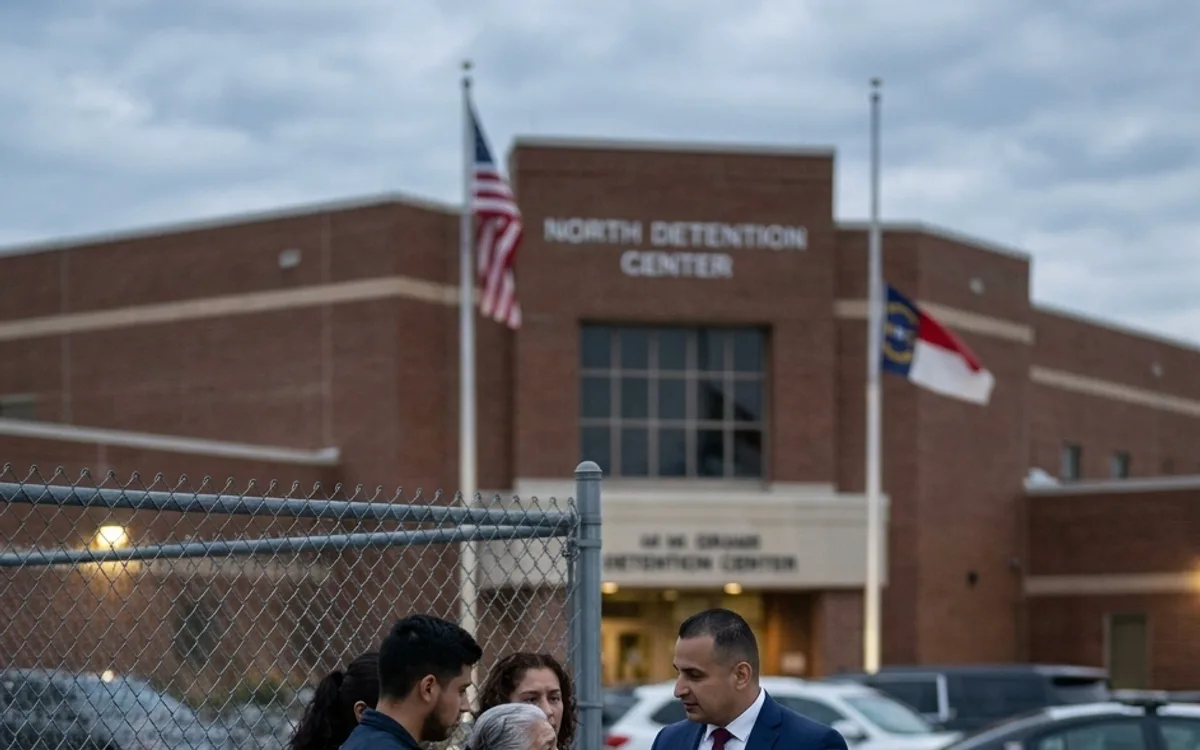
A phone call came, maybe from a jail you have never heard of, maybe from a hospital, maybe from a stranger who found your number in a wallet. Someone you love died during an ICE arrest, inside a county jail holding them under an immigration detainer, or in a detention facility hundreds of miles away. You do not know who is allowed to tell you what happened, whether a family member without legal status still has the right to sue, or whether any lawyer can touch a case against the federal government. This page covers North Carolina law only, not national immigration policy. It walks through the legal paths available to a family after a death connected to ICE enforcement in this state, the strict deadlines attached to each one, and what the first weeks of a case actually look like. Last updated June 2025.
Families of someone who died during an ICE arrest or in custody in North Carolina may have two legal paths: a Federal Tort Claims Act claim against the United States, filed within two years under 28 U.S.C. § 2401(b), or a state wrongful death claim against a county sheriff under N.C. Gen. Stat. § 28A-18-2.
The Hard Truth
## How Common Are Deaths During ICE Enforcement? ICE's own Detainee Death Reports, published at ice.gov, list more than 200 deaths in agency custody since the agency began keeping the list in fiscal year 2003, including at least 7 deaths ICE reported during fiscal year 2024 alone. TRAC Syracuse University (trac.syr.edu), which tracks federal immigration enforcement data independently of ICE, reported an average daily detained population above 39,000 people nationwide in 2024, the highest level the organization has recorded. Those figures count only people who died while physically inside an ICE detention facility. Deaths during the arrest itself, in a county jail holding someone on an immigration detainer before ICE transfer, or shortly after release, are tracked separately or not at all, a gap documented by investigative reporting from outlets including The Marshall Project (themarshallproject.org). A 2019 DHS Office of Inspector General investigation, report OIG-19-47 (oig.dhs.gov), found what it called dangerous practices at several ICE detention facilities, including delayed medical care and inadequate suicide prevention protocols. That report predates the current enforcement period, but the underlying detention infrastructure, including many of the same facilities and contracts, has not changed. ## Can You Sue ICE Directly for a Death in Custody? Rarely, and almost never successfully against the agency itself. The Federal Tort Claims Act waives the government's immunity for ordinary negligence, but it keeps immunity for any discretionary function, under 28 U.S.C. § 2680(a) (https://www.law.cornell.edu/uscode/text/28/2680). Courts read that exception broadly, often covering ICE's decisions about staffing levels, transport protocols, and medical screening, which are frequently the decisions blamed when someone dies in custody. Suing an individual ICE officer personally, under the constitutional tort theory from Bivens v. Six Unknown Named Agents, is harder still. The Supreme Court narrowed that remedy sharply in Egbert v. Boule, 596 U.S. 482 (2022), and federal courts, including the Fourth Circuit, which covers North Carolina, have since dismissed Bivens claims against immigration officers before any facts are tested at trial. A claim against a North Carolina sheriff's office operating under a 287(g) agreement runs on different law, the North Carolina Wrongful Death Act instead of federal tort law, but it carries its own immunity defenses. Public official immunity and governmental immunity can shield a county and its deputies unless the sheriff's liability insurance policy has waived immunity up to its limit, an analysis courts have applied in cases like Edwards v. City of Goldsboro, 178 F.3d 231 (4th Cir. 1999) (via Justia, law.justia.com), which addresses the scope of governmental immunity for North Carolina law enforcement officers. None of this makes a claim impossible. It means the first months after a death carry more procedural weight than they would in an ordinary negligence case, because records requests, administrative claim deadlines, and evidence preservation windows start running immediately, often before a family has found a lawyer.
What Happens If You Wait
## What Happens If You Wait to File a Claim? Two deadlines start running the day your family member dies, and missing either one can end a case before it begins. An administrative claim against DHS or ICE under the Federal Tort Claims Act must be filed within two years of the death, per 28 U.S.C. § 2401(b) (https://www.law.cornell.edu/uscode/text/28/2401). Skip that filing, or file it late, and a federal court has no authority to hear the case, regardless of how strong the facts are. If DHS denies the claim, or does not respond within six months, a lawsuit in federal district court must follow within six months of the denial, under 28 U.S.C. § 2675(a) (https://www.law.cornell.edu/uscode/text/28/2675). A wrongful death claim against a North Carolina sheriff's office, under N.C. Gen. Stat. § 28A-18-2 (https://www.ncleg.gov/EnactedLegislation/Statutes/HTML/BySection/Chapter_28A/GS_28A-18-2.html), must be filed within two years of death as well. If a North Carolina state agency, rather than a county, is a proper defendant, a tort claim affidavit must first be filed with the North Carolina Industrial Commission under N.C. Gen. Stat. § 143-297 (https://www.ncleg.gov/EnactedLegislation/Statutes/HTML/BySection/Chapter_143/GS_143-297.html) before any lawsuit can proceed. Waiting even a few months can cost the case its evidence, separate from any deadline. Body-worn camera and jail surveillance footage held by a county law enforcement agency is not preserved automatically, and under N.C. Gen. Stat. § 132-1.4A (https://www.ncleg.gov/EnactedLegislation/Statutes/HTML/BySection/Chapter_132/GS_132-1.4A.html), a specific written request, or a court order, is usually required to stop routine deletion. ICE's own detention standards (PBNDS 2011), overseen in part by the DHS Office of Inspector General, set retention schedules for medical and incident records that can run as short as 90 days depending on the record type. Once those windows close, the records are gone, and no later lawsuit can recreate them. Our North Carolina wrongful death practice (/practice-areas/wrongful-death-claims) and our team's experience with immigration detention procedures (/practice-areas/immigration/detention) both matter here, because the two filing tracks move on different clocks and often require coordinated records requests within the same first weeks.
Step-by-Step Process
## What Are the Procedural Steps After a Death During an ICE Operation in North Carolina? 1. Request records immediately, before hiring anyone. A family member can request an autopsy report from the county medical examiner, an incident report from the sheriff's office or police department involved, and a copy of any ICE detainee death report through a Freedom of Information Act request to DHS. These requests do not require a lawyer, and starting them early matters because some records, including county jail video, carry short retention windows under N.C. Gen. Stat. § 132-1.4A. 2. Identify who the proper defendant actually is. That depends on where the death occurred: inside an ICE-contracted detention facility points toward a Federal Tort Claims Act claim against the United States; inside a county jail operating under a 287(g) Jail Enforcement Model agreement, such as the agreements ICE maintains with the Henderson County Sheriff's Office and the Cabarrus County Sheriff's Office (see our overview of North Carolina's 287(g) agreements, /immigration/287g-agreements-north-carolina), points toward a North Carolina wrongful death claim against the county; during the arrest itself can point toward either, or both, depending on which personnel were present. 3. File the SF-95 administrative claim with DHS, if a federal claim applies. This is a Standard Form 95, filed with the DHS component involved, and it is a mandatory first step under 28 U.S.C. § 2675(a) (https://www.law.cornell.edu/uscode/text/28/2675), not an optional one. A lawsuit filed before this administrative claim is submitted, or before six months have passed without a response, is dismissed for lack of jurisdiction. 4. Separately pursue a North Carolina wrongful death claim, where applicable, in the county where the death or injury occurred. This claim is filed in North Carolina Superior Court under N.C. Gen. Stat. § 28A-18-2 (https://www.ncleg.gov/EnactedLegislation/Statutes/HTML/BySection/Chapter_28A/GS_28A-18-2.html), naming the personal representative of the estate as plaintiff, and service on a county or sheriff's office follows Rule 4(j)(9) of the North Carolina Rules of Civil Procedure (https://www.ncleg.gov/EnactedLegislation/Statutes/HTML/BySection/Chapter_1A/GS_1A-1.html). 5. Wait for the DHS response period to run, then file suit in federal court if needed. DHS has six months to respond to the SF-95 claim. If it denies the claim, or six months pass with no answer, suit can be filed in the U.S. District Court for the Eastern District of North Carolina (Terry Sanford Federal Building and Courthouse, Raleigh) or the Middle District, depending on where the events occurred. 6. Expect the case to run on two different tracks, on two different clocks, for a long stretch of the process. The federal administrative claim period and the state wrongful death filing deadline often overlap rather than follow a single sequence, and a family pursuing both needs records and deadlines tracked separately from the start.
A Real-World Example
## A Composite Example: The Records Request That Almost Came Too Late Consider a composite, non-client scenario built from patterns we see, not a real case. A man in his forties is arrested on an immigration detainer and held at a county jail participating in ICE's 287(g) Jail Enforcement Model. Three days later, his family receives a call that he is unresponsive and has been transported to a hospital, where he is pronounced dead. His sister, who has legal status and lives in Charlotte, starts calling the county jail and the hospital that same week, before contacting any attorney. She requests the incident report, the autopsy report from the county medical examiner, and asks in writing that the jail preserve any video from the housing unit where her brother was held, citing N.C. Gen. Stat. § 132-1.4A. That written preservation request, sent within the first ten days, is the step most families do not know to take, and it costs nothing. When she consults our firm, intake separates two questions: whether a Federal Tort Claims Act claim applies, because ICE had already lodged the detainer and was involved in his custody decisions, and whether a North Carolina wrongful death claim applies against the county, because county deputies held him and made the call to transport him. Both tracks get opened. The SF-95 administrative claim is prepared and filed with DHS, and the North Carolina wrongful death action is filed separately in Superior Court, naming her as the proposed personal representative of the estate pending appointment by the clerk of court. As of this writing, the administrative claim is in its six-month federal response window, and the state case is in early discovery, with depositions of jail medical staff not yet scheduled. No outcome has been determined in either track, and none should be predicted before the records and testimony are in.
William J. Vasquez is licensed to practice law in North Carolina and is admitted to practice before the U.S. District Courts for the Eastern and Middle Districts of North Carolina, as well as the U.S. Court of Appeals for the Fourth Circuit. His practice includes wrongful death litigation against government entities and civil matters arising from immigration detention and enforcement in North Carolina. He has represented families in matters involving county jails, 287(g) agreements, and federal detention facilities, work that requires filing in both state Superior Court and federal district court, often in the same matter. That dual-track filing experience, specifically preparing Standard Form 95 administrative claims alongside North Carolina wrongful death complaints, is directly relevant to the procedural sequence described above. Read more about his background and bar admissions on his attorney profile (/attorneys/william-j-vasquez).
Key Terms Explained
Federal Tort Claims Act (FTCA): The federal statute, 28 U.S.C. §§ 1346(b) and 2671-2680, that allows a person to sue the United States for the negligent or wrongful acts of federal employees acting within the scope of their duties, subject to specific exceptions. Administrative claim (SF-95): A Standard Form 95 filed with the federal agency involved before any FTCA lawsuit can be filed in court; required under 28 U.S.C. § 2675(a). Discretionary function exception: A carve-out in the FTCA, found at 28 U.S.C. § 2680(a), that keeps the government immune from suit for decisions involving policy judgment, even if the decision turned out to be harmful. Bivens claim: A lawsuit against an individual federal officer, in their personal capacity, for violating a constitutional right, based on Bivens v. Six Unknown Named Agents; this remedy has been significantly narrowed by later Supreme Court decisions, including Egbert v. Boule (2022). Qualified immunity: A legal defense that shields a government official from personal liability unless the official violated a clearly established constitutional right that a reasonable officer would have known about. 287(g) agreement (Jail Enforcement Model): A formal agreement between ICE and a local sheriff's office, authorizing specific county detention officers to perform certain immigration enforcement functions inside the county jail. North Carolina Wrongful Death Act: N.C. Gen. Stat. § 28A-18-2, which allows the personal representative of a deceased person's estate to bring a civil claim when the death was caused by another party's wrongful act, neglect, or default. Personal representative: The person appointed by the clerk of court to manage a deceased person's estate, including the authority to bring a wrongful death claim on the estate's behalf. North Carolina Industrial Commission tort claim affidavit: A filing required under N.C. Gen. Stat. § 143-297 before a claim for damages can proceed against a North Carolina state agency, as opposed to a county. PBNDS (Performance-Based National Detention Standards): ICE's internal operating standards for detention facilities, including medical care, record keeping, and incident reporting requirements, most recently updated in 2011. DHS Office of Inspector General (OIG): The independent oversight office within the Department of Homeland Security that investigates and reports on conditions and practices at ICE facilities. Sovereign immunity: The general legal principle that a government cannot be sued without its consent; the FTCA and the NC Industrial Commission process are both examples of the government consenting to be sued in limited ways. Public official and governmental immunity: North Carolina legal doctrines that can shield counties, sheriffs, and individual officers from civil liability unless immunity has been waived, typically through the purchase of liability insurance.
Frequently Asked Questions
Q: Can I sue ICE directly if a family member died during an arrest in North Carolina? A: You can file an administrative claim against the United States under the Federal Tort Claims Act, but the discretionary function exception under 28 U.S.C. § 2680(a) often blocks claims based on ICE's staffing, transport, or medical screening decisions, the decisions most often at issue in a custody death. Q: What is the deadline to file a claim after a death in ICE custody? A: A Federal Tort Claims Act administrative claim must be filed within two years of the death under 28 U.S.C. § 2401(b), and a lawsuit must follow within six months of a denial under 28 U.S.C. § 2675(a); a North Carolina wrongful death claim must separately be filed within two years under N.C. Gen. Stat. § 28A-18-2. Q: Can a North Carolina sheriff's office be held liable for a death under a 287(g) agreement? A: It is possible, through a state wrongful death claim, but governmental and public official immunity can shield the county and its deputies unless the sheriff's liability insurance policy has waived that immunity up to its coverage limit. Q: Does qualified immunity block a lawsuit against individual ICE agents? A: It makes a personal lawsuit against an individual agent, known as a Bivens claim, substantially harder since the Supreme Court's 2022 decision in Egbert v. Boule narrowed that remedy, and federal courts including the Fourth Circuit have since dismissed similar claims early in the case. Q: How do I request records about a death during an ICE operation? A: A family member can request the county medical examiner's autopsy report, the incident report from the law enforcement agency involved, and ICE's own records through a Freedom of Information Act request to DHS, none of which require hiring an attorney first. Q: What is the North Carolina Industrial Commission's role in a claim against a state agency? A: If a North Carolina state agency, rather than a county, is the proper defendant, N.C. Gen. Stat. § 143-297 requires a tort claim affidavit to be filed with the North Carolina Industrial Commission in Raleigh before any lawsuit can proceed.
Families contacting our firm after a death connected to ICE enforcement are often doing it for the first time, frightened of saying the wrong thing to a government agency. Clients describe our team's intake calls as direct about deadlines and documents needed in the first two weeks, rather than reassuring in a general sense. We do not publish star ratings or outcome statistics on this page, consistent with North Carolina Rule of Professional Conduct 7.1's restrictions on unverifiable result-based claims. Prior clients can be reached through independent review platforms including Google and Avvo for unfiltered feedback about working with our team.
If you are still gathering records, that is the right first move, and you do not need to have hired a lawyer to request an autopsy report or file a FOIA request with DHS today. Many families spend the first month on records alone before deciding whether a claim makes sense at all. When you are ready to talk through what the records show and which filing track applies, our office can walk through that with you.
Contact our office for a consultation about a wrongful death or civil rights claim connected to an ICE enforcement operation or detention death in North Carolina. We will review the records you already have, identify which deadlines apply to your family's situation, including the two-year Federal Tort Claims Act window under 28 U.S.C. § 2401(b) and the two-year North Carolina wrongful death deadline under N.C. Gen. Stat. § 28A-18-2, and explain what filing each track involves. Call our North Carolina office or request a consultation through our wrongful death intake page (/practice-areas/wrongful-death-claims/contact).
- North Carolina Wrongful Death Claims: /practice-areas/wrongful-death-claims
- Immigration Detention and Civil Rights in North Carolina: /practice-areas/immigration/detention
- North Carolina 287(g) Agreements Explained: /immigration/287g-agreements-north-carolina
- Attorney William J. Vasquez: /attorneys/william-j-vasquez
- Contact Our North Carolina Office: /contact