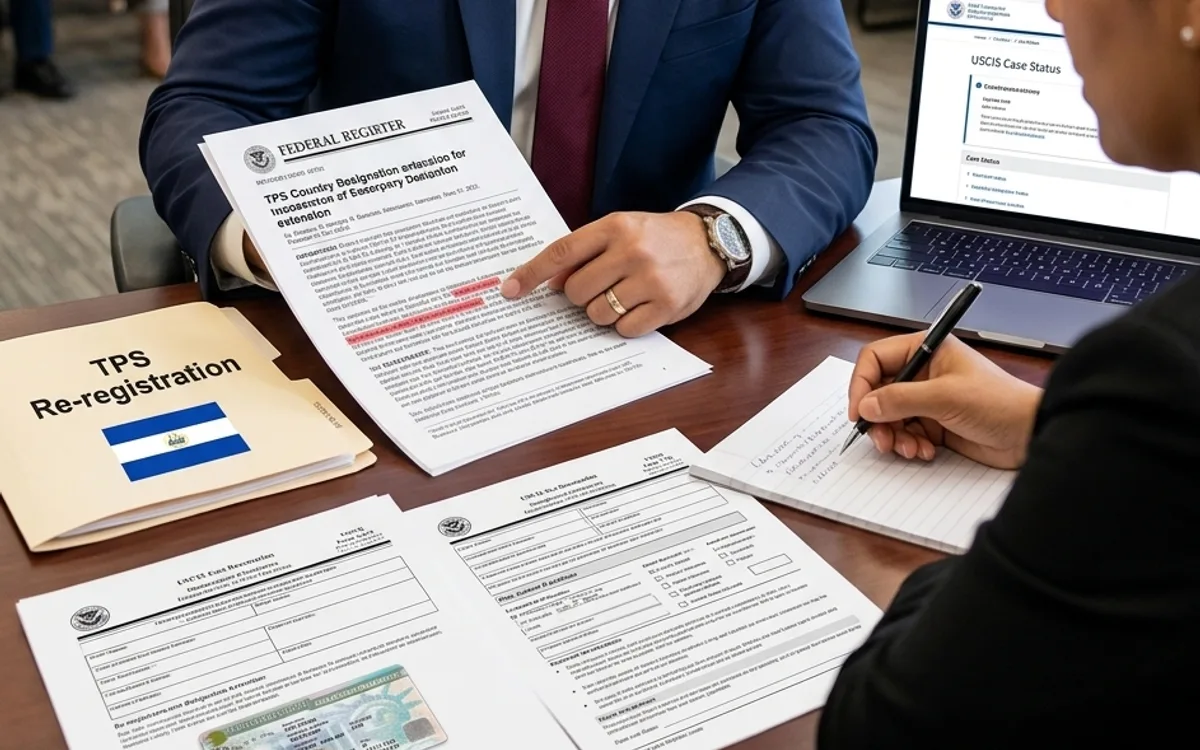
Every few months, the news cycle turns back to your country, and your stomach drops before you even click the headline. Will the designation extend? Will it end? You have built a life here: a job, maybe a house payment, kids in a Duplin County school district, while your paperwork depends on a notice published in a government bulletin called the Federal Register. That whiplash is just how Temporary Protected Status works. One missed deadline can undo years of lawful presence.
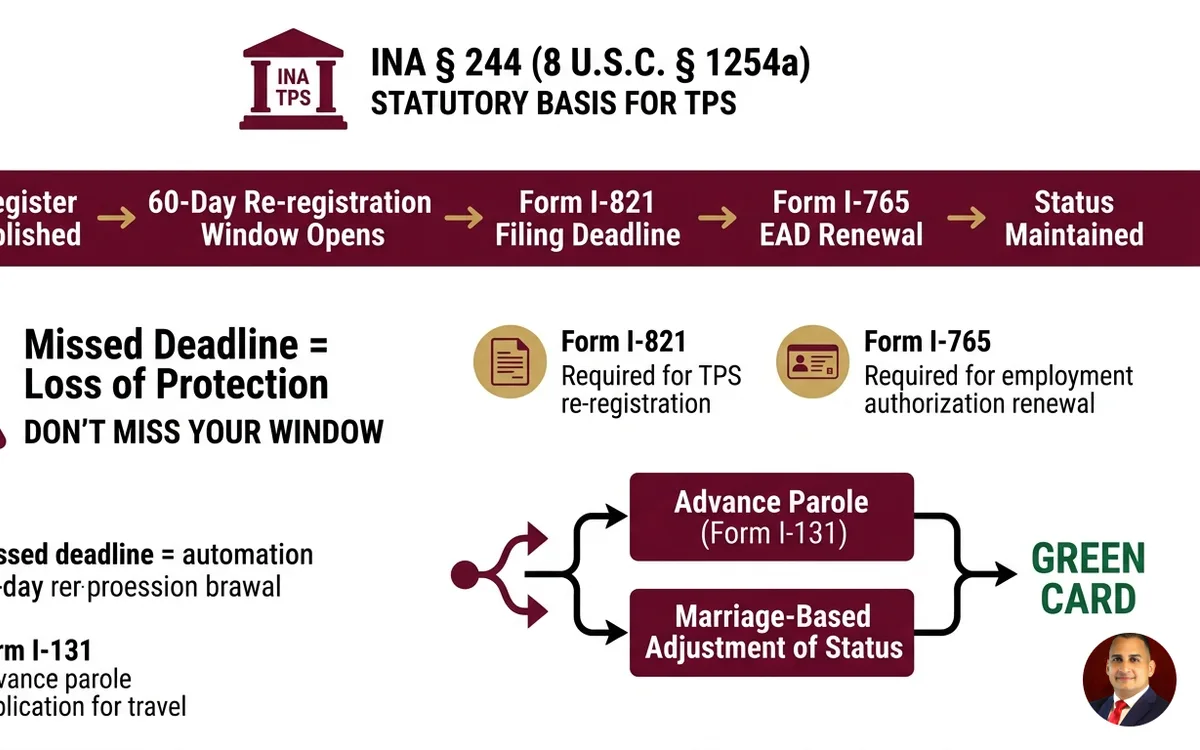
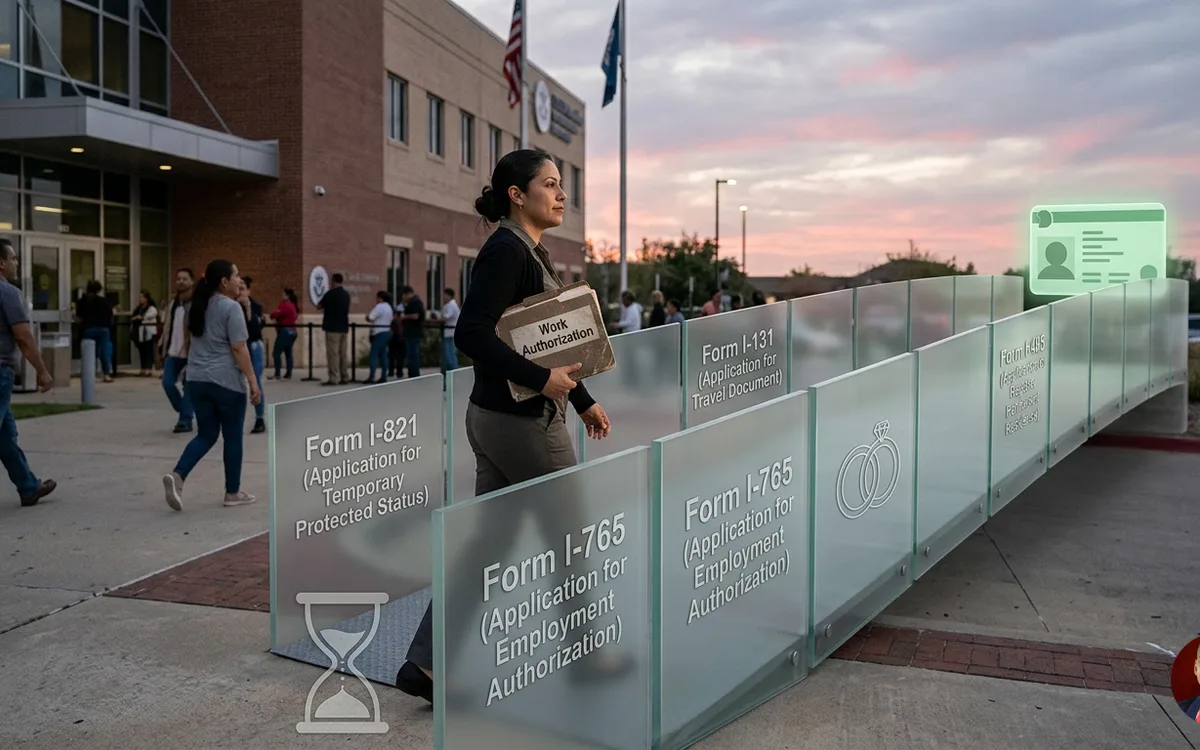
A TPS attorney helps Temporary Protected Status holders track Federal Register deadlines, file Form I-821 re-registrations, maintain valid work authorization through Form I-765, and evaluate paths such as advance parole (Form I-131) or marriage-based adjustment of status toward a green card. Under INA § 244 (8 U.S.C. § 1254a), missing a re-registration window can end protection.
The Hard Truth
TPS Is Temporary By Design, and That Is the Hard Part
Temporary Protected Status was never built as a green card substitute. Congress created it in the Immigration Act of 1990 as humanitarian relief tied to conditions in your home country, not your individual equities here. Under INA § 244(b)(3)(A) (8 U.S.C. § 1254a(b)(3)(A)), the Secretary of Homeland Security must review each country's designation periodically, and that review is political as well as factual. A designation can be extended, redesignated to cover more recent arrivals, or terminated, and recent history shows DHS has moved in all three directions depending on the administration (see, for example, the termination and reinstatement cycle litigated in Ramos v. Nielsen, 889 F.3d 858 (9th Cir. 2018)).
Re-registration windows are typically 60 days, set individually in each country's Federal Register notice, and USCIS does not send a personal reminder. File even one day after the window closes, and the regulations at 8 C.F.R. § 244.17 give you narrow late-filing exceptions, not a guarantee. We have no control over whether your home country's designation gets extended or terminated; that decision belongs to DHS. Our job is narrower and more practical: keeping you from losing status over a missed date, and telling you plainly when TPS alone will not lead to a green card.
What Happens If You Wait
What Happens If You Wait
When a TPS re-registration window closes without a filing, the consequences land immediately: your lawful status and your work authorization can end on the same day. Once your Form I-821 window closes without a timely filing, your Form I-765 employment authorization document (EAD) stops renewing, and your employer's E-Verify or Form I-9 reverification will flag you within days, not months. Poultry-processing employers across the Duplin and Sampson County corridor run regular I-9 audits; a gap in your EAD is often the first thing a compliance officer in HR notices, before you do.
Every month without valid status also closes off options. Advance parole under 8 C.F.R. § 244.17 only works if you file Form I-131 while your TPS is still valid, so travel for a dying parent or a family emergency becomes legally risky, not just emotionally hard, once your status lapses. If you later marry a U.S. citizen, an adjustment-of-status filing under INA § 245 is far more straightforward if your TPS never broke than if you are reconstructing years of unlawful presence after the fact. None of this reverses itself automatically. DHS does not restore a missed re-registration window just because your reasons were good.
Step-by-Step Process
How TPS Re-Registration and Related Filings Actually Work
Confirm your country's current designation status. Check the Federal Register's published TPS notices (federalregister.gov, search "Temporary Protected Status" plus your country name) or USCIS's TPS country-status page (uscis.gov/tps) for the exact re-registration window dates for your designation cycle. Do this yourself today; it costs nothing and takes ten minutes.
File Form I-821, Application for Temporary Protected Status, during the open window. Include Form I-765 if you need a new or renewed EAD, and pay or request a fee waiver for the applicable filing fees set out in 8 C.F.R. § 244.17 and the current USCIS fee schedule.
Attend your biometrics appointment. Most North Carolina applicants are scheduled at the Charlotte Application Support Center (6130 Tyvola Centre Dr, Charlotte, NC 28217) or another regional ASC; bring your appointment notice and a government photo ID.
Track adjudication through the USCIS National Benefits Center, which adjudicates Form I-821 and associated Form I-765 filings. Processing times vary by service center and change throughout the year; check the current range for your receipt category at the USCIS processing-times tool (egov.uscis.gov/processing-times) rather than relying on a fixed number.
If you need to travel, file Form I-131 for advance parole under 8 C.F.R. § 244.17 before you leave the country, and wait for approval before departing. Traveling on advance parole and being inspected on return can affect eligibility for adjustment of status later, so this step should be evaluated against your specific facts, not treated as routine paperwork.
If you have a U.S. citizen spouse, parent, or adult child, evaluate adjustment of status under INA § 245 alongside your TPS renewal. TPS holders may satisfy the "inspected and admitted or paroled" requirement differently depending on how they entered, which is exactly the question addressed in Sanchez v. Mayorkas, 141 S. Ct. 1809 (2021); this needs case-specific review, not a general answer.
Calendar your next re-registration window the moment this one closes. DHS announces each designation's next window through a new Federal Register notice, usually before the prior EAD validity or extension period ends, though exact timing is set per notice. Organizations such as the Latin American Coalition in Charlotte also provide know-your-rights information and community support while a case is pending, independent of any attorney relationship.
A Real-World Example
A Composite Example: Re-Registration After a Missed Notice
Consider a composite client we will call Elena, a Honduran national working at a poultry-processing plant in Duplin County. She had re-registered for TPS every cycle for years, but a change of address meant she never received her employer's reminder about the newest window, and she had not independently checked the Federal Register. By the time she came in, her EAD had been expired for six weeks and her HR department had already flagged her file for I-9 reverification.
The first step was confirming whether Honduras's designation was still open for late re-registration under 8 C.F.R. § 244.17's limited exceptions, which required documenting the specific reason for the delay. We prepared and filed her Form I-821 and Form I-765 together, scheduled biometrics at the Charlotte Application Support Center, and sent her employer a letter confirming the filing receipt while adjudication was pending at the National Benefits Center.
Because Elena has a U.S. citizen adult daughter, we also reviewed whether adjustment of status might eventually apply, which meant pulling her original entry records to assess how Sanchez v. Mayorkas, 141 S. Ct. 1809 (2021), would apply to her specific entry history. That review takes weeks to complete properly; it is not a single-meeting answer. Elena's case illustrates the sequence most late re-registrations follow, not a guaranteed result. USCIS, not the applicant's attorney, decides every filing.
About the Attorney Handling TPS Matters
William J. Vasquez represents TPS holders and applicants before USCIS and, when cases involve removal proceedings, before the Executive Office for Immigration Review (EOIR) and the Board of Immigration Appeals (BIA). His federal immigration practice covers the full TPS lifecycle: initial applications, re-registration, EAD renewal, advance parole requests under Form I-131, and adjustment-of-status evaluation for TPS holders with a qualifying family relationship.
Our office maintains a standing process for tracking every Federal Register notice affecting currently designated TPS countries, including Venezuela, Honduras, El Salvador, Haiti, Nicaragua, and Sudan, so clients hear about an opening or closing re-registration window before it becomes a crisis rather than after. For the full scope of his background and the matters he handles, see his attorney bio page. TPS and related USCIS filings are federal immigration matters, handled the same way regardless of which state a client lives in.
Key Terms Explained
Key Terms Used on This Page
Temporary Protected Status (TPS): A temporary immigration status granted to nationals of countries designated by the Department of Homeland Security under INA § 244 (8 U.S.C. § 1254a) due to armed conflict, environmental disaster, or other extraordinary conditions.
Form I-821: The USCIS application used to initially apply for TPS or to re-register for an existing designation.
Form I-765 (EAD): The Application for Employment Authorization; approval produces the Employment Authorization Document that proves your right to work.
Form I-131 / Advance Parole: The travel authorization document TPS holders must obtain under 8 C.F.R. § 244.17 before leaving the United States if they intend to return.
Redesignation: When DHS extends TPS coverage to include individuals who arrived in the United States after the original designation date, expanding who currently qualifies.
Re-registration window: The specific period, published in a Federal Register notice for each country, during which existing TPS holders must file to keep their status active.
National Benefits Center: The USCIS service center that adjudicates Form I-821 applications and related Form I-765 work authorization requests.
Adjustment of status: The process under INA § 245 of applying for lawful permanent residence (a green card) from within the United States, without leaving for consular processing abroad.
Federal Register notice: The official government publication where DHS must announce every TPS designation, extension, redesignation, or termination decision under INA § 244(b).
Frequently Asked Questions
Q: I missed my TPS re-registration window. What can I do now? A: File Form I-821 as soon as possible and document the specific reason for the delay; 8 C.F.R. § 244.17 allows USCIS to consider late re-registration in limited circumstances, but approval is not automatic. The longer you wait after discovering the missed window, the harder it becomes to show good cause.
Q: How much does it cost to hire an attorney for a TPS case? A: Fees vary with the complexity of the filing, for example a straightforward re-registration versus a late filing combined with an adjustment-of-status review. Ask for a written fee agreement before any work begins; immigration representation is not offered on a contingency basis, since there is no monetary recovery to share in a status case.
Q: How long does USCIS take to process a TPS re-registration or EAD renewal? A: Processing times change throughout the year and differ by service center, so check the current range for your specific receipt category at USCIS's processing-times tool (egov.uscis.gov/processing-times) rather than relying on a fixed number. Your receipt notice also confirms whether your EAD is covered by an automatic extension while the renewal is pending.
Q: My EAD expired but my renewal is still pending. Can I keep working? A: DHS has periodically extended the automatic extension period for certain EAD renewal categories through Federal Register notices, including a notice published in January 2024 raising the automatic extension to up to 540 days for eligible applicants. Whether you qualify depends on your specific category and filing date, so confirm against your receipt notice and the applicable notice before assuming coverage.
Q: What happens if my country's TPS designation is terminated? A: DHS must publish a termination decision in the Federal Register under INA § 244(b)(3), and that notice sets a wind-down date, generally at least 60 days out, after which work authorization and protection from removal end unless you have another lawful basis to remain. Terminations have been challenged in federal court before, as in Ramos v. Nielsen, 889 F.3d 858 (9th Cir. 2018), so a termination notice is worth a case review rather than an assumption that nothing can be done.
Q: Can I travel outside the United States while I have TPS? A: Only with advance parole, Form I-131, approved in advance under 8 C.F.R. § 244.17. Traveling without it, or leaving before approval, can be treated as abandoning your TPS and can create serious problems with re-entry.
Q: I have TPS and I am marrying a U.S. citizen. Can I get a green card? A: It depends heavily on how you originally entered the United States and whether that entry counts as an inspection and admission or parole for purposes of INA § 245. Sanchez v. Mayorkas, 141 S. Ct. 1809 (2021), addressed this question directly, and the answer is not the same for every TPS holder, so it requires a document-by-document review of your entry history.
Clients come to us after a redesignation announcement, a notario's bad advice, or a missed deadline they discovered too late, and most say the same thing afterward: they wanted someone who would actually track the Federal Register for their country instead of waiting for them to ask. Our intake process is built around that. We do not publish star ratings or outcome percentages here, since no two TPS cases involve the same designation history, entry facts, or family circumstances, and immigration results depend on USCIS and, in removal cases, an immigration judge, not on how many cases a firm has handled. What we can tell you is how many re-registration cycles our office has tracked for Venezuela, Honduras, El Salvador, Haiti, Nicaragua, and Sudan clients, and that the same attorney reviewing your file today is the one who signs off on it before it goes to USCIS.
If you are not sure whether your country's designation is still open, or whether your last re-registration actually went through, that is worth answering before the next news cycle brings another round of uncertainty. A short review of your USCIS receipt notices and entry history tells us more than a general question ever could.
Our team offers a consultation focused specifically on TPS cases, including re-registration review, EAD renewal tracking, advance parole strategy, and adjustment-of-status screening for TPS holders with a qualifying U.S. citizen or lawful permanent resident relative. Call our office or use the contact form on our immigration services page to schedule a review of your TPS file with our immigration team before your next deadline arrives.
- TPS Re-Registration and Status Review Services
- Asylum Representation
- Marriage-Based Green Card and Adjustment of Status
- Removal Defense Before the Immigration Court and BIA
- Attorney Bio: William J. Vasquez
- USCIS TPS Country Status Page (uscis.gov/tps)
- Federal Register TPS Notices (federalregister.gov)
- Sanchez v. Mayorkas, 141 S. Ct. 1809 (2021), Supreme Court Opinion