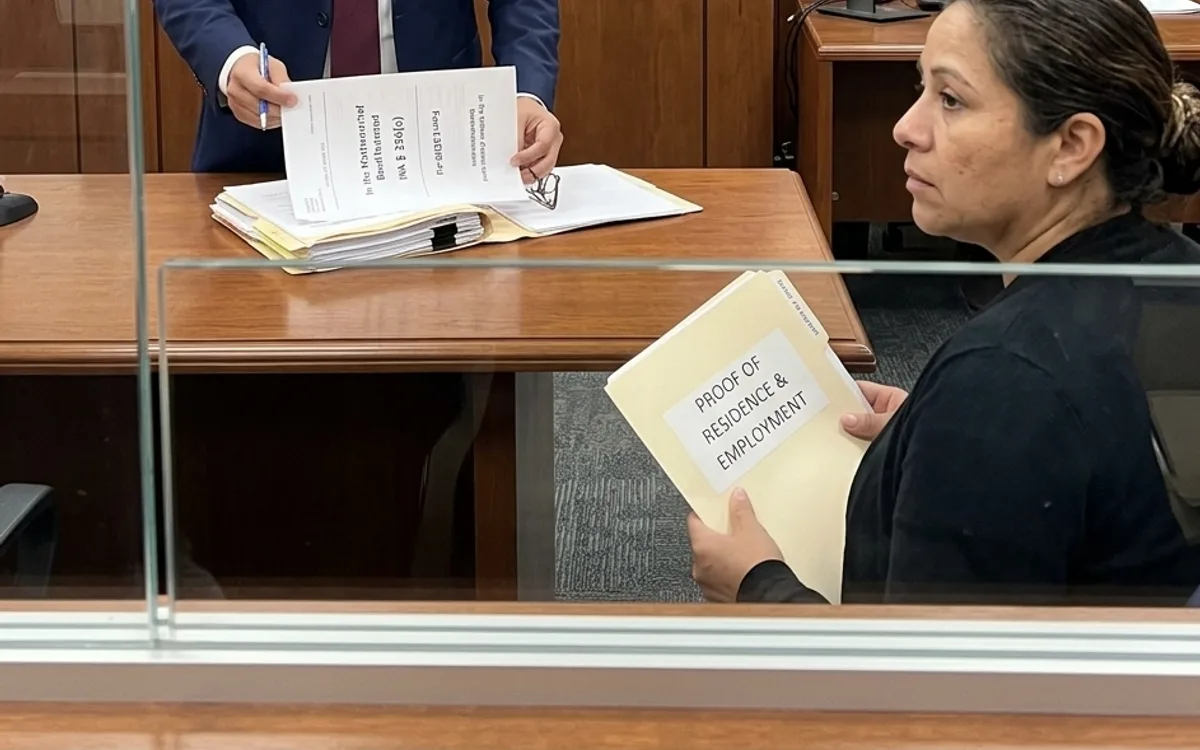
Your phone rang and it was county jail or a detention facility, not your relative. ICE now has them, and you do not know if they are still in Mecklenburg County Jail Central or already on a bus to Stewart Detention Center in Lumpkin, Georgia. Every hour that passes without a bond motion filed is an hour closer to a transfer that moves the case eight hours away from Charlotte. You need someone who answers the phone today, not next week.
An immigration bond hearing asks an immigration judge to set a release amount while a removal case continues. Under INA § 236(a) (8 U.S.C. § 1226(a)), judges may grant bond if the detainee is not a flight risk or danger. Hearings are requested through EOIR's Charlotte Immigration Court, often within one to three weeks of filing.
The Hard Truth
Not every detainee qualifies for a bond hearing at all. If ICE holds your family member under INA § 236(c) (8 U.S.C. § 1226(c)) mandatory detention, usually tied to certain criminal convictions, the Charlotte Immigration Court judge has no authority to set bond, period. Mandatory detention cases move instead to a habeas corpus petition in federal district court, a slower and different track. For cases that do qualify for a 236(a) discretionary hearing, a judge can still deny bond outright or set an amount the family cannot pay, and no attorney can tell you what a judge will decide before the evidence is heard.
What Happens If You Wait
Every day without a filed bond motion is a day your relative stays locked up while ICE finishes building the custody record it will use later in the case. Detainees are frequently transferred within days from Mecklenburg County Jail Central, Alamance County Detention Center, or Wake County Detention Center to Stewart Detention Center in Lumpkin, Georgia, roughly 350 miles from Charlotte. Once that transfer happens, a motion to change venue has to be filed with EOIR before the Charlotte Immigration Court will even hear the case, adding weeks before a bond hearing is possible. Meanwhile your relative loses wages, the household loses a second income, and the underlying removal case keeps running on its own deadline regardless of custody status.
Step-by-Step Process
Step 1: DHS/ICE arrests the individual and issues Form I-286, Notice of Custody Determination, which sets an initial ICE bond amount or marks the case as no-bond. Step 2: A bond redetermination request is filed through EOIR's ECAS electronic filing system with the Charlotte Immigration Court at 5701 Executive Center Drive. If the detainee has already been moved to Stewart Detention Center in Lumpkin, a motion to change venue back to Charlotte is filed first. Step 3: Evidence is gathered, lease or mortgage documents, pay stubs, an employer letter, and sponsor letters from family members, addressing the flight-risk and danger factors set out in Matter of Guerra, 24 I&N Dec. 37 (BIA 2006). Step 4: EOIR schedules the hearing, typically one to three weeks after the request is filed, per the EOIR Immigration Court Practice Manual, Chapter 9. Step 5: At the hearing, the judge hears from DHS counsel and the detainee's side, then sets a bond amount or denies release. Step 6: If bond is granted, payment of at least $1,500 under 8 U.S.C. § 1226(a)(2)(A) is made directly to ICE, not the court. Step 7: If bond is denied or unaffordable, options include appealing to the Board of Immigration Appeals, filing a second request if circumstances change, or continuing the removal case from detention while the family arranges funds.
A Real-World Example
Consider a composite based on the kind of matter our team handles regularly. ICE stops a detainee at a routine check-in in Mecklenburg County and files a Form I-286 setting an initial bond amount ICE decided administratively. The family calls our office within 24 hours. The next business day, our team files a bond redetermination request through EOIR's ECAS system with the Charlotte Immigration Court, along with a signed lease, two years of pay stubs, a letter from the detainee's employer confirming the job is held open, and letters from three family members willing to serve as sponsors. The hearing is scheduled nine days later. At the hearing, the judge questions the detainee's ties to the district and asks DHS counsel about the underlying record, then weighs those facts against the factors from Matter of Guerra, 24 I&N Dec. 37 (BIA 2006): community ties, criminal history, prior immigration violations, and past court appearances. The judge issues a bond decision, and either way, the underlying removal case continues separately on its own track at the same court.
William J. Vasquez has spent years focused on immigration detention and bond matters, representing detainees held at Mecklenburg County Jail Central, Alamance County Detention Center, Wake County Detention Center, and, after transfer, at Stewart Detention Center in Lumpkin, Georgia. He personally reviews bond redetermination filings submitted through EOIR's ECAS system and motions to change venue back to Charlotte Immigration Court for clients moved out of state. His practice centers on acting within the first days after an ICE arrest, when the filing window matters most.
Key Terms Explained
INA § 236(a) (8 U.S.C. § 1226(a)): the statute allowing a discretionary bond hearing before an immigration judge for most detainees. INA § 236(c) (8 U.S.C. § 1226(c)): the mandatory detention statute that strips the judge of bond authority for certain criminal or terrorism-related grounds. Form I-286, Notice of Custody Determination: the DHS/ICE document that sets the initial bond amount or no-bond status at the time of arrest. EOIR: the Executive Office for Immigration Review, the Department of Justice agency that runs the immigration courts and adjudicates bond hearings. ECAS: EOIR's Courts and Appeals System, the electronic portal through which bond motions and filings are submitted. BIA: the Board of Immigration Appeals, which reviews a judge's bond decision on appeal. Bond redetermination hearing: the hearing at which an immigration judge reconsiders ICE's initial custody decision. Matter of Guerra factors: the list of considerations from Matter of Guerra, 24 I&N Dec. 37 (BIA 2006), including community ties, criminal history, and flight risk, that a judge weighs in setting or denying bond. Motion to change venue: a filing asking EOIR to move a case's docket to a different immigration court, often needed after an out-of-state transfer.
Frequently Asked Questions
Q: How fast can I get an emergency immigration bond hearing after an ICE arrest in Charlotte? A: A bond redetermination request can be filed within 24 to 48 hours of arrest through EOIR's ECAS system at Charlotte Immigration Court. The hearing itself is typically scheduled one to three weeks later, per the EOIR Immigration Court Practice Manual, Chapter 9. Q: My family member was moved from North Carolina to Stewart Detention Center in Lumpkin, Georgia. Can we still get the bond hearing in Charlotte? A: Sometimes. A motion to change venue back to Charlotte Immigration Court can be filed with EOIR, but the judge decides whether to grant it based on where the detainee's ties and evidence are strongest. Q: How much does an immigration bond cost at Charlotte Immigration Court? A: Bond amounts are set case by case. Federal law sets a statutory minimum of $1,500 under 8 U.S.C. § 1226(a)(2)(A), but judges frequently set bonds well above that minimum based on the Matter of Guerra factors. Q: Can my family member get a bond hearing if they are held under mandatory detention? A: Generally no. Under INA § 236(c) (8 U.S.C. § 1226(c)), certain criminal grounds remove the immigration judge's authority to set bond, and the case may instead require a habeas corpus petition in federal district court. Q: What happens if the judge grants bond but we cannot afford to pay it? A: Family members can pool funds, use a licensed immigration bond company, or ask the judge to reconsider the amount in a later motion if financial circumstances are documented. Failing to pay within the window ICE sets means the detainee stays in custody.
Families who call us during an active detention case describe the same thing afterward: someone picked up the phone right away, explained what a Form I-286 actually meant, and filed the bond paperwork the same week. Our team's immigration practice handles bond and detention matters across North Carolina's Piedmont region, from Mecklenburg County Jail Central to Alamance and Wake County facilities. We do not publish star ratings or outcome statistics for bond cases, because a custody decision depends on a judge's assessment of the specific facts, not on how many bonds a firm has filed before.
If your relative is already in custody, the clock that matters most right now is EOIR's filing calendar, not ours. The sooner a bond redetermination request reaches Charlotte Immigration Court, the sooner a hearing date gets set.
Call our office now for an immigration bond hearing consultation. We can review the Form I-286, confirm where your relative is currently held, Mecklenburg County Jail Central, Alamance County Detention Center, Wake County Detention Center, or Stewart Detention Center in Lumpkin, Georgia, and discuss filing a bond redetermination request or a motion to change venue the same week you call.
- Immigration Detention and Bond Hearings
- Removal Defense Attorney North Carolina
- BIA Appeals
- Family-Based Immigration Petitions
- Contact Our Immigration Team