You have watched DACA survive one court ruling only to face the next. Your renewal window is open now, and you do not know if it will still be open in six months. You need your work permit valid without interruption, your driver license current, and a straight answer about whether anything else might protect you if the program ends. That answer starts with a calendar, not a prediction.
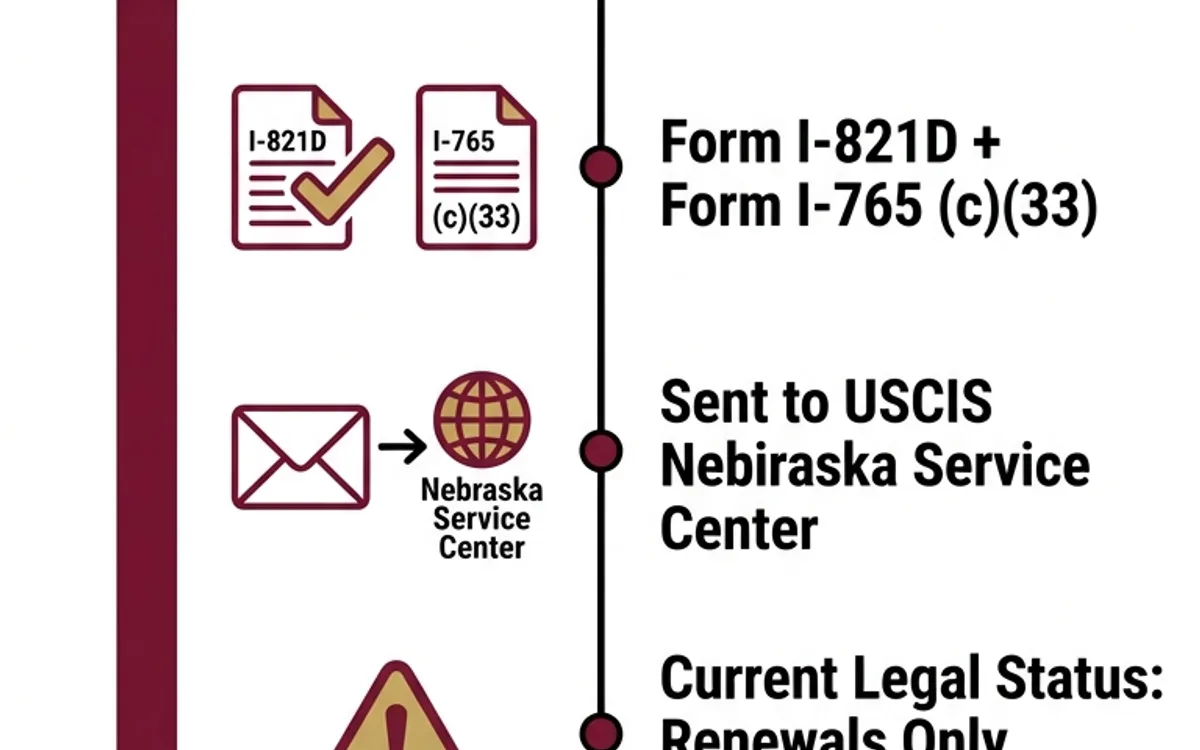
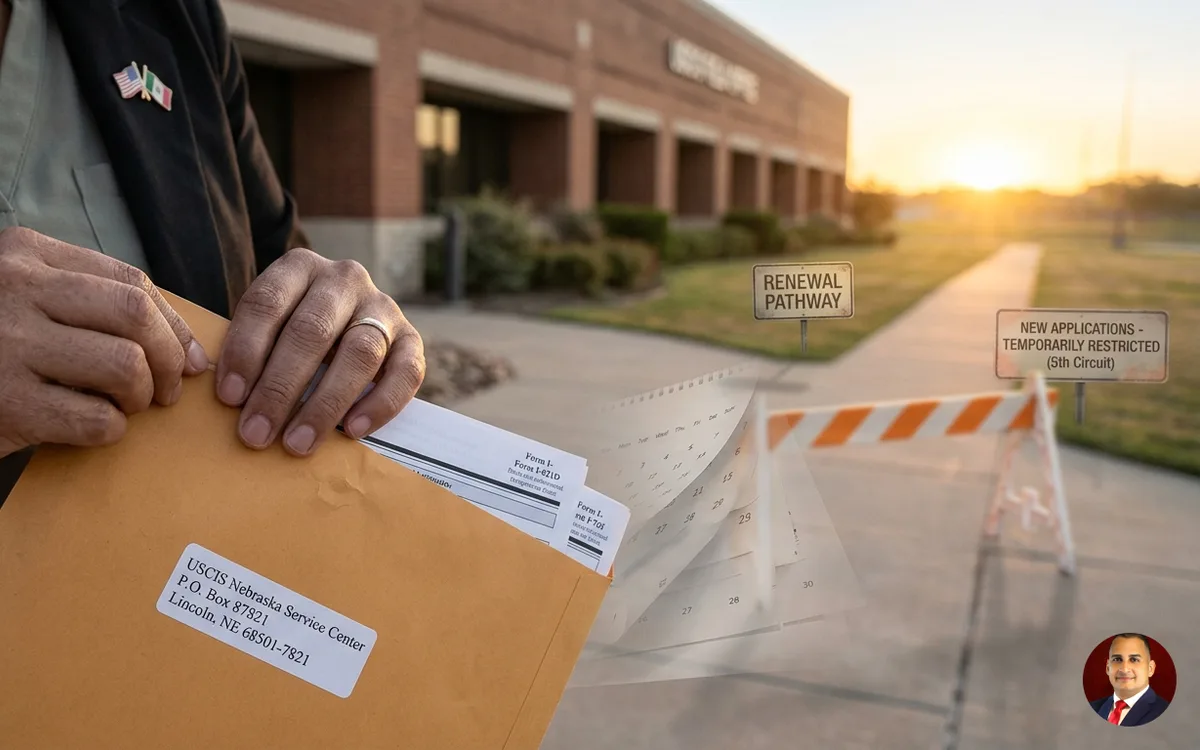
A DACA renewal attorney files Form I-821D and Form I-765 (category (c)(33)) with USCIS's Nebraska Service Center 120 to 150 days before your work permit expires, per USCIS guidance, to avoid a gap in authorization. We also screen every case for other relief, since the Fifth Circuit's stay in Texas v. United States limits USCIS to renewals only.
The Hard Truth
DACA is not a green card, and no attorney can promise it will exist next year. The Fifth Circuit's stay in Texas v. United States, No. 23-40653, currently lets USCIS process only renewal requests, not new initial DACA applications, and that limit could change with the next ruling. The Supreme Court upheld DACA's existence in DHS v. Regents of the University of California, 140 S. Ct. 1891 (2020), but left room for the executive branch to end the program through proper rulemaking. A renewal filed today keeps your status and work authorization current for another term. It does not fix the program's long-term uncertainty, and anyone who tells you otherwise is not being straight with you.
What Happens If You Wait
Miss the filing window and the clock does not pause for you. USCIS recommends filing a renewal 120 to 150 days before your current Employment Authorization Document (EAD) expires, and processing has taken longer than that for some applicants in recent years. If your EAD lapses before a renewal is approved, your work authorization ends, and your employer can lawfully terminate you under federal Form I-9 rules. A lapsed EAD also means your North Carolina driver license, which NC DMV ties to your EAD expiration date, cannot be renewed until new, valid work authorization is issued. A rejected filing, caused by something as small as a missing signature or an outdated fee amount, resets that countdown and can push you past your own deadline.
Step-by-Step Process
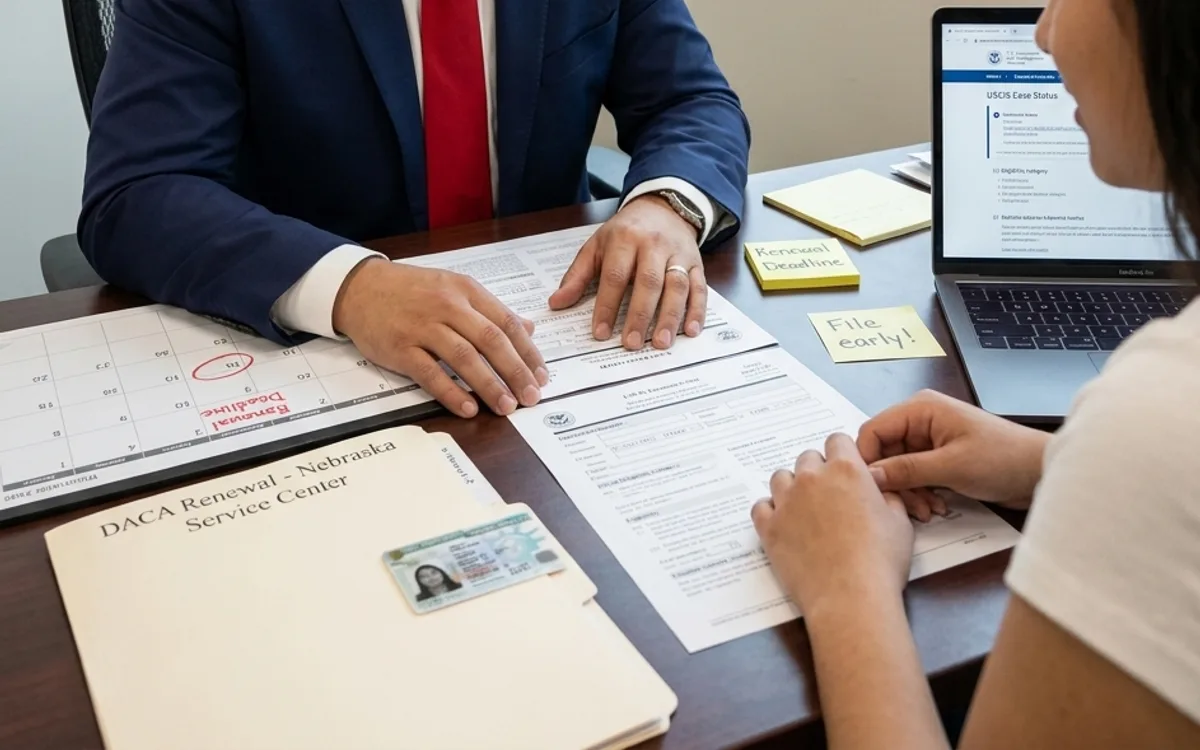
Calendar the deadline. Count back 150 days from your current EAD expiration date and treat that date as your filing deadline, not a suggestion.
Screen for other relief first. Before refiling, our attorneys review your full history, including any arrests, for eligibility under 8 C.F.R. § 274a.12(c)(14) and check whether a U visa, asylum claim, or marriage-based adjustment might apply to your case instead of, or alongside, DACA.
Prepare the filing. We complete Form I-821D and Form I-765 together, using category (c)(33) on the I-765, the specific code for DACA-based work authorization, and confirm the current filing fee before submission.
File with the correct service center. DACA renewals go to USCIS's Nebraska Service Center, and we track the receipt notice to confirm the filing was accepted intact.
Attend biometrics if scheduled. Some renewals still require biometrics at the USCIS Charlotte Application Support Center; we prepare you for what that appointment covers.
Monitor processing and respond to any Request for Evidence immediately, since a missed deadline on an RFE can turn into a denial.
Once the new EAD arrives, take it to NC DMV before your old license expires to keep your driver license current without a gap.
A Real-World Example
Consider a composite client we will call Ana, a DACA recipient in Mecklenburg County whose EAD was set to expire in five months. She had a single old shoplifting charge from age 17 that worried her. Our intake started with a full record review under 8 C.F.R. § 274a.12(c)(14) to determine whether that charge counted as a disqualifying offense, which it did not, since it had been dismissed and did not meet the regulation's threshold. We filed her I-821D and I-765 at the 150-day mark, confirmed her receipt notice from the Nebraska Service Center, and scheduled her for biometrics at the Charlotte ASC. While her renewal was pending, we also reviewed her relationship history and flagged a possible future path through marriage-based adjustment if she married a U.S. citizen partner, a separate process she would need to pursue in its own right. Her case shows the sequence every renewal client goes through: record review, filing, biometrics, and a parallel look at whether another door is open. It does not predict what USCIS will decide in any individual case.
William J. Vasquez has spent his career practicing immigration law, with a focus that includes DACA renewals and the deferred-action framework under 8 C.F.R. § 274a.12(c)(14). He is a member of the American Immigration Lawyers Association (AILA) and follows the Texas v. United States litigation and the DHS v. Regents of the University of California decision as they develop, so renewal clients get a current read on what USCIS can and cannot process at any given moment. His practice is affirmative filing work before USCIS, not state court representation, and he screens every DACA renewal client for other possible relief, including U visas, asylum, and family-based adjustment, rather than treating a renewal as the only option on the table.
Key Terms Explained
DACA (Deferred Action for Childhood Arrivals): a USCIS policy that defers removal and grants work authorization in two-year terms to eligible people who came to the U.S. as children, upheld in DHS v. Regents of the University of California, 140 S. Ct. 1891 (2020).
Form I-821D: the USCIS form used to request or renew DACA status.
Form I-765: the Application for Employment Authorization, filed alongside Form I-821D for DACA cases under category code (c)(33), the code specific to DACA-based work permits.
EAD (Employment Authorization Document): the physical work permit card USCIS issues once a DACA request or renewal is approved.
8 C.F.R. § 274a.12(c)(14): the federal regulation giving USCIS authority to grant work authorization to people with deferred action, the legal basis for DACA-related EADs.
Nebraska Service Center: the USCIS office that processes DACA renewal and initial filings nationwide.
Stay order: a court order pausing part of a lower ruling while an appeal proceeds; the Fifth Circuit's stay in Texas v. United States currently lets USCIS process DACA renewals but not new initial grants.
ASC (Application Support Center): the USCIS office where applicants go for fingerprinting and biometrics, including the Charlotte, North Carolina location used for many of the firm's clients.
Frequently Asked Questions
Q: How early can I file my DACA renewal to avoid a gap in my work permit? A: USCIS recommends filing Form I-821D and Form I-765 between 120 and 150 days before your current EAD expires, per USCIS guidance. Filing at the earliest point in that window gives processing delays room to run without your authorization lapsing.
Q: What happens if my work permit expires while my renewal is still pending with USCIS? A: If your EAD expires before USCIS approves the renewal, your work authorization ends on that date regardless of a pending filing, and your employer can lawfully stop employing you under federal Form I-9 rules. There is no automatic extension for DACA-based EADs the way there is for some other categories, which is why filing early matters more than filing perfectly.
Q: Can I renew my North Carolina driver license if my DACA EAD shows as expired but my renewal is pending? A: NC DMV ties your driver license validity to your EAD's expiration date, so a pending renewal generally does not extend your license on its own. Bring your receipt notice to a local DMV office to ask about your specific situation, since practices can vary by office and change over time.
Q: Does an old minor criminal charge disqualify me from renewing DACA? A: It depends on the charge, the disposition, and how it fits the standards in 8 C.F.R. § 274a.12(c)(14) and USCIS's DACA guidelines on significant misdemeanors and felonies. A dismissed charge, a charge below a certain threshold, or a juvenile adjudication may not disqualify you, but that determination requires a full record review, not a guess.
Q: Is there a path to a green card for a DACA recipient who marries a U.S. citizen? A: Marriage to a U.S. citizen can open a path to adjustment of status, but whether it works depends on how you entered the country and whether you have any unlawful presence or prior removal order on your record. That screening is separate from your DACA renewal and should happen alongside it, not instead of it.
Q: What should I do if my DACA renewal was rejected for a fee or signature error? A: USCIS rejects incomplete filings and returns them with a notice describing the defect; you then have to correct the issue and refile, which costs time you may not have if your window is already closing. Review every signature line and the current fee amount before submission, since a rejection restarts your filing clock.
Clients describe our DACA renewal team as responsive during a process that feels, for many recipients, like it depends on headlines outside their control. Reviews consistently mention clear explanations of each filing step and direct communication when court rulings affect DACA processing nationwide. We do not publish outcome statistics, consistent with our view that immigration case results depend on individual facts, USCIS adjudication, and the state of ongoing litigation, not a firm's track record.
If your renewal window is open, or closing, now is the point to get the filing moving and get a straight answer about whether anything else applies to your history. A short conversation with our team can tell you where you stand before the 150-day mark becomes a problem instead of a plan.
Schedule a consultation with our immigration team to calendar your DACA renewal deadline, review your eligibility under 8 C.F.R. § 274a.12(c)(14), and screen your case for other relief such as a U visa, asylum, or family-based adjustment. Call our North Carolina office or request a consultation online to get your Form I-821D and Form I-765 filed before your window closes.