Last updated: January 2025
What to Look for When You Search "Immigration Lawyer Near Me" in Charlotte
When you search for an immigration lawyer near me in Charlotte, prioritize attorneys with regular appearances before Charlotte Immigration Court (5701 Executive Center Drive), filings at the USCIS Charlotte Field Office (6130 Tyvola Centre Drive, see USCIS processing times), verified North Carolina State Bar standing, and case-specific experience — not physical proximity to your home or office.
You typed that search at midnight because something happened today that scared you. Maybe it was a letter from USCIS, a knock from ICE, or a court date you don't understand yet. Charlotte and Raleigh list dozens of immigration attorneys within a few miles of you, and almost none of that distance tells you who will actually stand up in Charlotte Immigration Court on your hearing date.
Why Proximity Doesn't Decide Your Case
What matters is who shows up, not who is closest. The attorney five minutes from your house and the attorney forty minutes away face the same immigration judge, the same government attorney, and the same filing deadlines. Distance on a map has never changed a case outcome.
Quick Answer: How to Choose an Immigration Lawyer Near Me in Charlotte
Search "immigration lawyer near me" and you'll get pages of ads. Verify any attorney through the North Carolina State Bar, 217 E. Edenton Street, Raleigh, before you call. If your case involves USCIS Charlotte Field Office (6130 Tyvola Centre Drive, current processing times here) or Charlotte Immigration Court (5701 Executive Center Drive), choose a firm that appears before both regularly — see our attorney's full bio for specific courtroom and filing experience.
The Hard Truth
Does Living Close to Charlotte Immigration Court Actually Help My Case?
Proximity does not win cases. Charlotte Immigration Court, at 5701 Executive Center Drive, operates under Local Operating Procedures issued by the Executive Office for Immigration Review (EOIR), and a docket that fills up months in advance means your first hearing date will rarely come quickly. EOIR's own Adjudication Statistics track average case-completion times court by court nationwide, and the agency's published backlog has grown substantially in recent years — which is why checking that live data, rather than any fixed number quoted on a website, is the only reliable way to gauge how long your specific case will take. An attorney's office being five minutes from your house does not change the immigration judge, the government's position, or the strength of your underlying case.
What actually changes an outcome is whether your attorney has appeared before that specific judge, filed the correct form on time, and prepared you for the questions asked under oath. Some cases are strong from intake and stay strong. A U-visa applicant with a signed police certification, or a green card holder with a clean record filing for naturalization, moves largely on paper. A removal case built on a prior deportation order, or an asylum claim resting on general country conditions rather than a threat specific to you, is harder, and no attorney's zip code changes that math.
Case Type, Venue, Timeline, and Complexity at a Glance
| Case Type | Filing Venue | Typical Timeline | Complexity |
|---|---|---|---|
| U-Visa | Certifying agency (e.g., CMPD Victim Services) then USCIS centralized adjudication | Years, due to the 10,000/year statutory cap (8 U.S.C. § 1184(p)(2)(A)) | High |
| Removal Defense | Charlotte Immigration Court (EOIR) | Varies by docket; hearings are often set months to over a year apart | High |
| Naturalization | USCIS Charlotte Field Office | Typically months; check the current local estimate on USCIS's processing times page | Low to Moderate |
| Family-Based Petition (I-130/I-485) | USCIS service center, then Charlotte Field Office for interview | Varies widely by category; check USCIS processing times | Moderate |
This table is a general guide, not a guarantee — always confirm current timelines through the linked government sources, since both USCIS and EOIR update their figures regularly.
What Happens If You Wait
What Happens If I Wait to Hire an Immigration Lawyer?
Every day you wait to find representation is a day closer to a deadline you may not know exists. If you were served a Notice to Appear (NTA), the document itself sets your first master calendar hearing date. Miss it, and the immigration judge can enter an in absentia removal order under 8 U.S.C. § 1229a(b)(5), leaving you with a deportation order you never had a chance to contest in person.
If you are detained and eligible for release, ICE and the immigration judge move on their own calendar, not yours. The Fourth Circuit's decision in Zavaleta-Policiano v. Sessions, No. 16-1231 (4th Cir. Sept. 13, 2017), shows how a bond determination can be challenged on appeal, but that appeal takes time you spend in custody.
Waiting also costs you outside of court. The NC Division of Motor Vehicles will not renew a driver's license tied to lawful presence documents past your authorized stay date, regardless of a pending immigration case. And under N.C. Gen. Stat. § 143-133.3, employers who ignore E-Verify requirements accumulate state contract and licensing exposure the longer the noncompliance continues.
Nationally, EOIR's published Adjudication Statistics show immigration court backlogs have grown for years; every month you delay finding counsel is a month that backlog keeps moving without you building the record your case needs.
Step-by-Step Process
What Are the Steps to Finding the Right Immigration Lawyer and Filing Correctly?
Step 1: Identify what kind of case you actually have. A Notice to Appear starts removal defense in Charlotte Immigration Court. A pending I-130 or I-485 runs through USCIS. A U-visa starts with local police certification, not with USCIS at all.
Step 2: Confirm the attorney is in good standing with the North Carolina State Bar, 217 E. Edenton Street, Raleigh. The Bar's online license lookup takes less than five minutes and costs nothing.
Step 3: Bring your documents to the first consultation, including the NTA if you have one, your I-94, any prior USCIS notices, and identification for everyone involved. An attorney can't evaluate deadlines without seeing the actual paper.
Step 4: File in the correct venue. Removal defense filings and motions go to Charlotte Immigration Court at 5701 Executive Center Drive. Green card and naturalization filings go to USCIS Charlotte Field Office at 6130 Tyvola Centre Drive. U-visa certifications route first through the certifying law enforcement agency, such as the Charlotte-Mecklenburg Police Department Victim Services Unit, before the I-918 packet ever reaches USCIS.
Step 5: Attend every scheduled hearing, biometrics appointment, or interview. A NCAOC-certified court interpreter is available at Charlotte Immigration Court if English isn't your strongest language for legal proceedings; ask for one before the hearing date, not during it.
Step 6: Track the decision and, if denied, the deadline to appeal or file a motion to reconsider. Those deadlines are typically measured in days, not months, and they do not pause for holidays.
Step 7: Know your appeal window if the judge rules against you. Under 8 C.F.R. § 1003.38(b), you generally have 30 days from the date of the immigration judge's decision to file a Notice of Appeal with the Board of Immigration Appeals (BIA). The BIA reviews the written record rather than hearing new testimony, which is why the transcript and exhibits your attorney builds at the trial level matter well beyond the first hearing.
A Real-World Example
U-Visa Case Walkthrough: What Actually Happens After You File?
Consider a composite scenario, not a real client: a domestic violence survivor living in Mecklenburg County, call her Marisol. Step one was reporting the crime to the Charlotte-Mecklenburg Police Department, whose Victim Services Unit reviews and signs Form I-918 Supplement B, the law enforcement certification a U-visa petition requires.
CMPD's Victim Services Unit does not publish a guaranteed turnaround time for signing that certification, and processing can take anywhere from a few weeks to several months depending on caseload — ask the unit directly for its current estimate when you file your request. Once signed, the I-918 petition and supporting evidence go to USCIS for centralized adjudication, not to the USCIS Charlotte Field Office on Tyvola Centre Drive, since U-visas aren't decided at the local field office level.
From filing to any decision, the wait is long by statutory design: Congress capped U-visa approvals at 10,000 principal petitions per year under 8 U.S.C. § 1184(p)(2)(A), so USCIS maintains a waiting list once that cap is reached each fiscal year. USCIS has publicly acknowledged multi-year waits for a waiting-list decision; because that estimate changes, check USCIS's own Check Case Processing Times tool and its U Nonimmigrant Status page for the current figure before relying on any number you read on a law firm's website, including this one.
The next real step in a case like this isn't a hearing. It's the wait, with periodic requests for updated evidence, address changes, and biometrics appointments filed along the way.
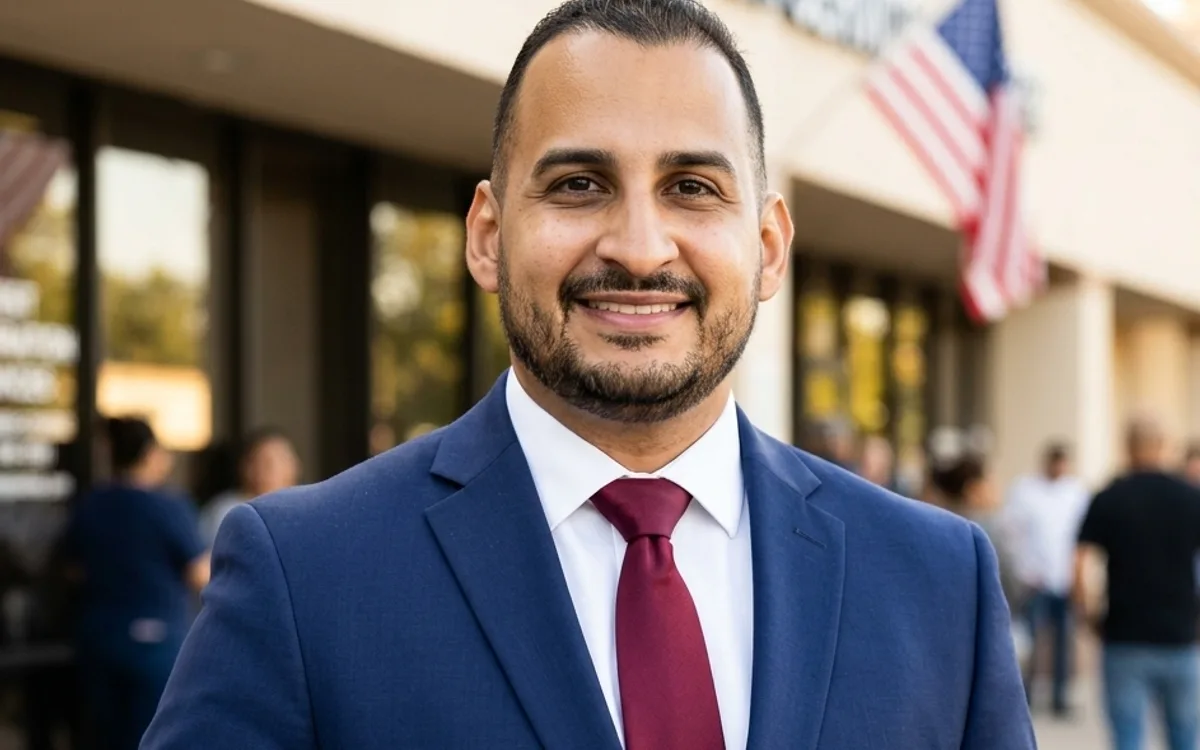
About the Attorney: William J. Vasquez
William J. Vasquez handles immigration matters across Mecklenburg and Wake counties, including appearances before Charlotte Immigration Court at 5701 Executive Center Drive and filings with USCIS Charlotte Field Office at 6130 Tyvola Centre Drive. He is licensed to practice law in North Carolina; you can verify his current license status, standing, and any public disciplinary history at any time through the North Carolina State Bar's online lookup. He is also a member of the American Immigration Lawyers Association (AILA) Carolinas Chapter.
His caseload includes removal defense, U-visa certification cases coordinated with local law enforcement including the Charlotte-Mecklenburg Police Department Victim Services Unit, family-based petitions, and naturalization applications. That work is built on appearing in front of the same judges and officers case after case, not on how close an office sits to your home.
For his full professional background, including specific practice areas, courtroom experience, and how to reach his office directly, see his complete attorney biography page. We encourage every prospective client to independently verify any attorney's bar status and disciplinary history before hiring, through the North Carolina State Bar link above, rather than relying solely on what any law firm website says about itself.
Key Terms Explained
Immigration Court Glossary: Key Terms Explained
Notice to Appear (NTA): The charging document that starts removal proceedings and sets your first hearing date and location.
Master Calendar Hearing: A short procedural hearing, typically 5 to 15 minutes, where the immigration judge confirms your identity, takes your plea, and sets deadlines for filings. It is not the trial.
Bond Hearing: A separate hearing where an immigration judge decides whether a detained person can be released while their case is pending, and on what conditions.
U-Visa Certification (Form I-918 Supplement B): A form signed by a law enforcement agency, such as a police department's victim services unit, confirming a crime victim cooperated with an investigation. It is required before USCIS will consider a U-visa petition.
Adjustment of Status: The process of applying for a green card from inside the United States, filed with USCIS rather than through a U.S. consulate abroad.
EOIR: The Executive Office for Immigration Review, the U.S. Department of Justice agency that runs immigration courts, including Charlotte Immigration Court, and publishes its own case and backlog statistics.
Board of Immigration Appeals (BIA): The administrative appellate body within EOIR that reviews immigration judges' decisions on the written record.
E-Verify: A federal electronic system employers use to confirm work authorization; North Carolina requires certain employers to use it under N.C. Gen. Stat. § 143-133.3.
In Absentia Order: A removal order entered when a respondent fails to appear for a scheduled hearing, issued without the person present under 8 U.S.C. § 1229a(b)(5).
Frequently Asked Questions
Frequently Asked Questions About Finding an Immigration Lawyer Near Me
Is there a Spanish-speaking immigration lawyer near me in Charlotte? Many Charlotte-area immigration offices, including this one, handle intake and consultations in Spanish. Ask directly during your first call, and ask specifically whether the attorney handling your hearing, not just the intake staff, speaks Spanish.
How much does an immigration lawyer near me actually cost in North Carolina? Fees vary by case type and are not standardized by the state. Removal defense and complex U-visa cases generally cost more than a straightforward naturalization filing, because they require more court appearances and briefing.
Does your office offer a free consultation, and what should I expect it to cost? Consultation policies and fees differ firm to firm. Contact our office directly to confirm whether your first consultation is free or flat-fee, and ask for the amount in writing before you schedule, so there are no surprises when you arrive.
How long after my Notice to Appear (NTA) is filed will my first hearing be scheduled? It depends on Charlotte Immigration Court's docket at the time your NTA is filed; under current EOIR backlog conditions, a first master calendar hearing can be scheduled anywhere from a few weeks to well over a year out. Your NTA itself should list a date, time, and courtroom; if it says 'to be determined,' you can confirm your hearing date once it's set through EOIR's automated case information line at 1-800-898-7180 or the online case status tool.
Can I check if an immigration lawyer near me is actually licensed? Yes. The North Carolina State Bar, 217 E. Edenton Street, Raleigh, maintains a free online license lookup that shows license status and any public discipline before you pay for a consultation.
Do I need a lawyer who lives near Charlotte Immigration Court, or just one who appears there regularly? The second matters more. What counts is whether the attorney has actually stood before the judge assigned to your case, not the commute from their office to the courthouse at 5701 Executive Center Drive.
What happens if I miss my hearing at Charlotte Immigration Court? The judge can enter an in absentia removal order under 8 U.S.C. § 1229a(b)(5) without you present. Reopening that order later is difficult and not guaranteed.
Can an immigration lawyer near me help with an NC driver's license held up by lawful presence documents? An attorney can help you obtain the correct USCIS documentation the NC DMV requires, but the DMV itself controls the renewal decision and timeline, not the attorney.
What Do Client Reviews Actually Tell You About an Immigration Lawyer?
Search results for "immigration lawyer near me" surface star ratings before they surface anything about how a firm actually works. On Google and Avvo, clients who leave reviews for this firm tend to mention responsiveness, whether calls got returned, and whether the attorney explained the timeline in plain terms, more than they mention outcomes.
That distinction matters. Immigration outcomes depend on facts, assigned judges, and government discretion no attorney controls, so a review that says "they called me back and told me the truth about how long this would take" tells you more than a star count ever will.
How Do I Verify an Immigration Lawyer's License in North Carolina?
Before you call anyone, do two things that cost you nothing. Look up the attorney's license status using the North Carolina State Bar's free online lookup (217 E. Edenton Street, Raleigh). Then ask, specifically, whether they've filed in the venue your case actually needs: USCIS Charlotte Field Office, Charlotte Immigration Court, or the certifying agency for a U-visa.
Once you know the answers, you're in a position to have a real conversation instead of picking a name off a map. If your situation involves a pending filing or hearing, review our pages on U-visa cases, removal defense, and naturalization before your first call so you arrive with the right questions.
Ready to Talk to an Immigration Attorney in Charlotte?
If you have an NTA, a USCIS notice, or a U-visa certification question and need to know what happens next, schedule a consultation with our office. William J. Vasquez and our team handle removal defense, U-visa cases, naturalization, and family petitions for clients across Mecklenburg and Wake counties, and the first conversation is about your documents and your deadline, not a sales pitch.
- Removal Defense in Charlotte Immigration Court
- U-Visa Certification with CMPD Victim Services
- Naturalization & USCIS Charlotte Field Office
- NC Driver's License Lawful Presence Issues
- Employer E-Verify Compliance in North Carolina
- Verify an Attorney with the NC State Bar